The context
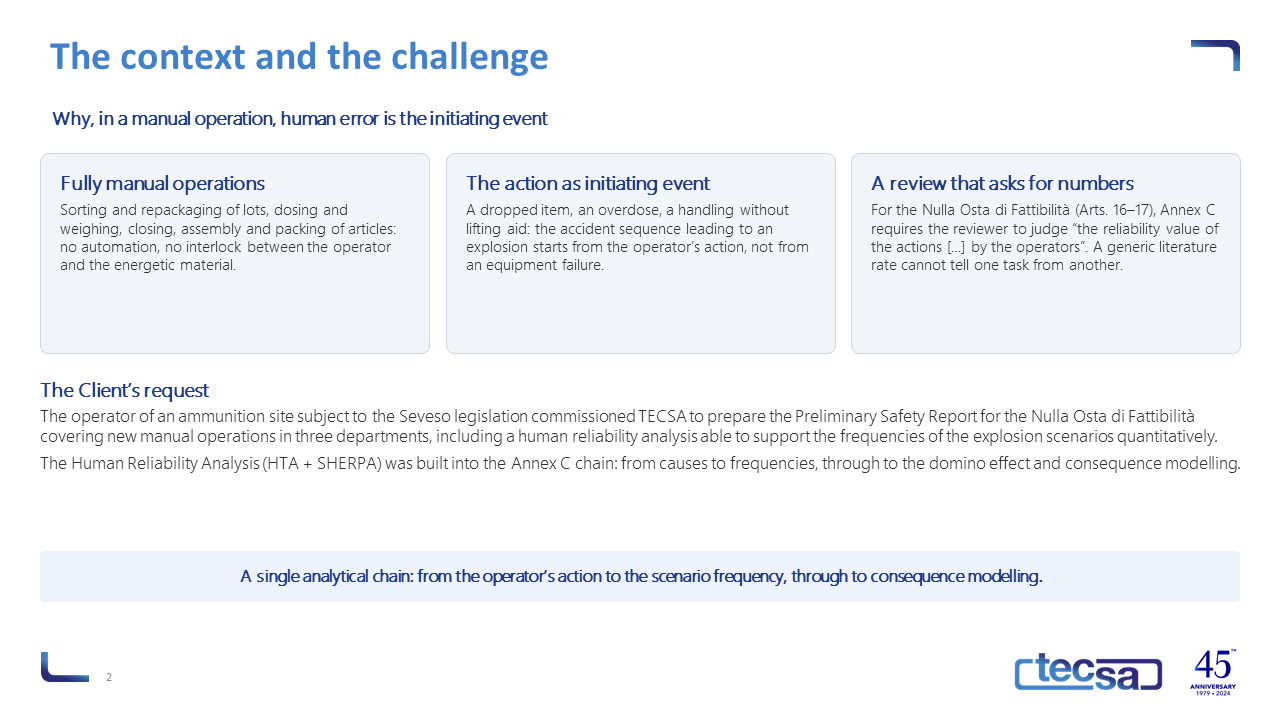
The operator of an ammunition site subject to Italian Legislative Decree 105/2015 (Seveso III) commissioned TECSA to prepare the Preliminary Safety Report for the Nulla Osta di Fattibilità (feasibility clearance) of new, fully manual operations in three departments: sorting of lots, dosing, closing, assembly and packing of articles. With no automation and no interlocks, the initiating event of the explosion scenarios is the operator’s action.
The regulatory reference
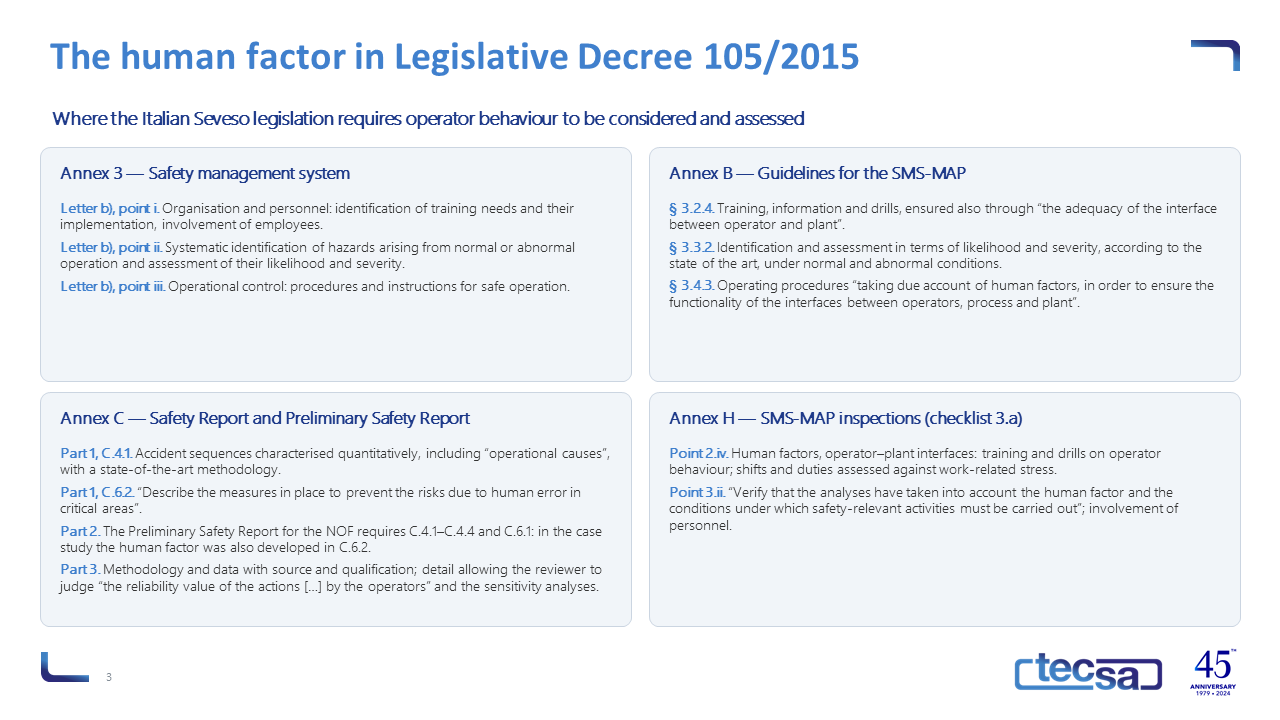
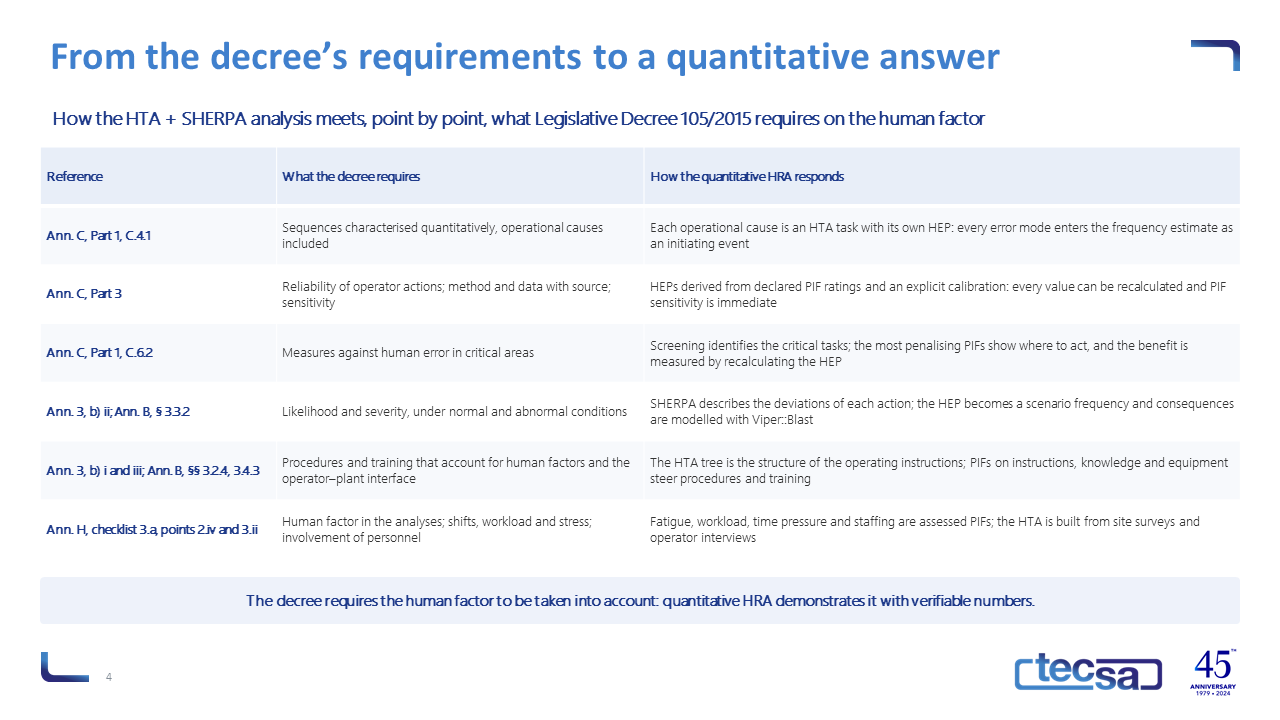
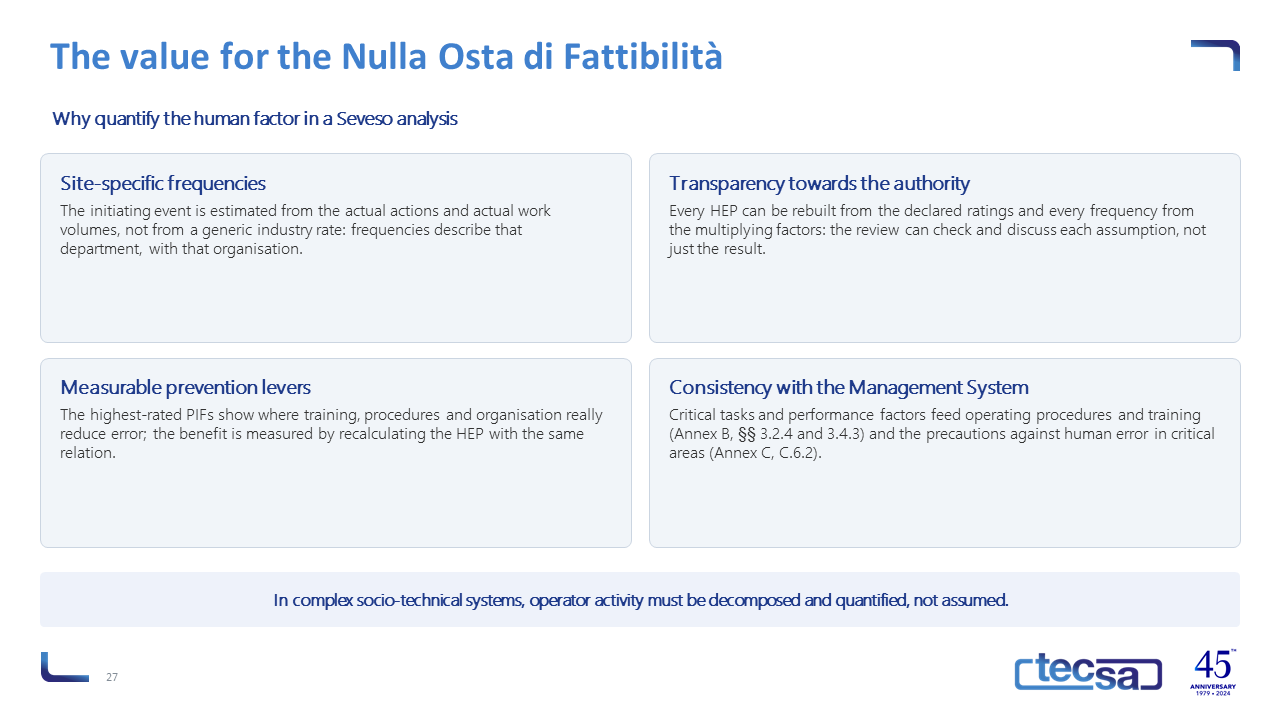
The decree explicitly requires this to be taken into account. Annex C requires accident sequences to be characterised quantitatively, including operational causes (C.4.1), the precautions against human error in critical areas to be described (C.6.2) and, in the assessment criteria (Part 3), “the reliability value of the actions by the operators” to be documented with a qualified method and data. Annex B requires procedures that take “due account of human factors” (§ 3.4.3) and an adequate operator–plant interface (§ 3.2.4); the Annex H checklists verify that the analyses consider the human factor.
The approach
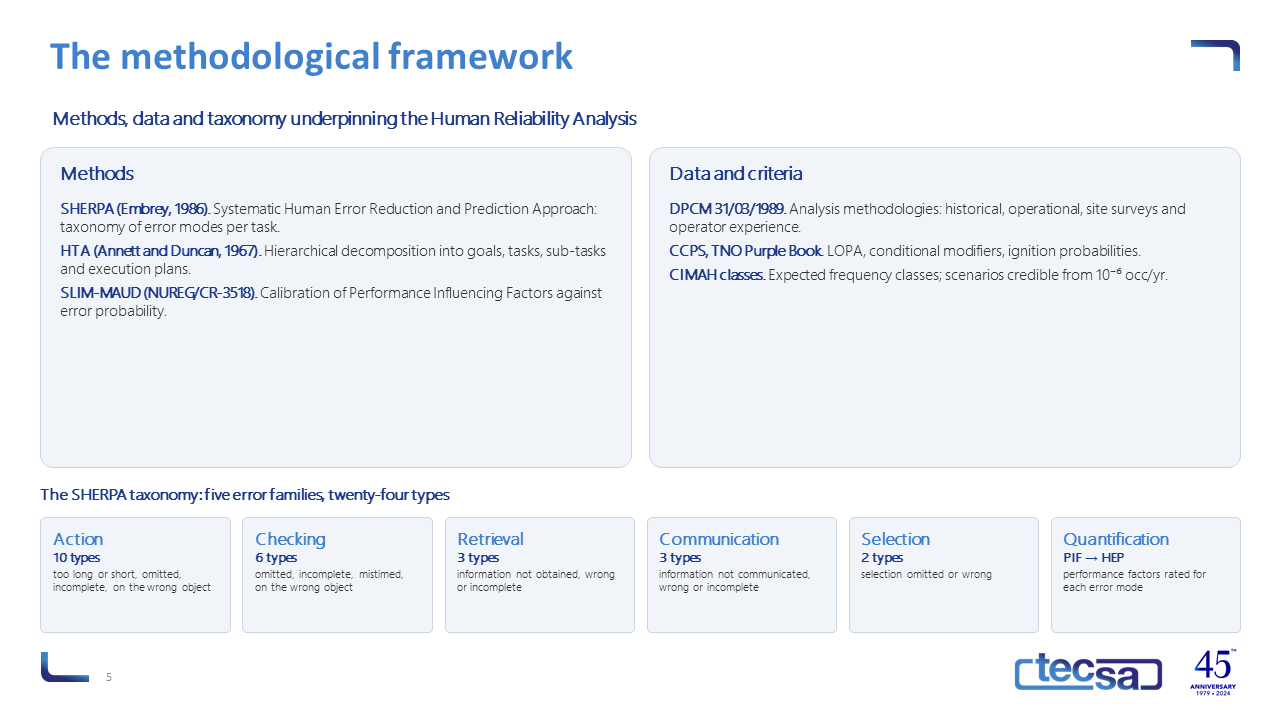
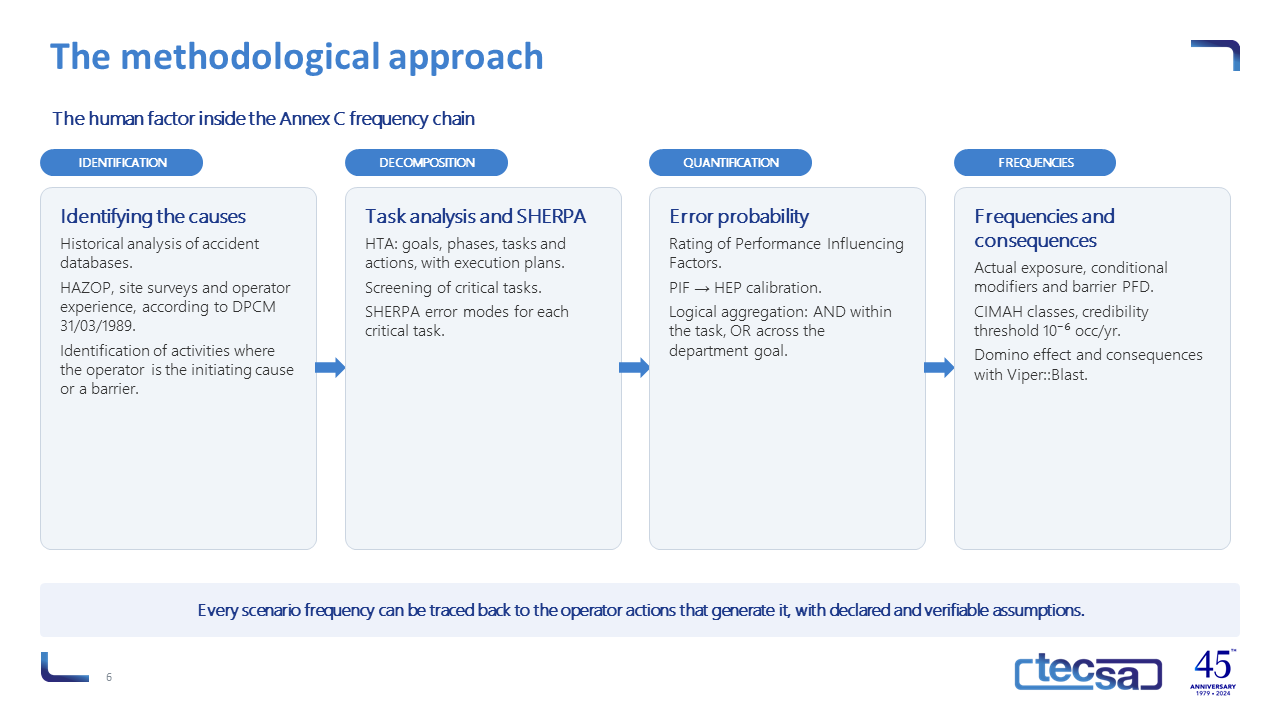
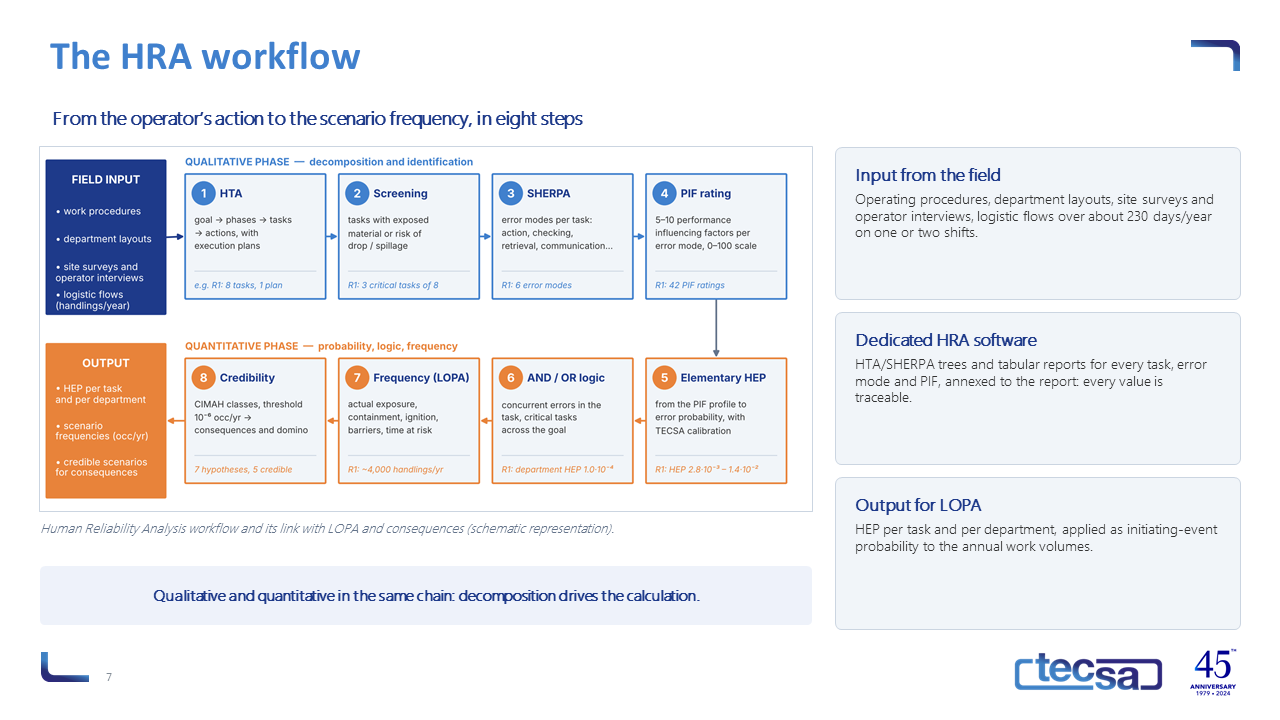
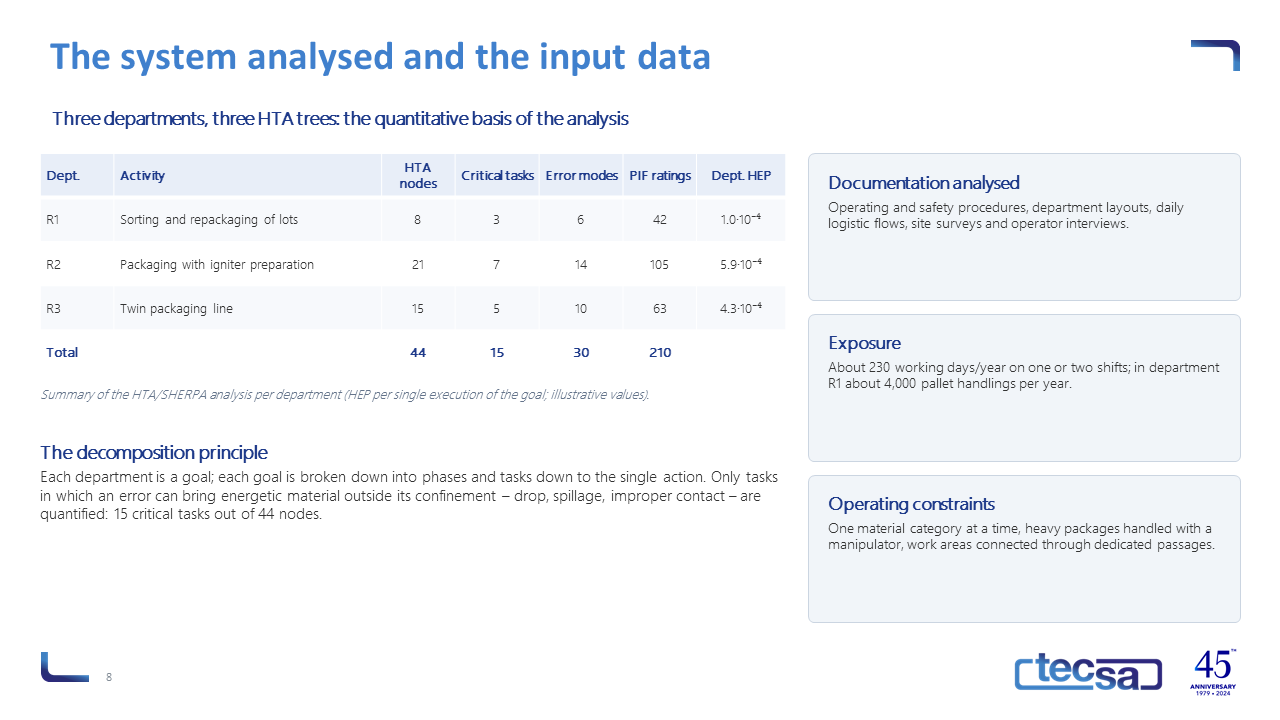
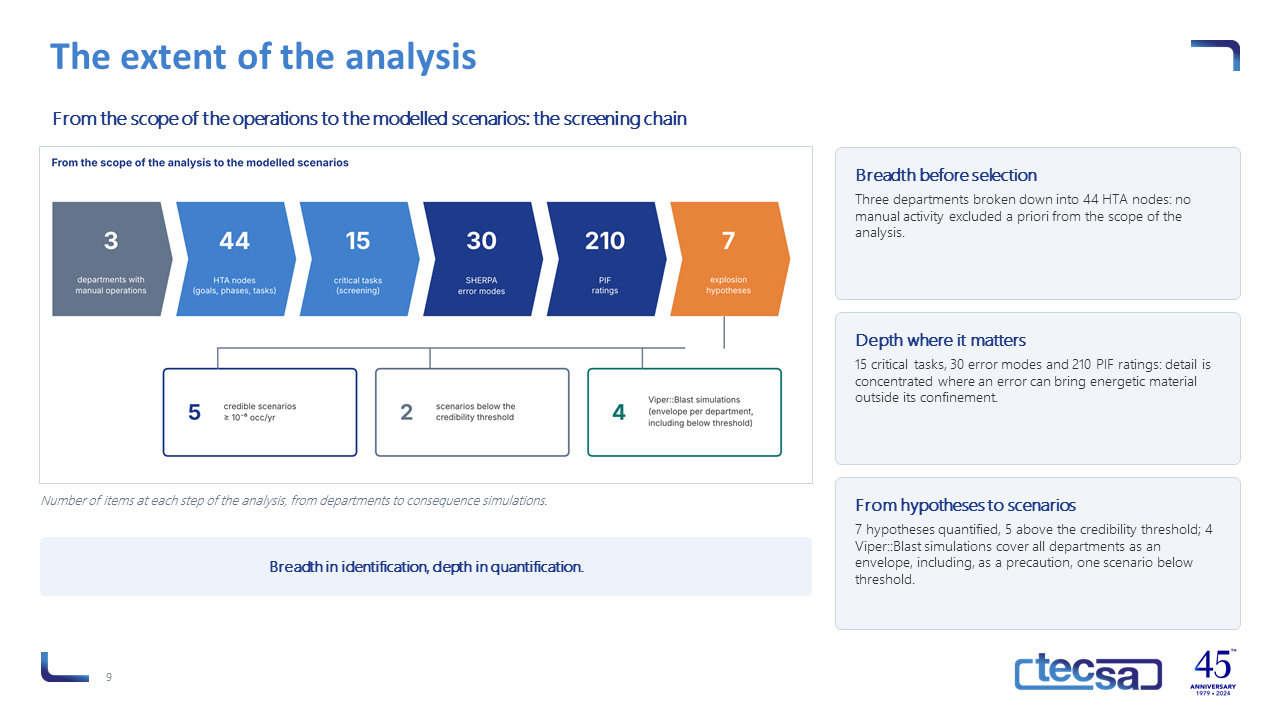
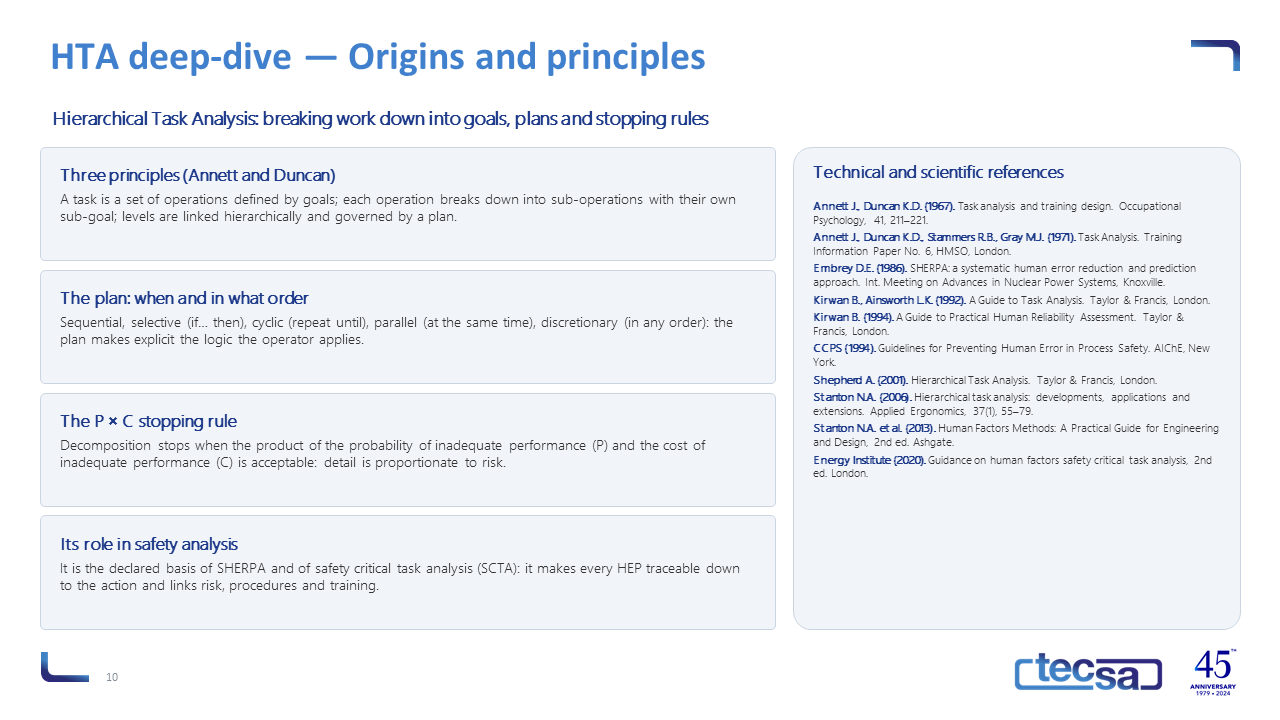
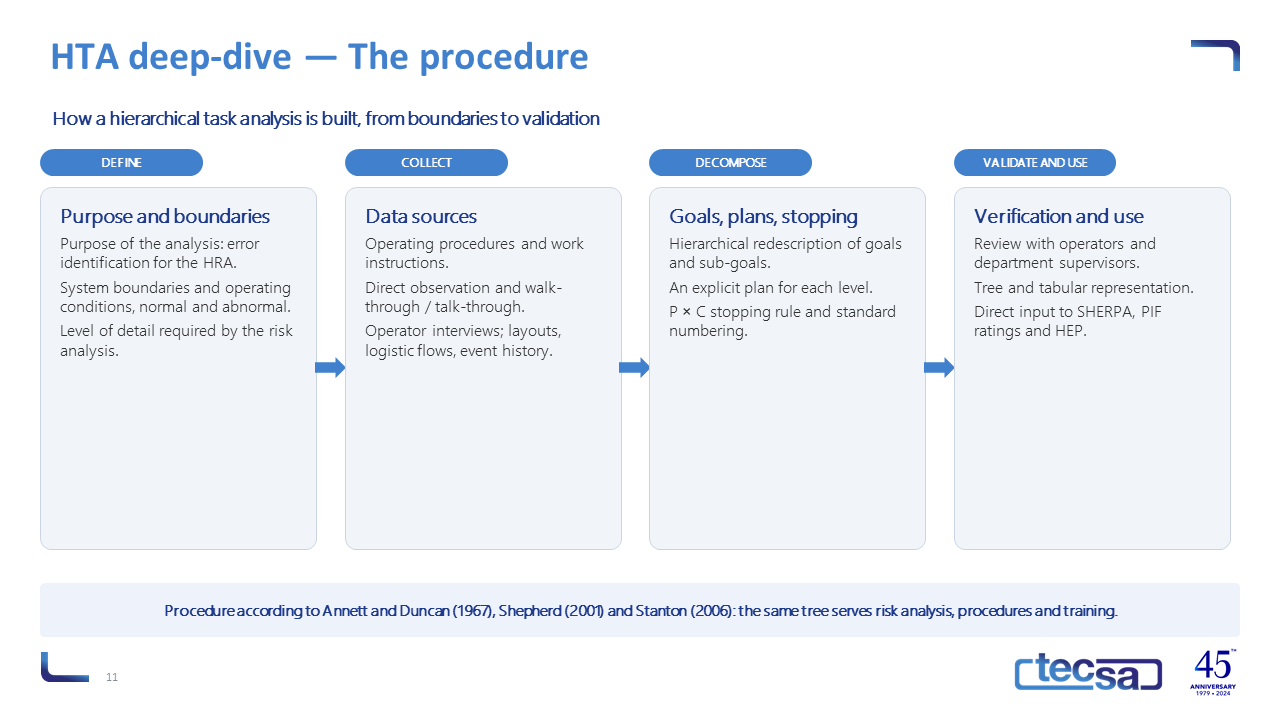
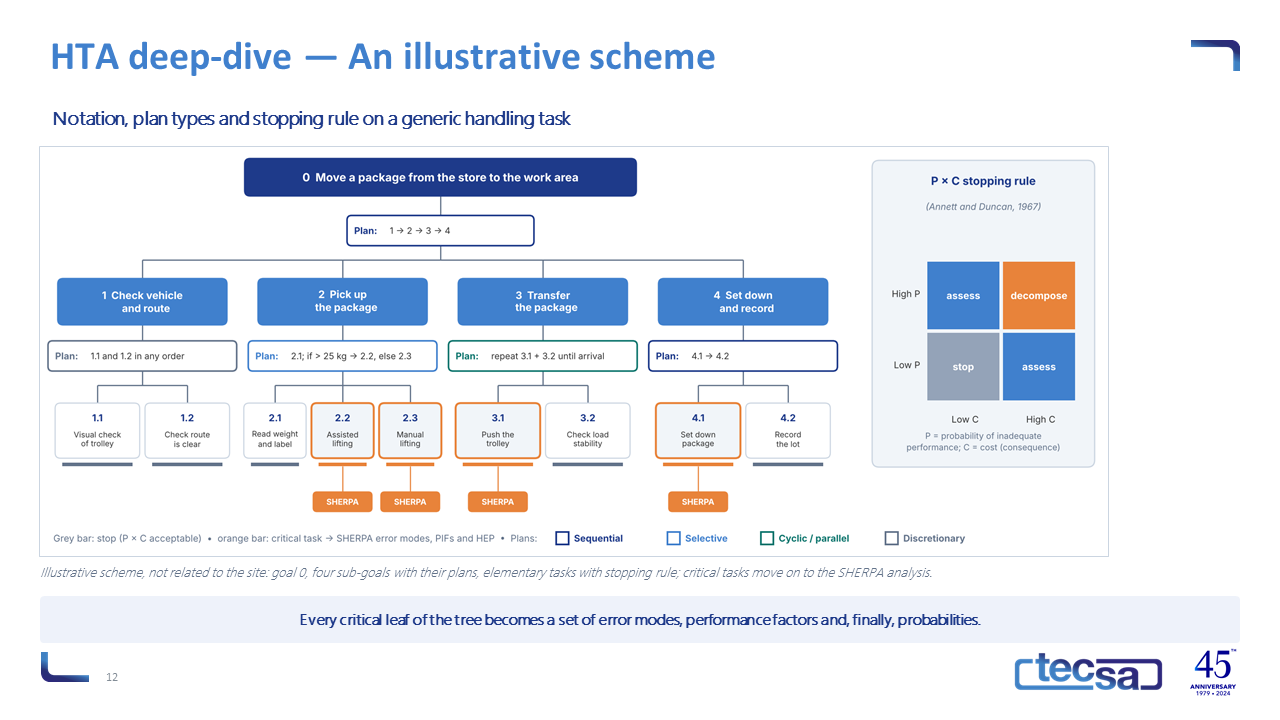
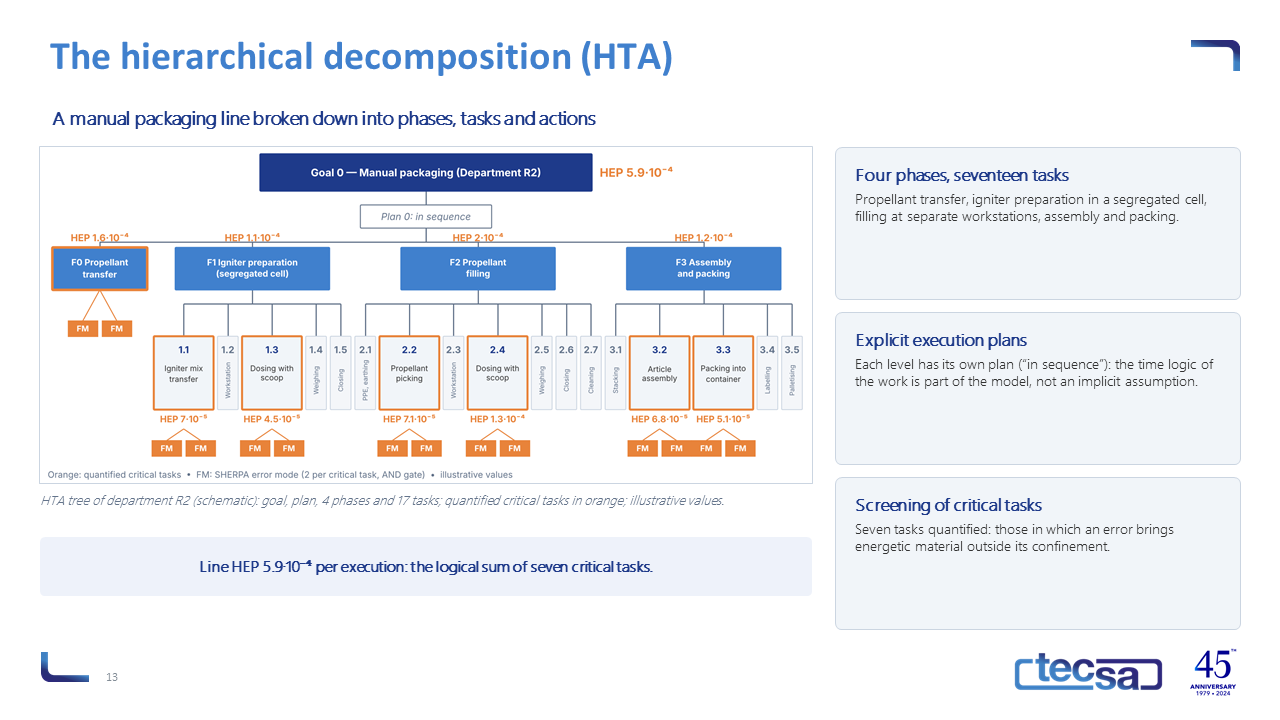
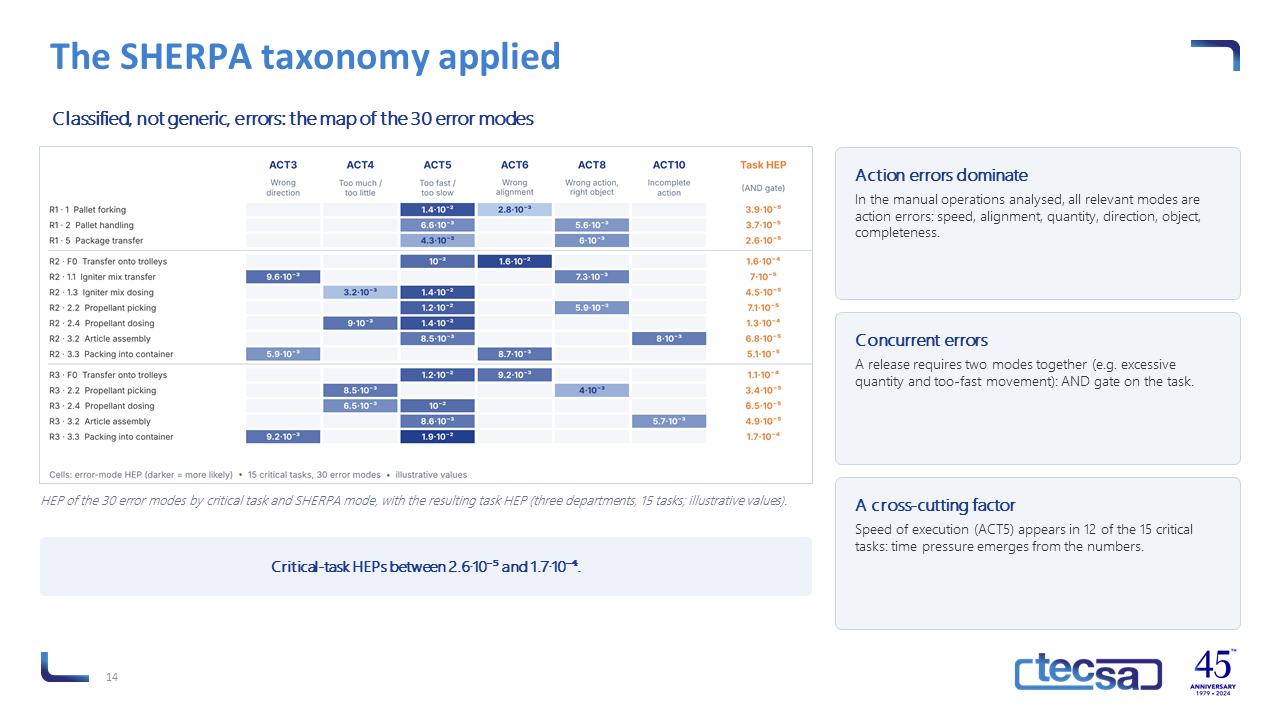
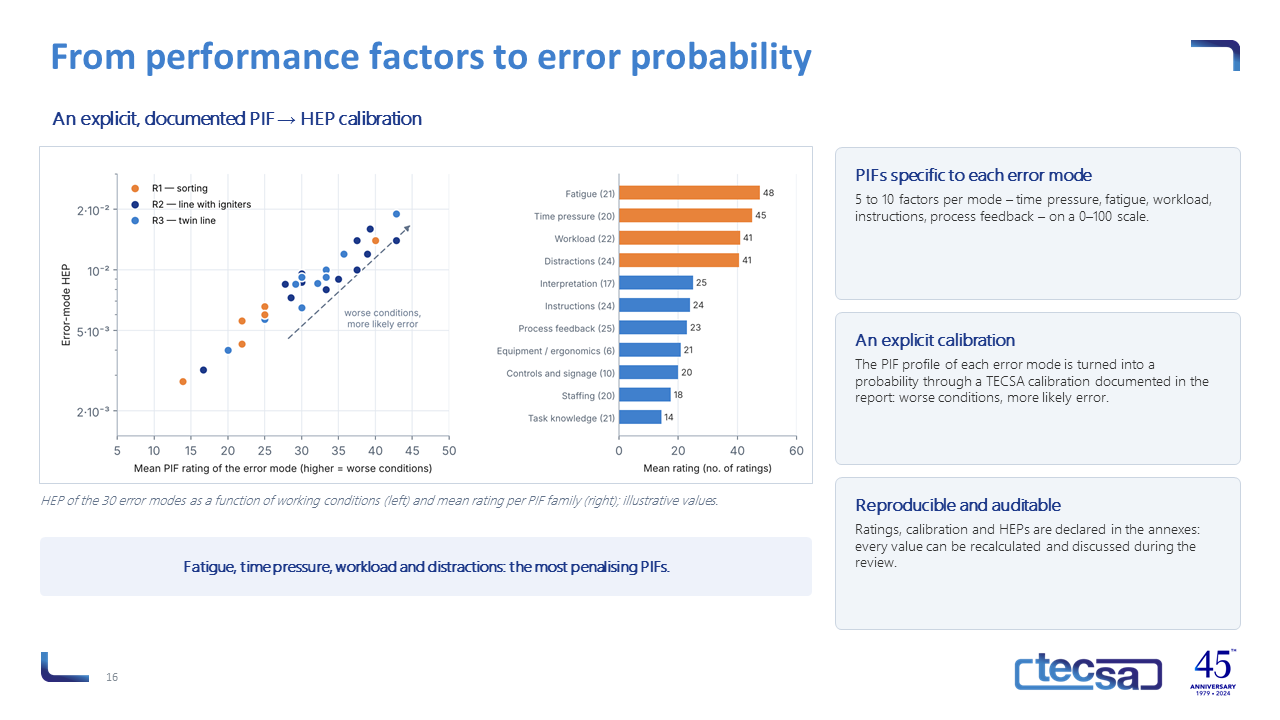
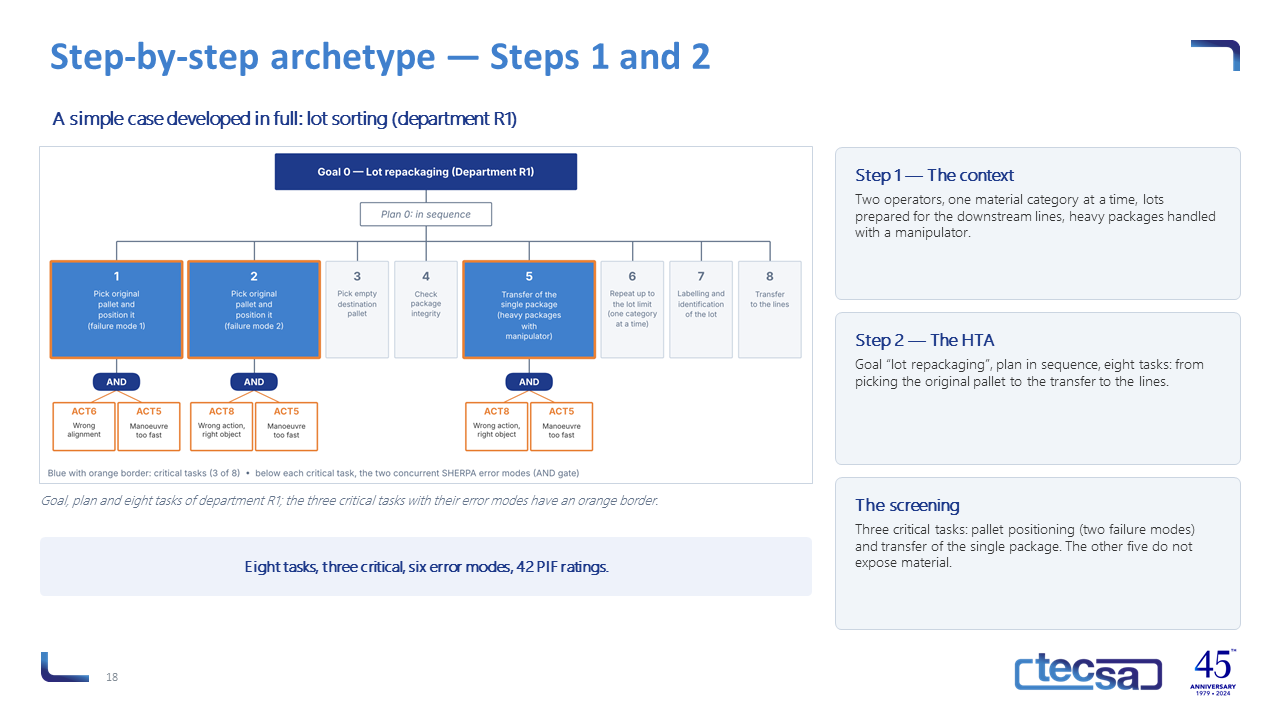
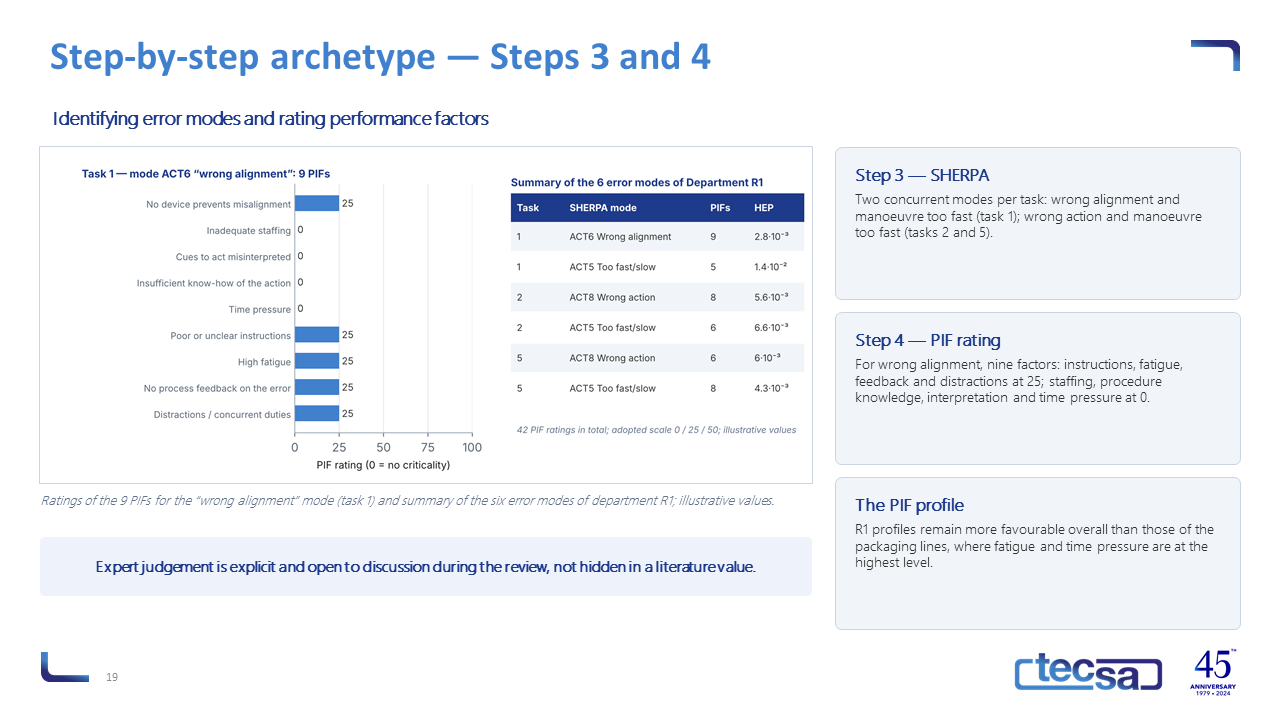
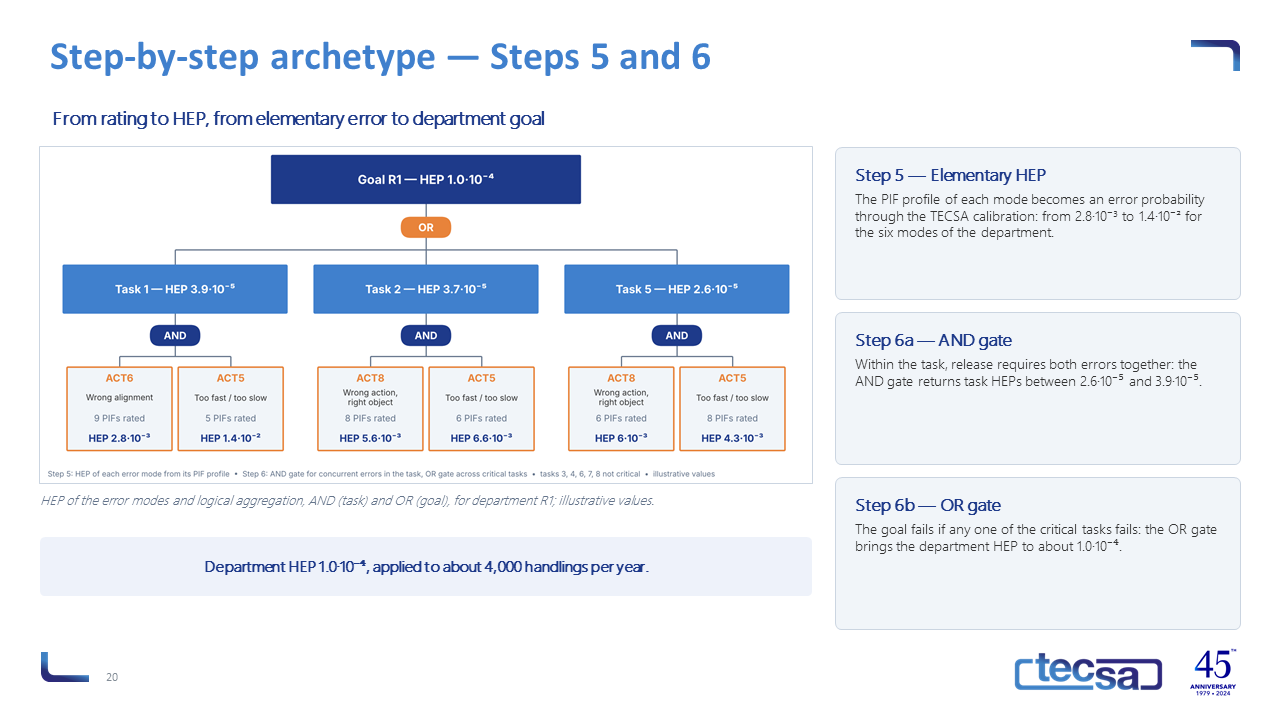
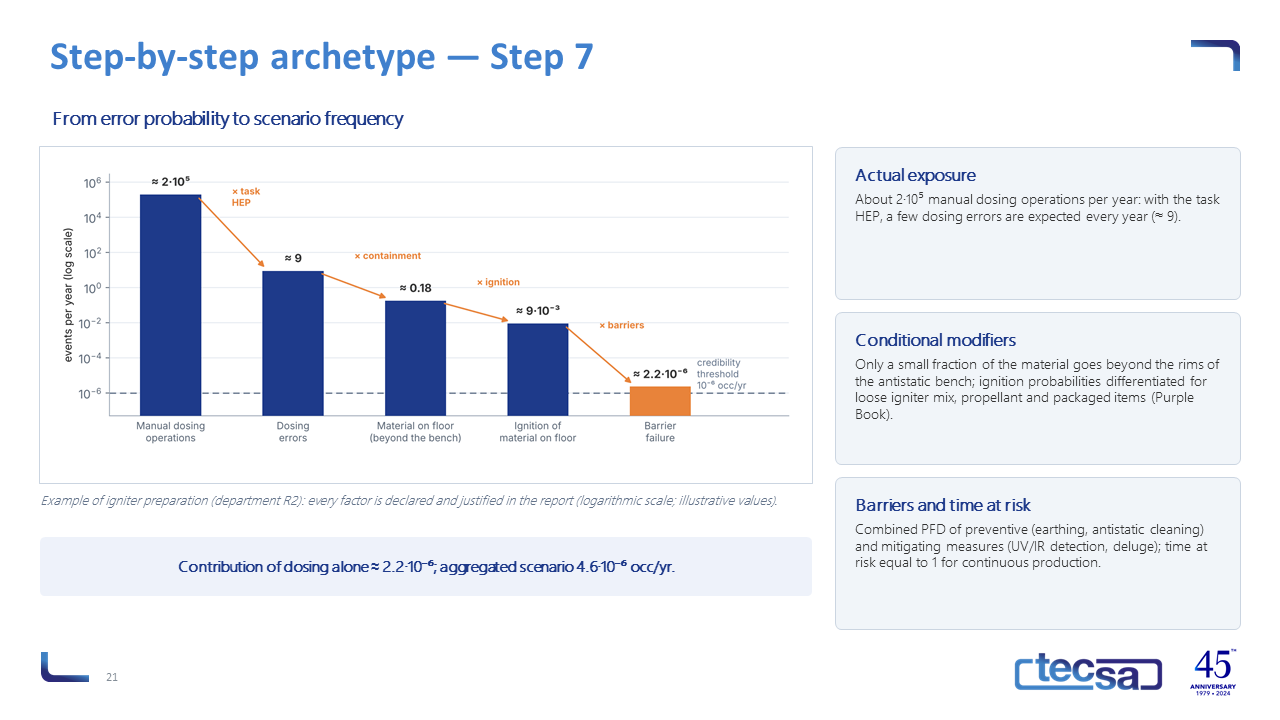
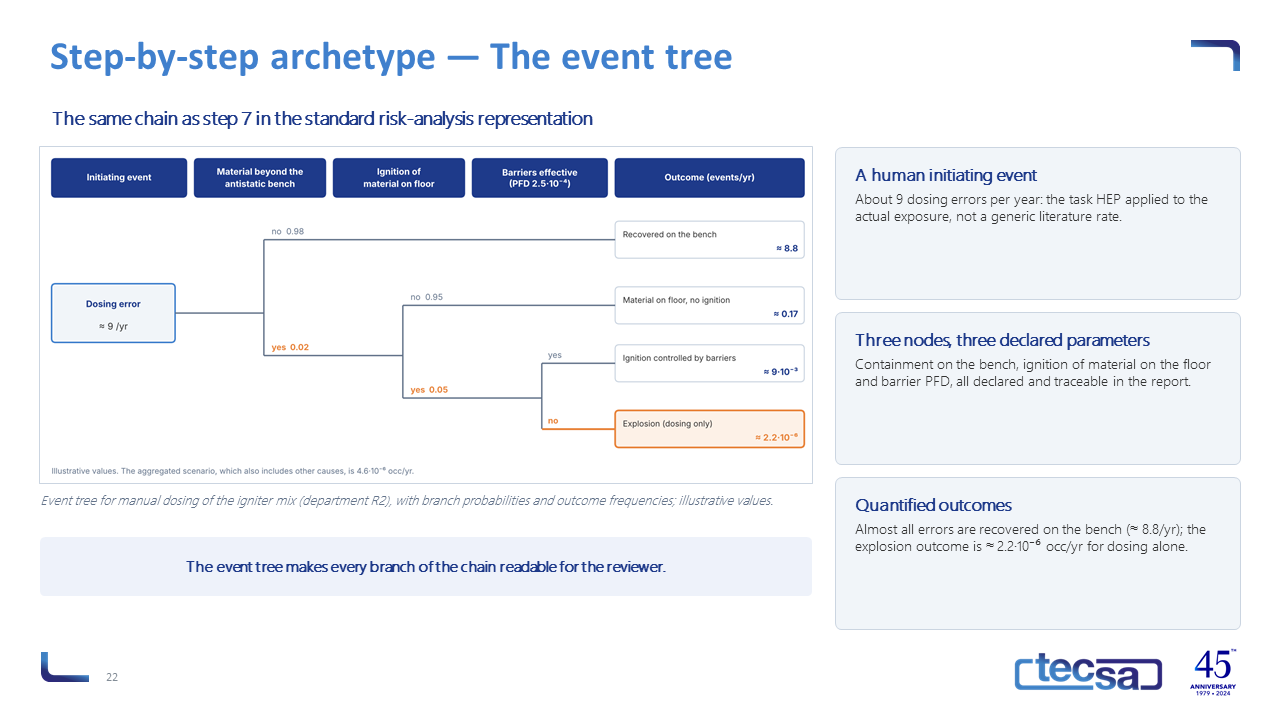
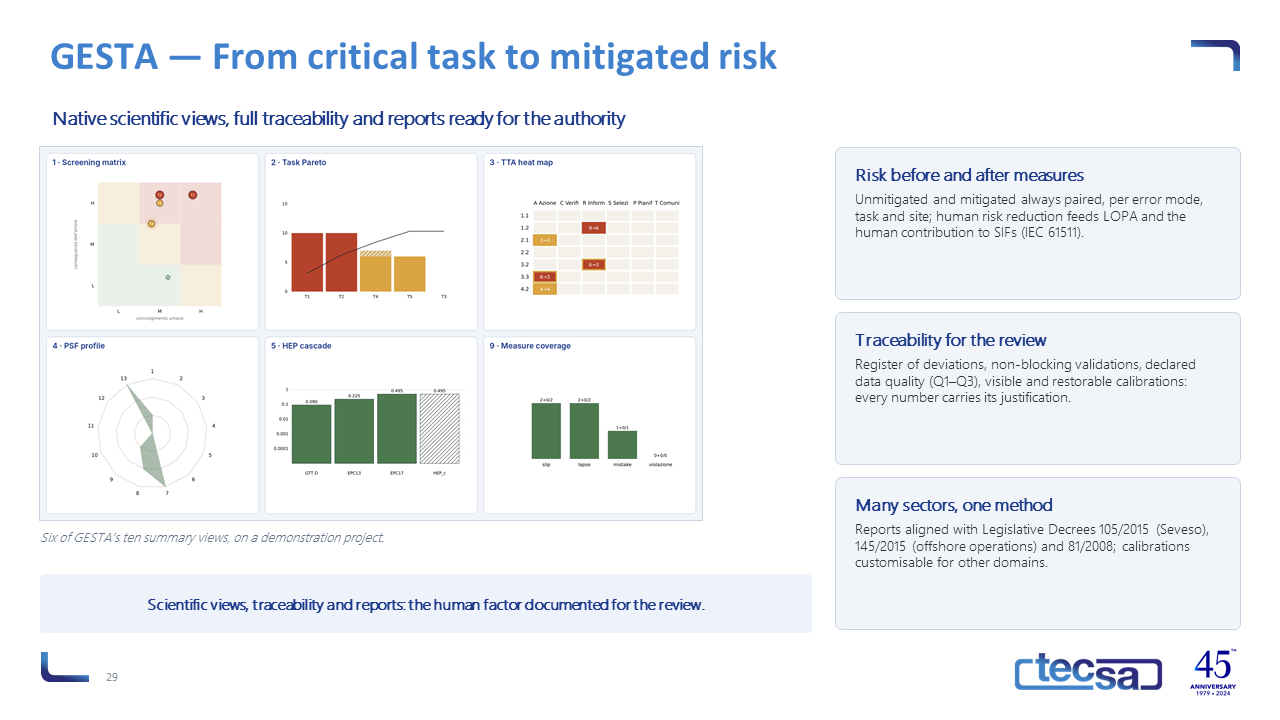
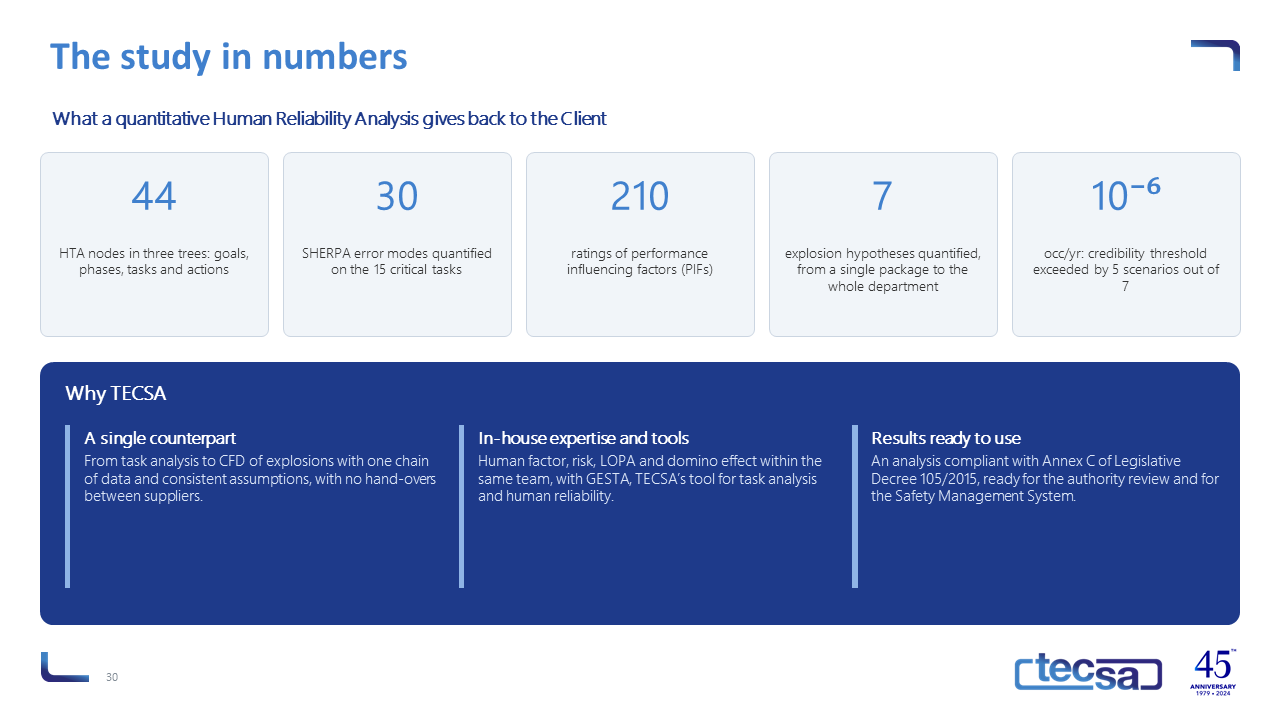
TECSA broke each operation down with Hierarchical Task Analysis (44 nodes in three trees) and, for the 15 critical tasks, used SHERPA to identify 30 error modes, assessed through 210 ratings of Performance Influencing Factors. The human error probability (HEP) derives from an explicit calibration of the PIF profile, documented in the report, and is aggregated with AND logic within the task and OR logic across the goal; applied to the actual exposure and to the conditional modifiers – containment, ignition, time at risk, barrier PFD – it returns the frequency of each scenario. A complete archetype, the sorting department, illustrates the procedure step by step.
The results
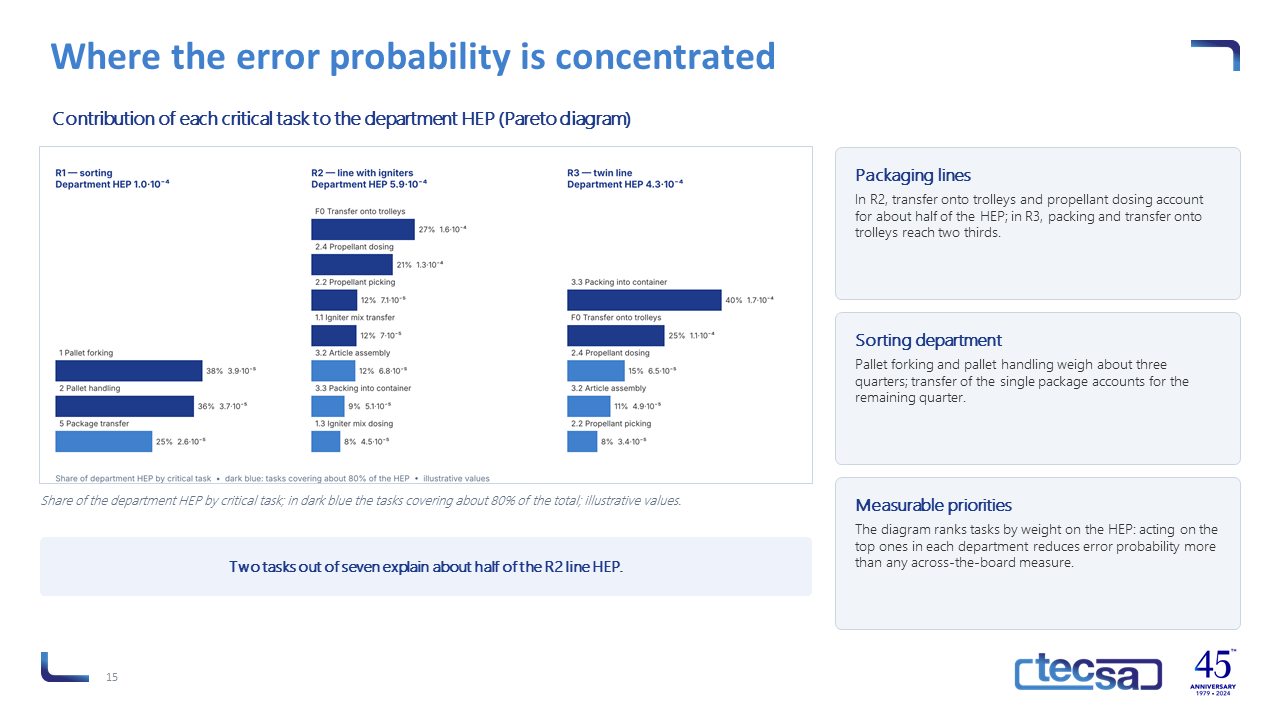
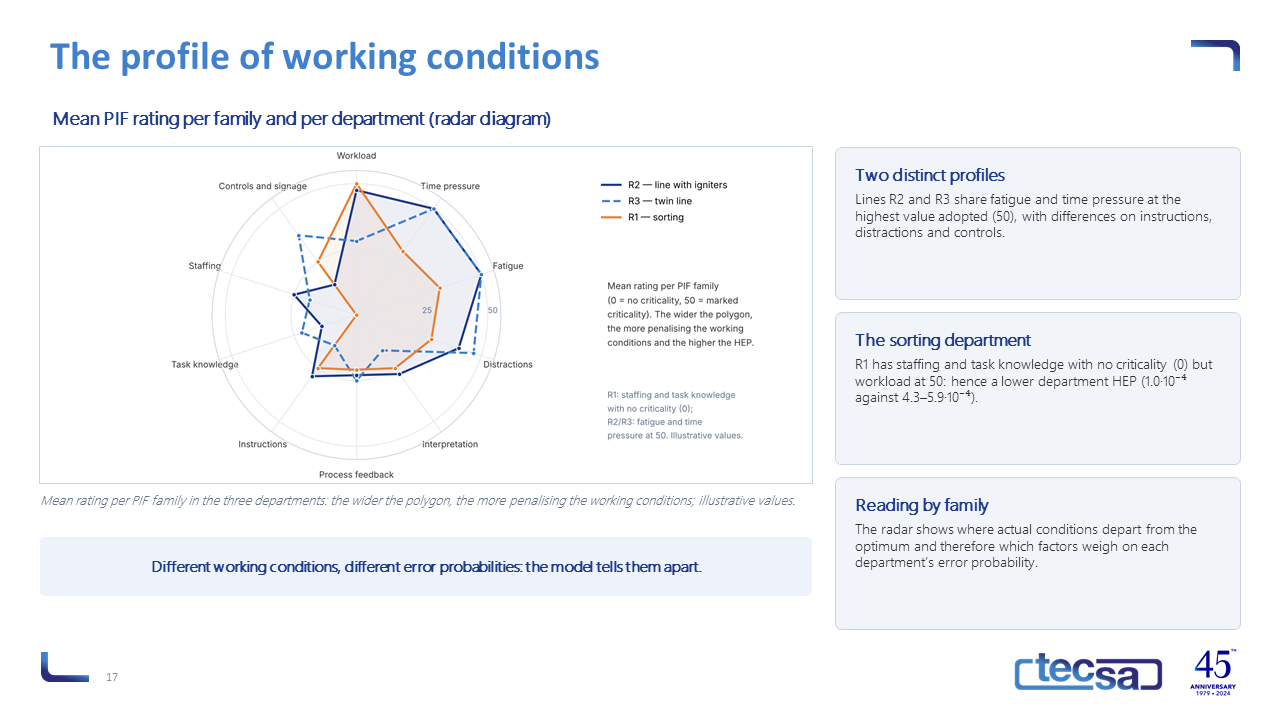
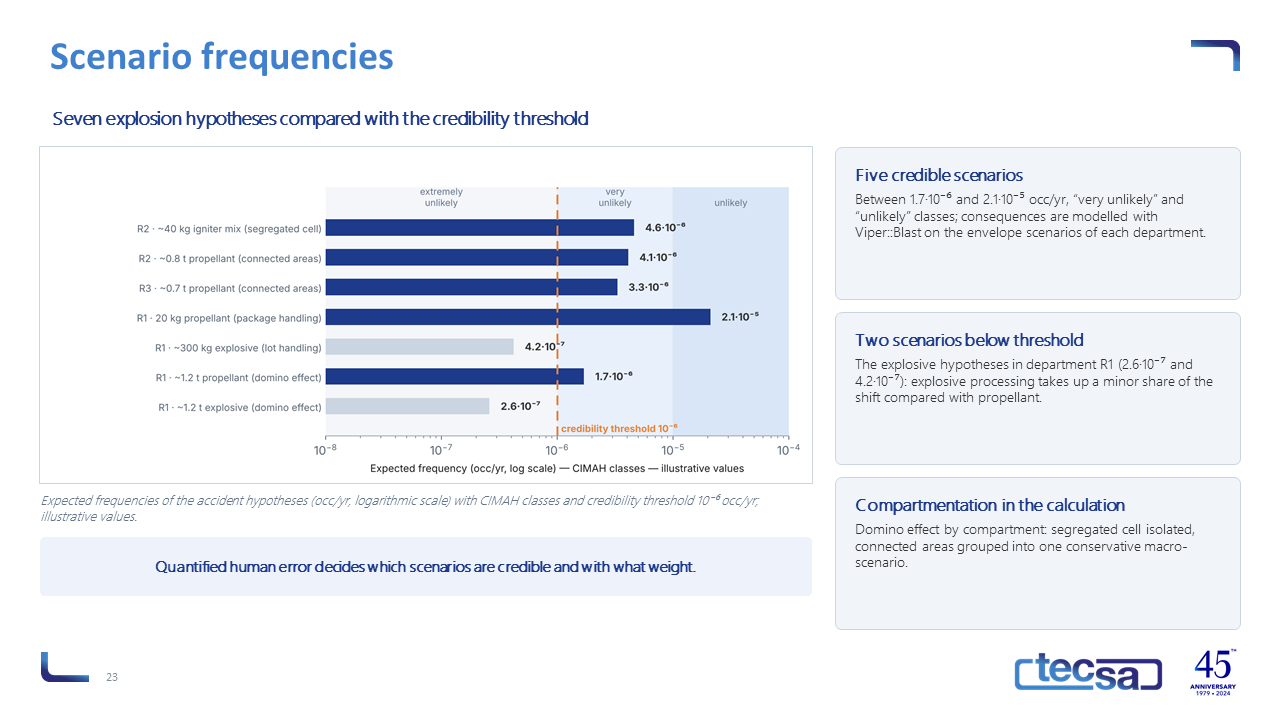
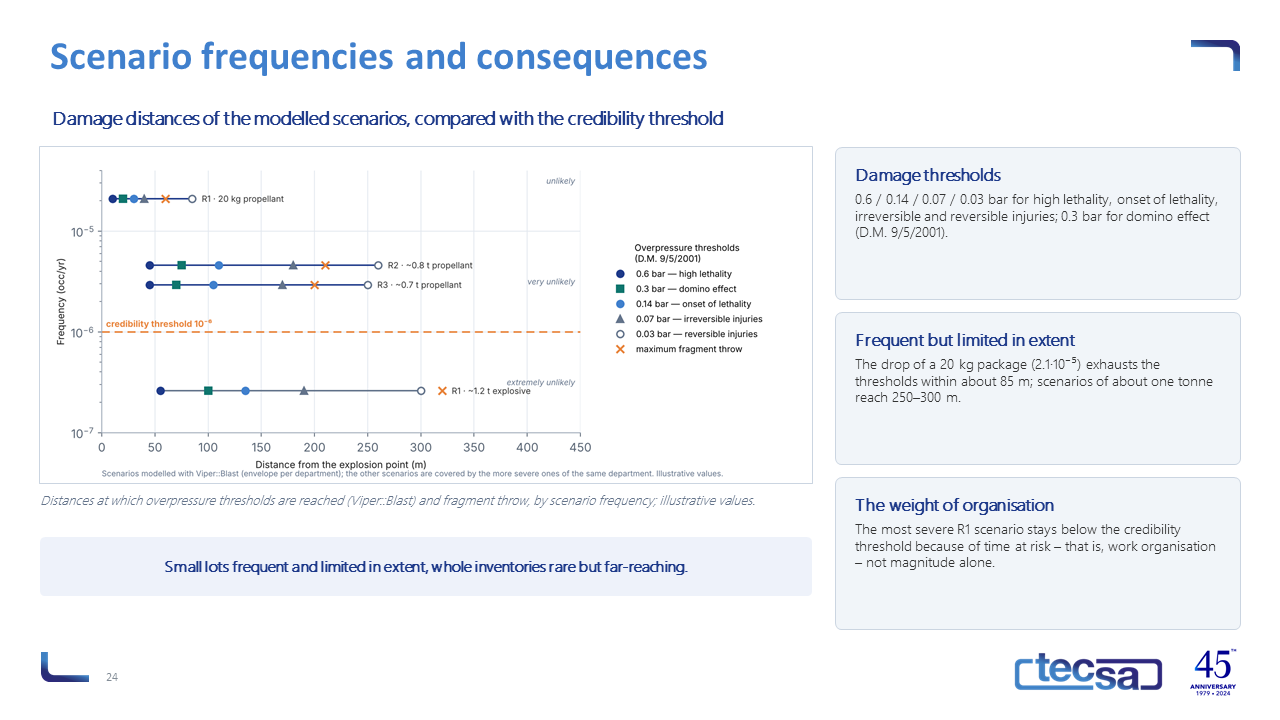
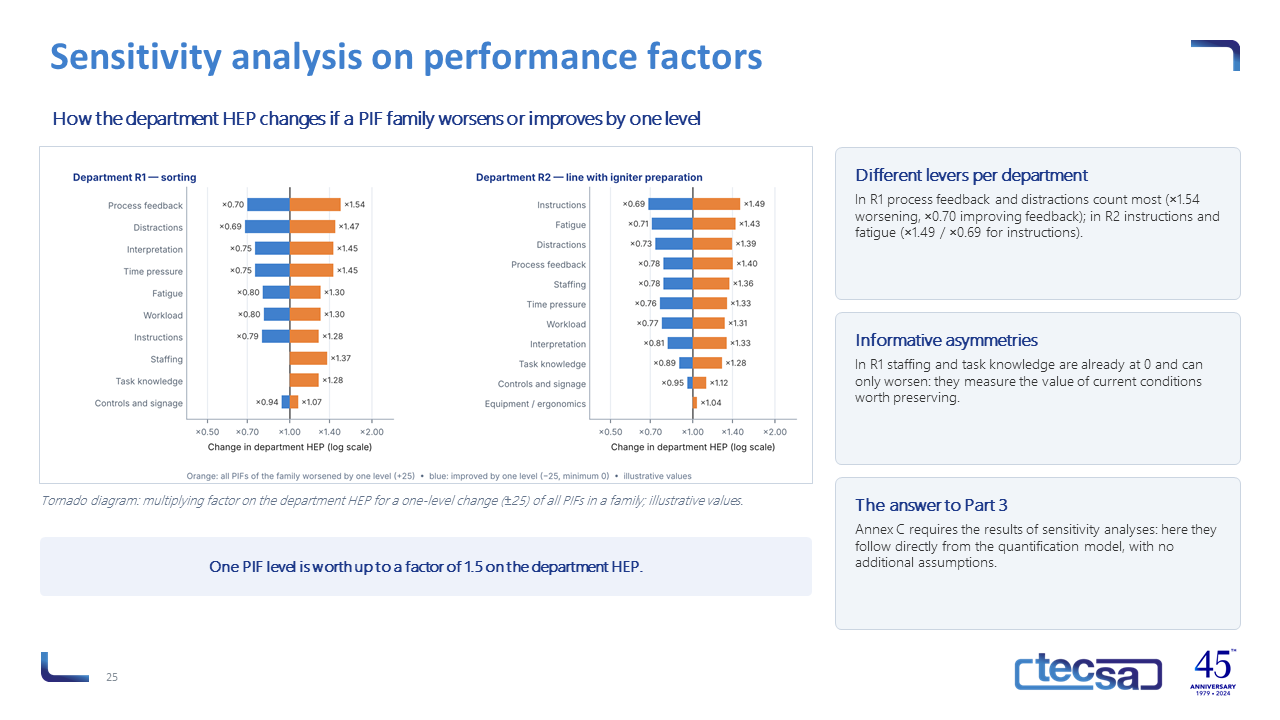
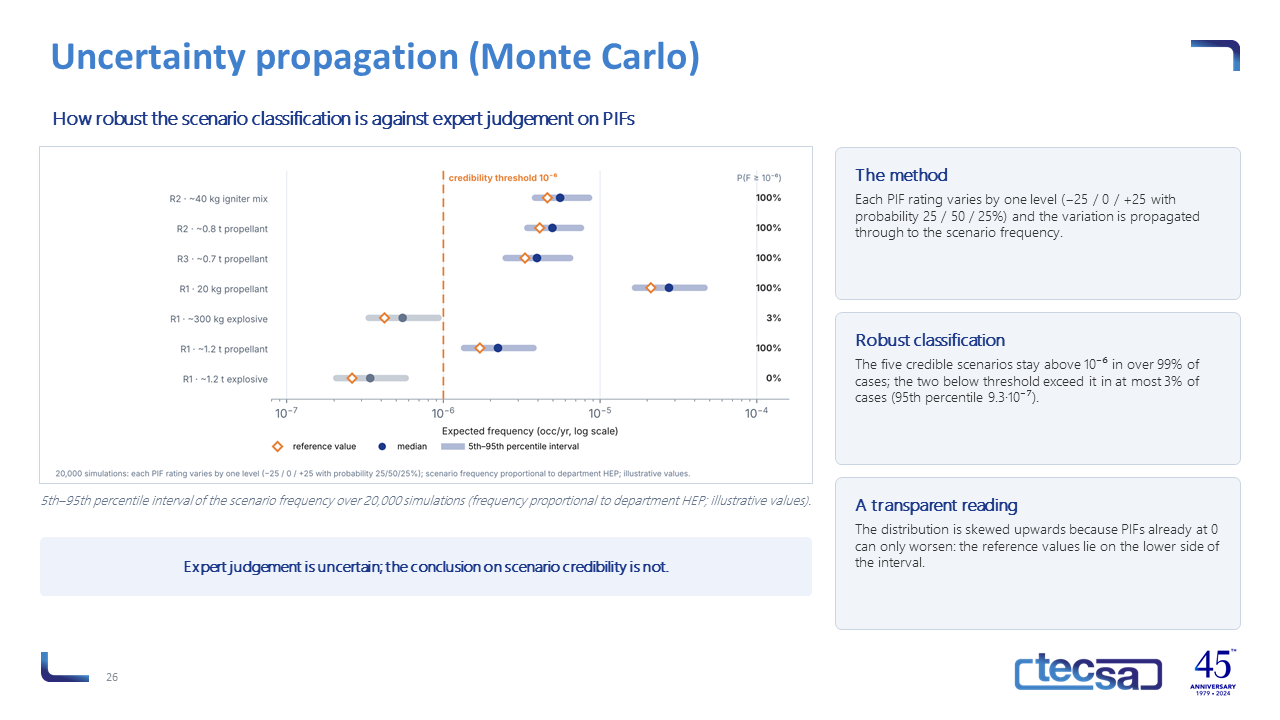
Elementary HEPs are of the order of 10⁻³–10⁻², department HEPs of the order of 10⁻⁴. Of the seven explosion hypotheses quantified, five exceed the credibility threshold of 10⁻⁶ occ/yr; the consequences of the envelope scenarios of each department were modelled with Viper::Blast. Sensitivity analysis on the PIFs and Monte Carlo uncertainty propagation confirm the robustness of the classification. Fatigue, time pressure, workload and distractions emerge as the most penalising factors: measurable prevention levers for the operator, and a verifiable calculation chain for the authority.
Why TECSA
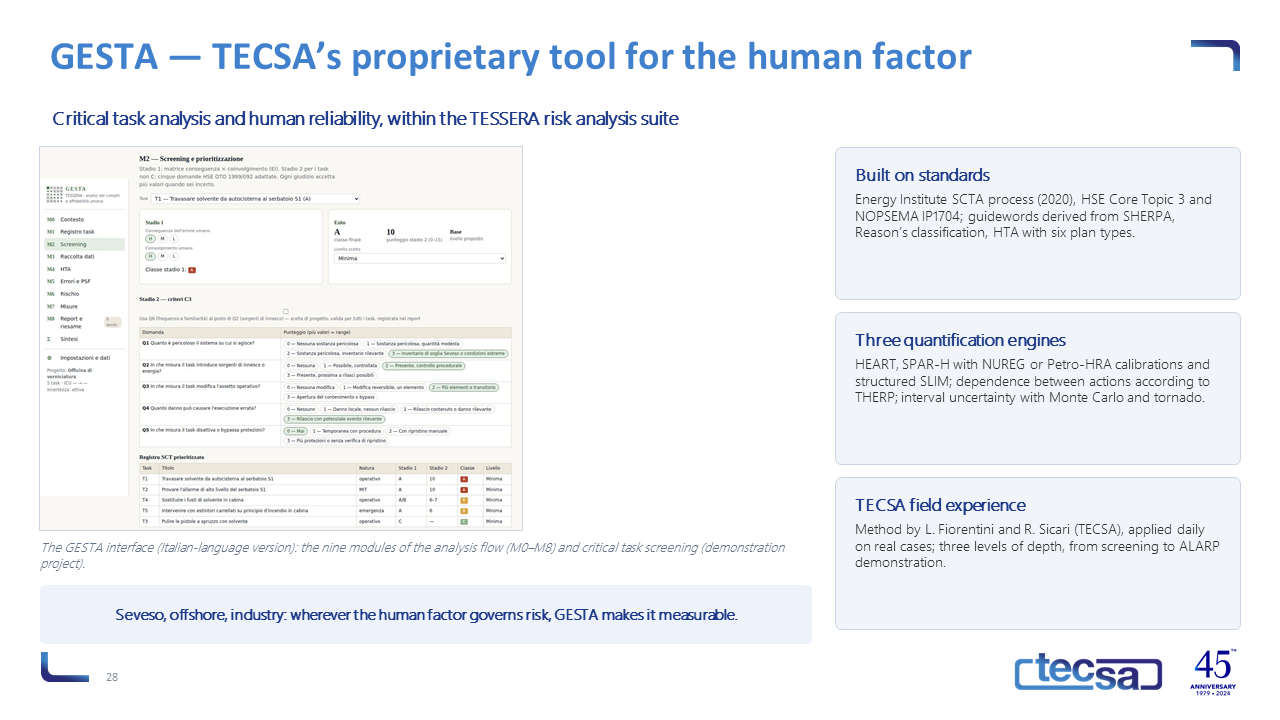
In socio-technical systems where safety depends on the operator, TECSA integrates human factor analysis, LOPA, domino effect and CFD modelling of explosions into a single chain, consistent with the requirements of Legislative Decree 105/2015. It does so with its own tools too: GESTA, the TESSERA suite module for critical task analysis and human reliability, built on international standards (Energy Institute, HSE, NOPSEMA) and applicable in Seveso, offshore and industrial settings.
The numerical values quoted are illustrative and modified to protect the Client’s confidentiality.