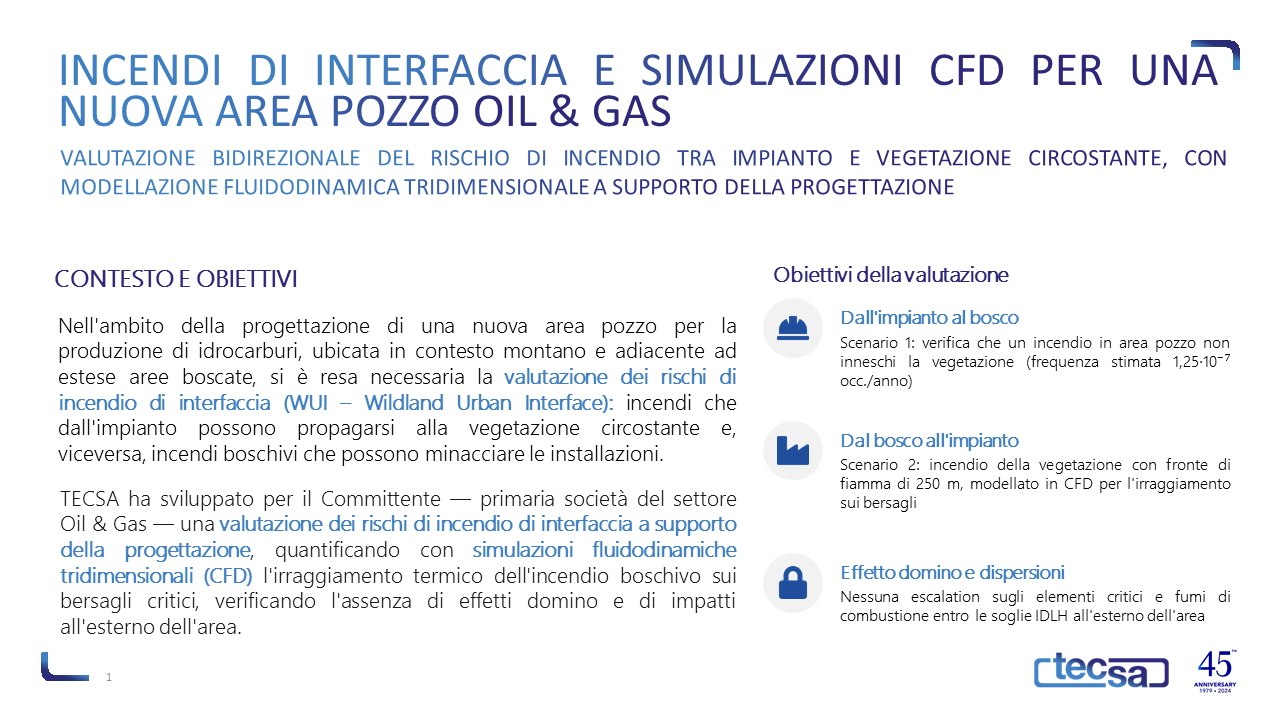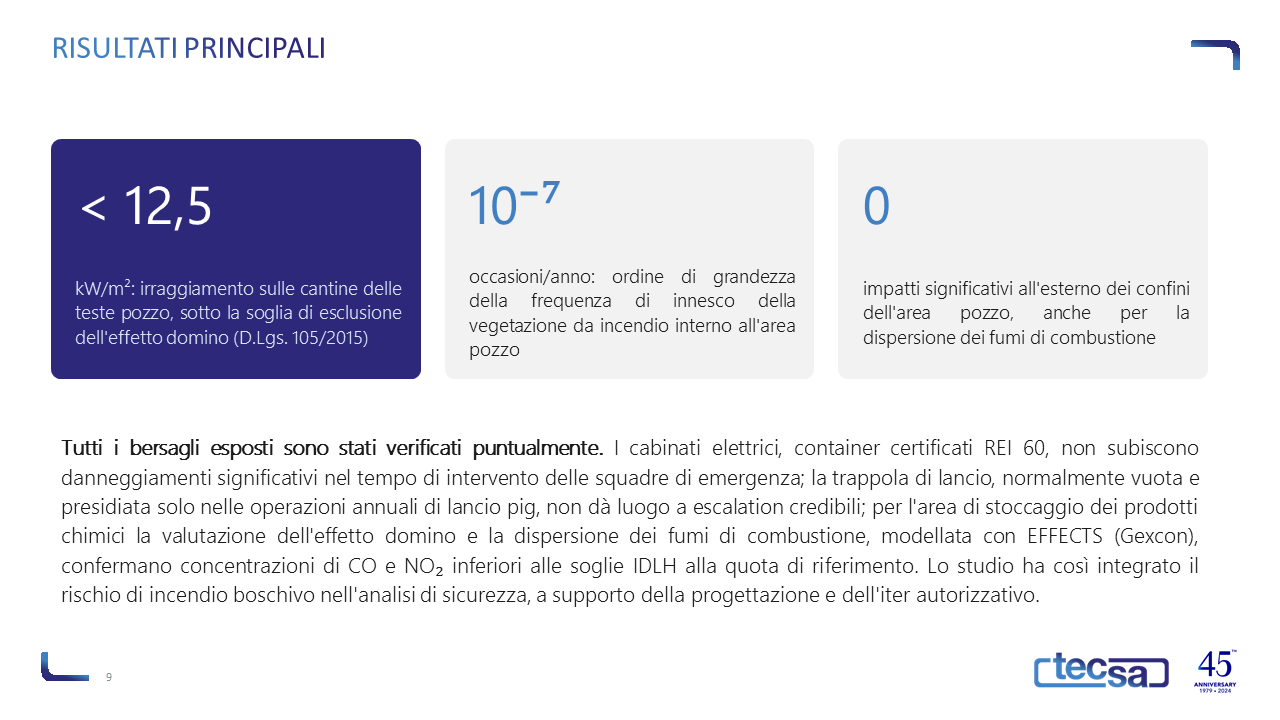
For the design of a new wellsite intended for hydrocarbon production, situated in a mountainous setting adjacent to extensive wooded areas, TECSA carried out an assessment of wildland-urban interface (WUI) fire risks (WUI – Wildland Urban Interface) for a leading company in the Oil & Gas sector, quantitatively examining both aspects of the risk: the ignition of vegetation by a fire within the wellsite area — estimated at 1.25×10⁻⁷occurrences per year, an extremely unlikely event — and the impact of a forest fire on the installations.
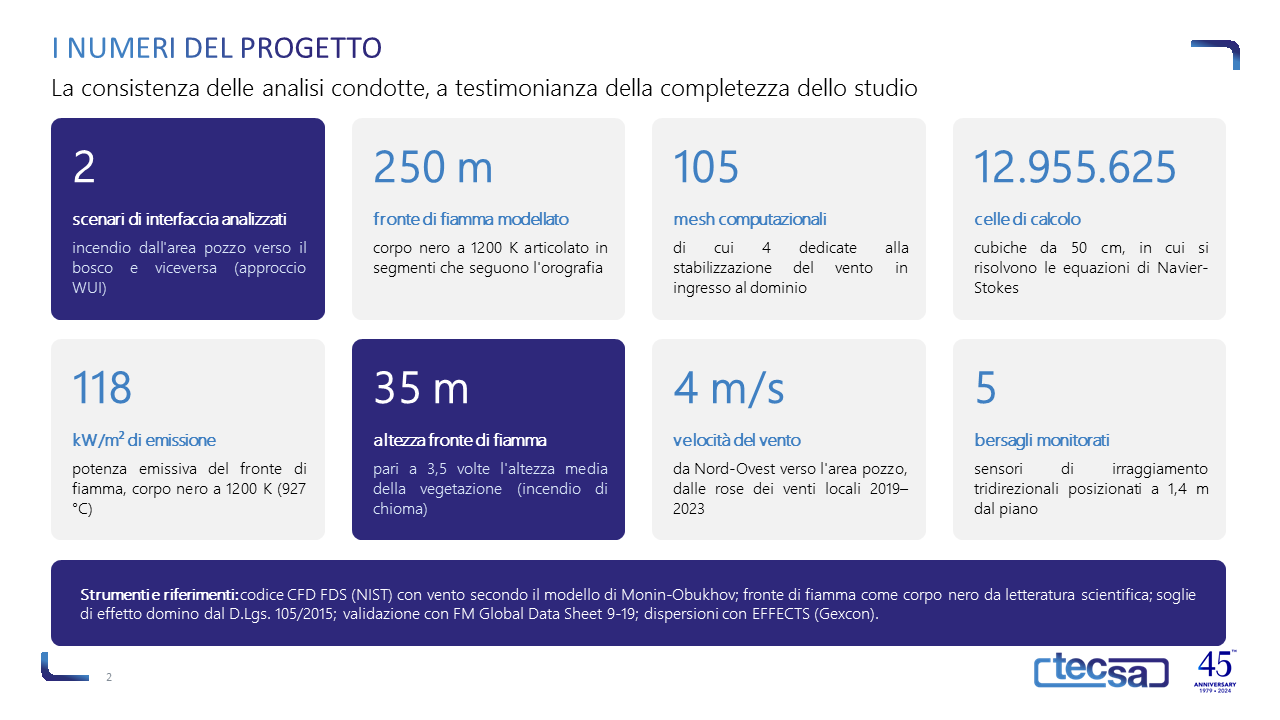
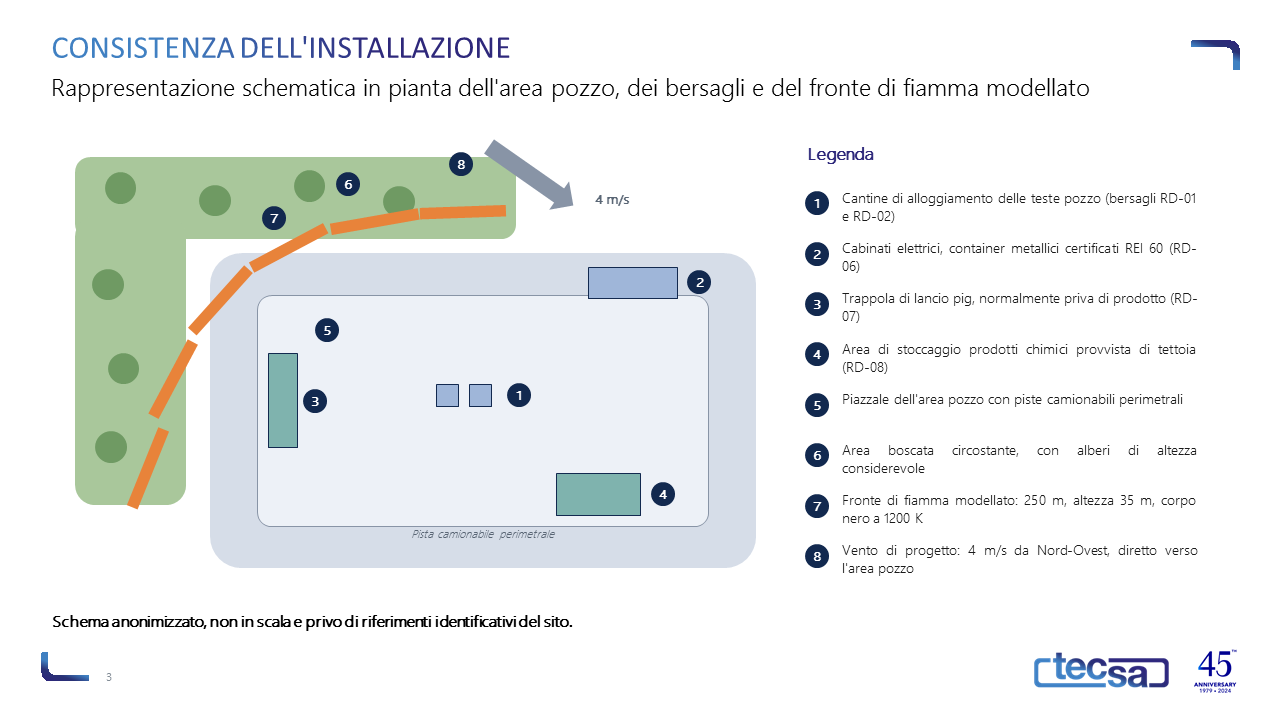
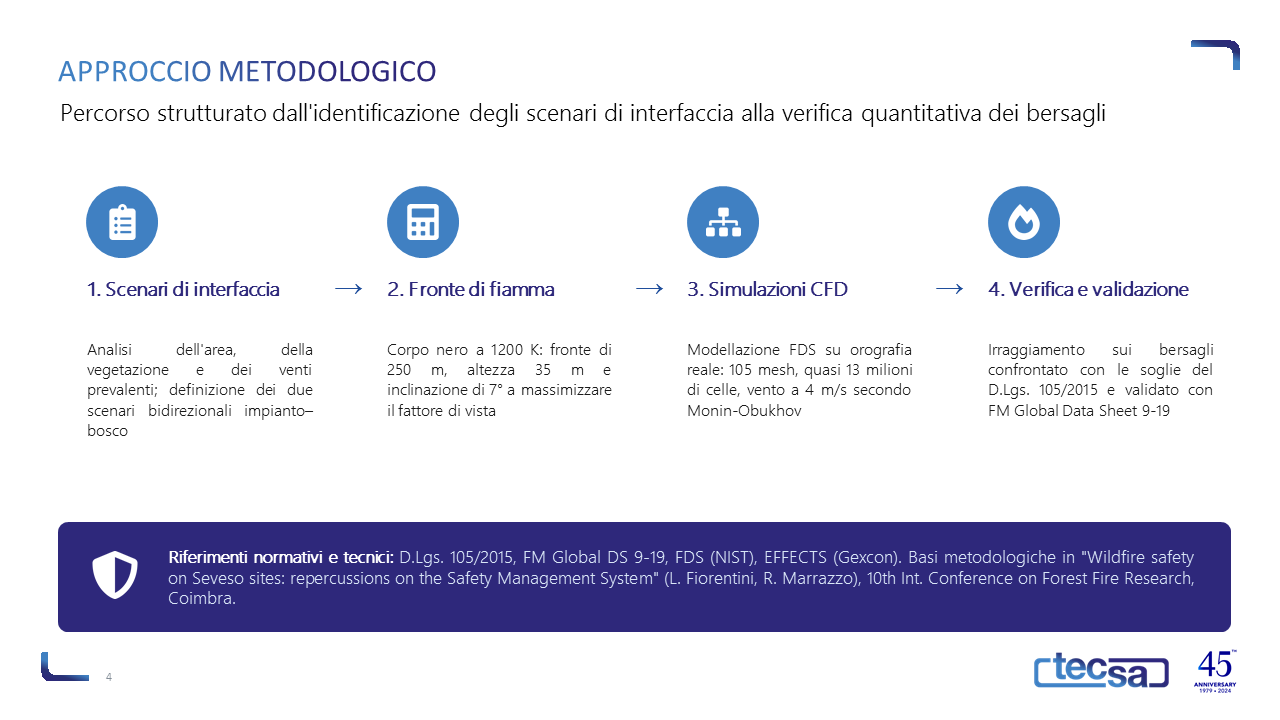
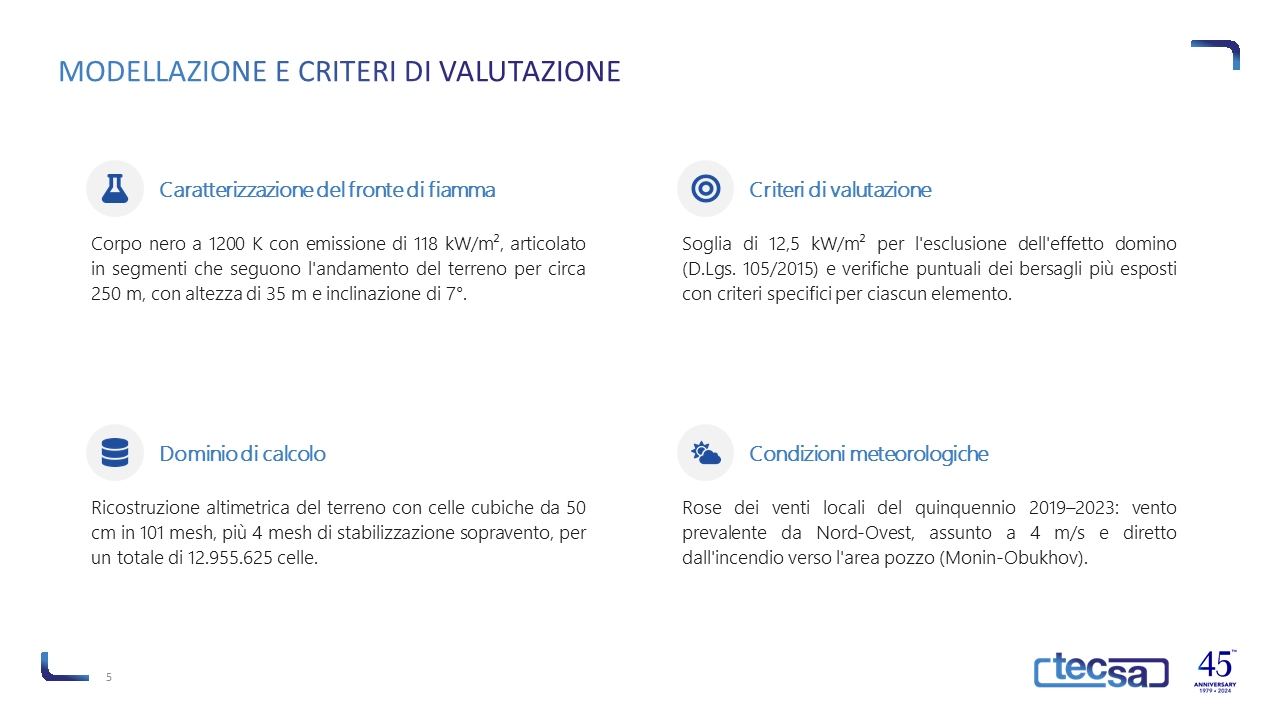
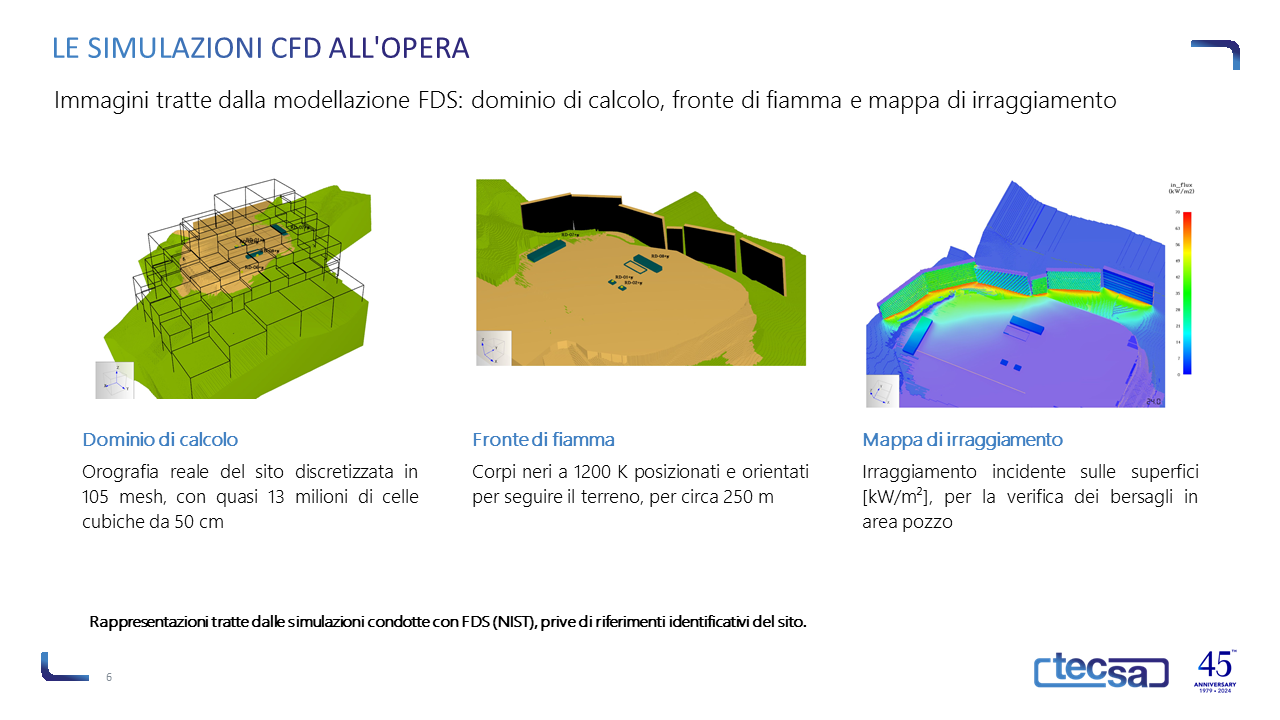
For the second scenario, a three-dimensional computational fluid dynamics (CFD) model was developed using NIST’s FDS code: the flame front was modelled as a black body at 1200 K, extending for approximately 250 m following the site’s actual topography, with a computational domain of 10⁵ mesh cells comprising over 12.9 million cells, a wind speed of 4 m/s from the prevailing direction, and radiation sensors on sensitive targets. The basis of the methodology for assessing the impact of wildfires on critical industrial installations is also presented in the scientific article “Wildfire safety on Seveso sites: repercussions on the Safety Management System” (L. Fiorentini, TECSA; R. Marrazzo, ISPRA), presented at the 10th International Conference on Forest Fire Research in Coimbra.
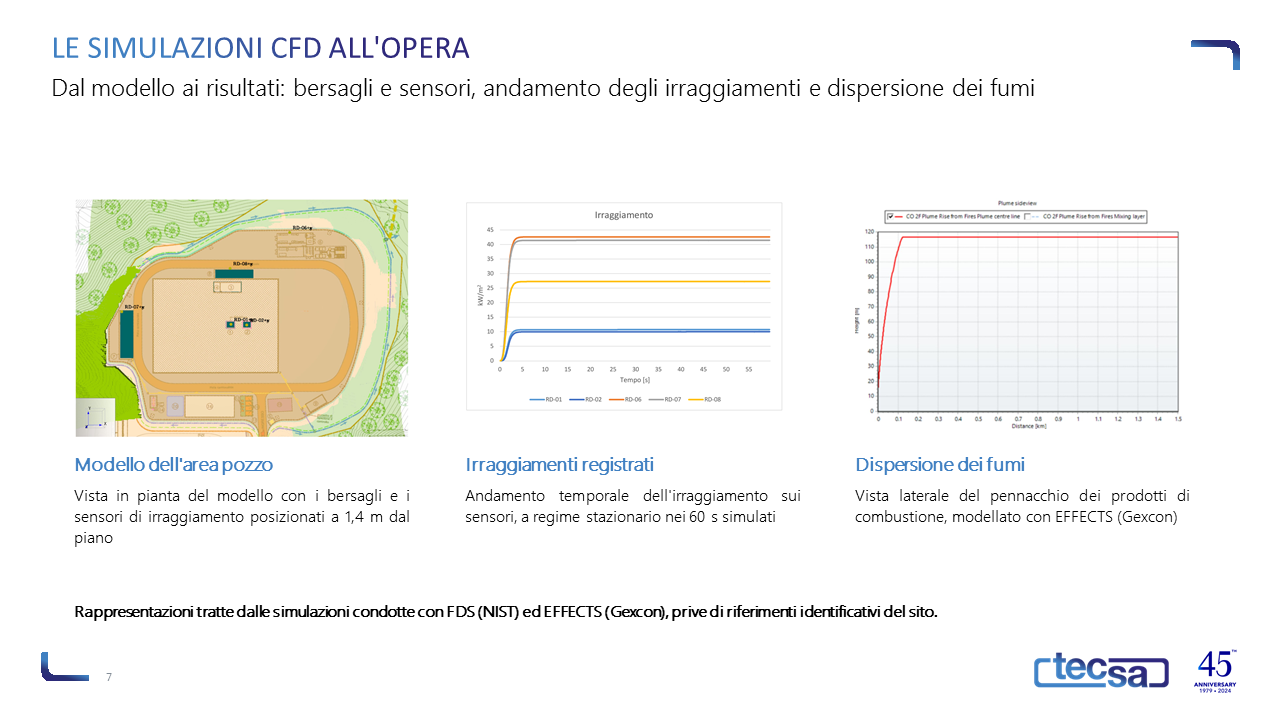
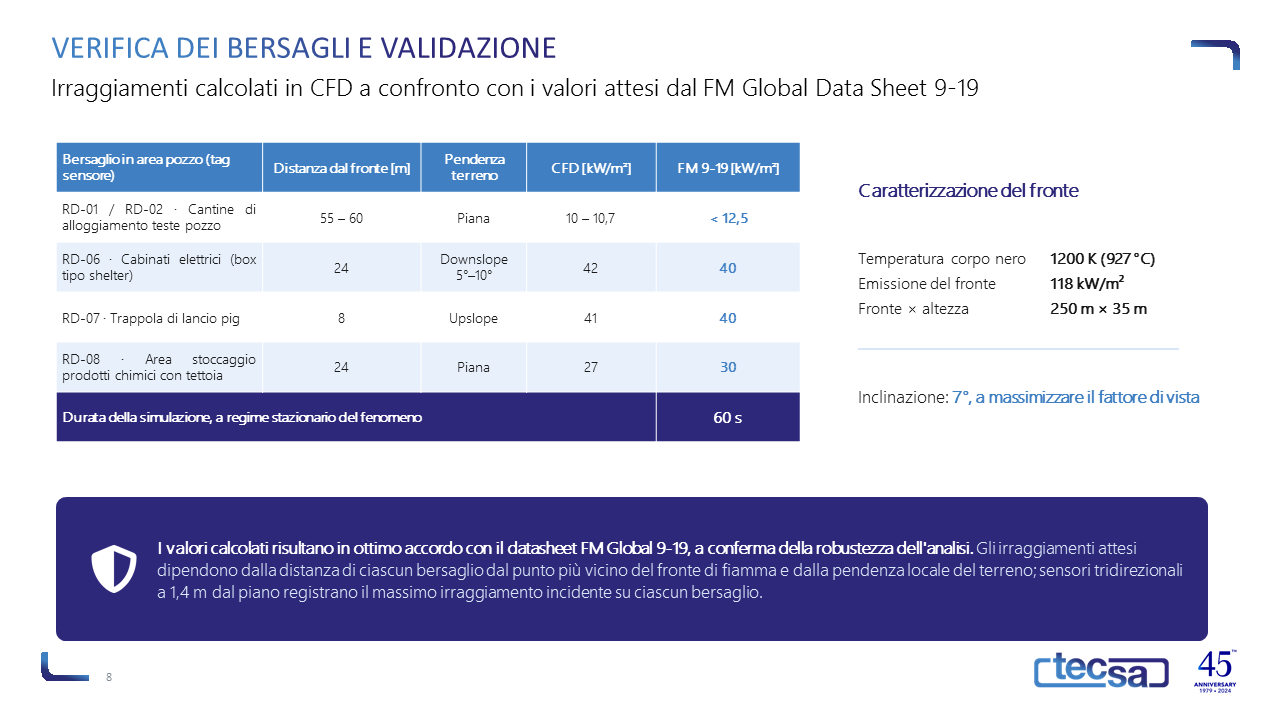
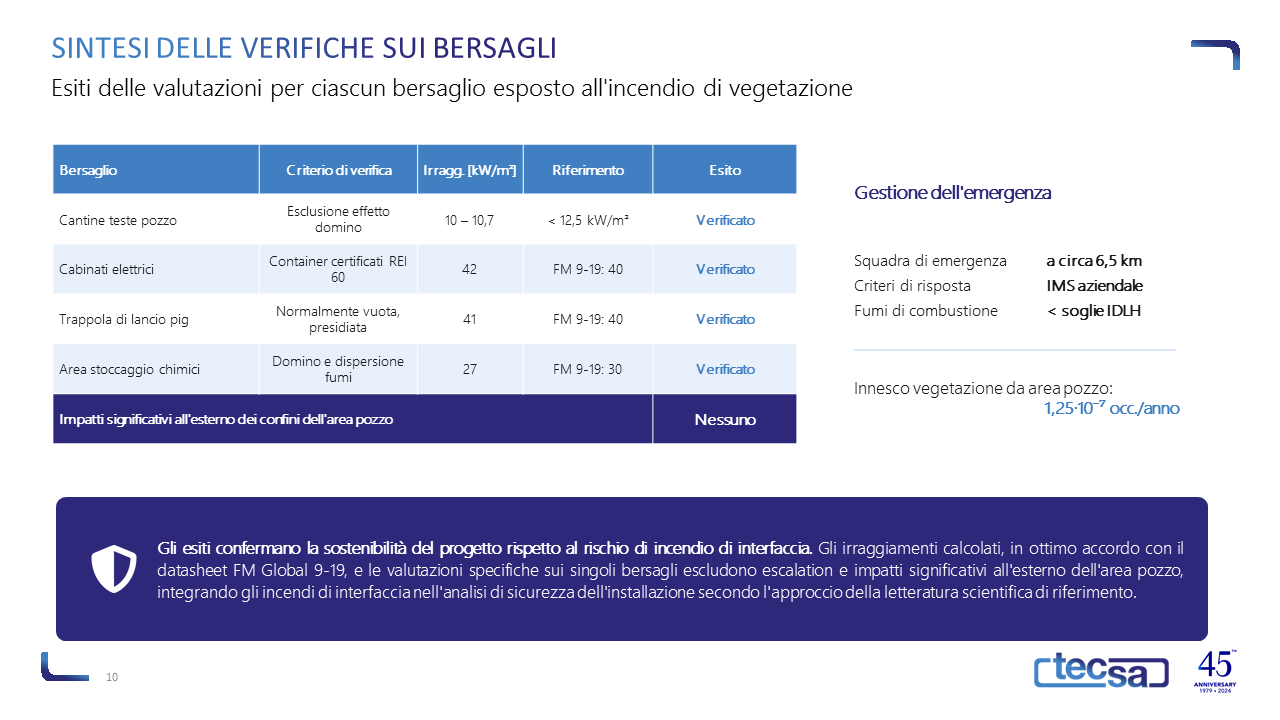
The calculated radiation levels — ranging from approximately 10 kW/m² on the wellhead vaults, below the domino effect threshold set out in Legislative Decree 105/2015, up to 42 kW/m² on the most exposed targets — were found to be in excellent agreement with the FM Global 9-19 datasheet. Detailed checks on individual targets and the analysis of combustion smoke dispersion, with concentrations below IDLH thresholds, ruled out escalation and significant impacts outside the well area, thereby integrating the risk of forest fire into the safety analysis to support the design and authorisation process.