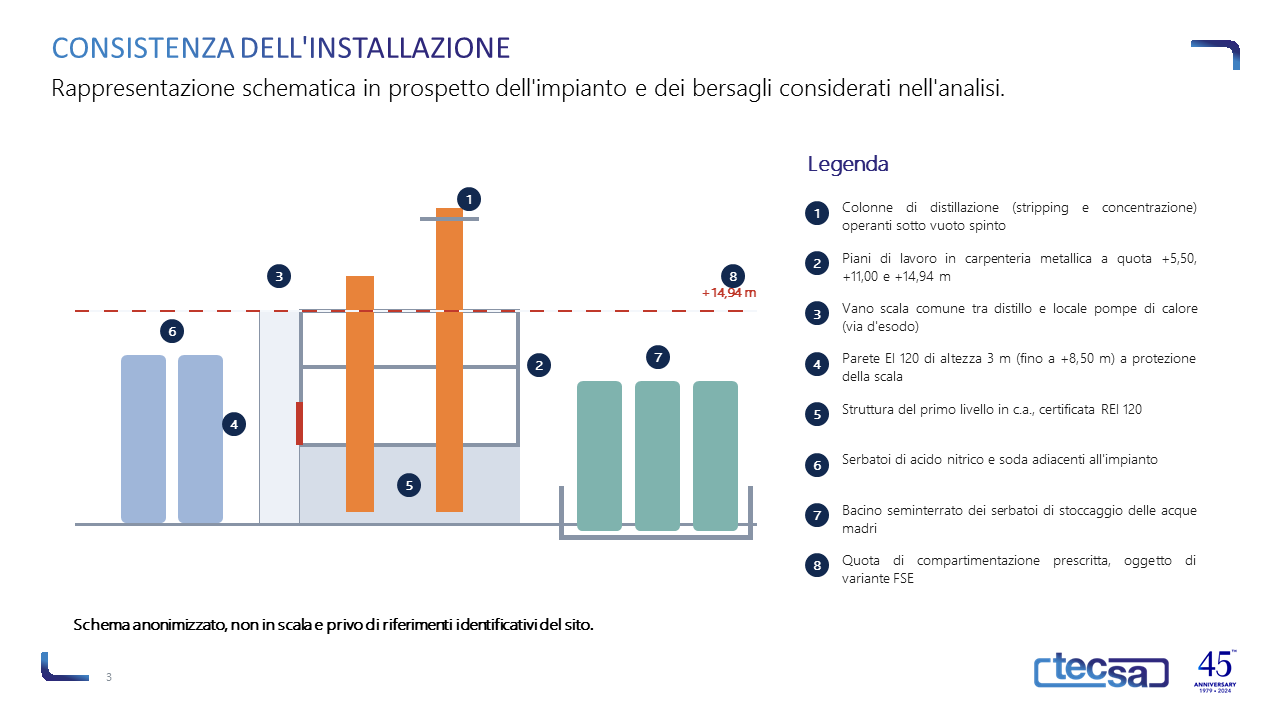
As part of the fire prevention process for a new ethyl alcohol distillation plant at a pharmaceutical facility (an activity subject to Presidential Decree 151/2011), the Fire Brigade’s fire safety compliance certificate stipulated that the R/EI 120 fire-resistant compartments should be extended up to a height of +14.94 m. However, checks carried out during the detailed design phase highlighted structural implementation issues that were difficult to resolve — the sail effect and increased wind loads, increased seismic forces at height, and invasive work on existing foundations and structures — making it necessary to demonstrate that an equivalent level of safety had been achieved through alternative measures.
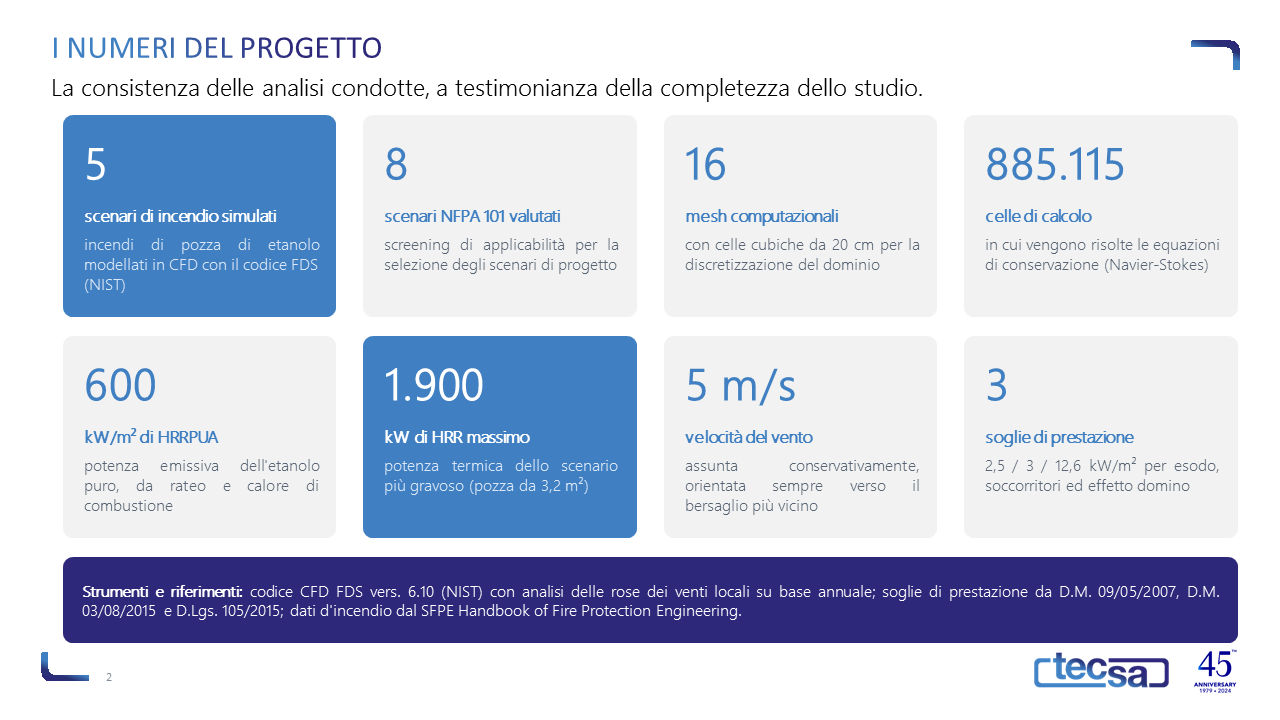
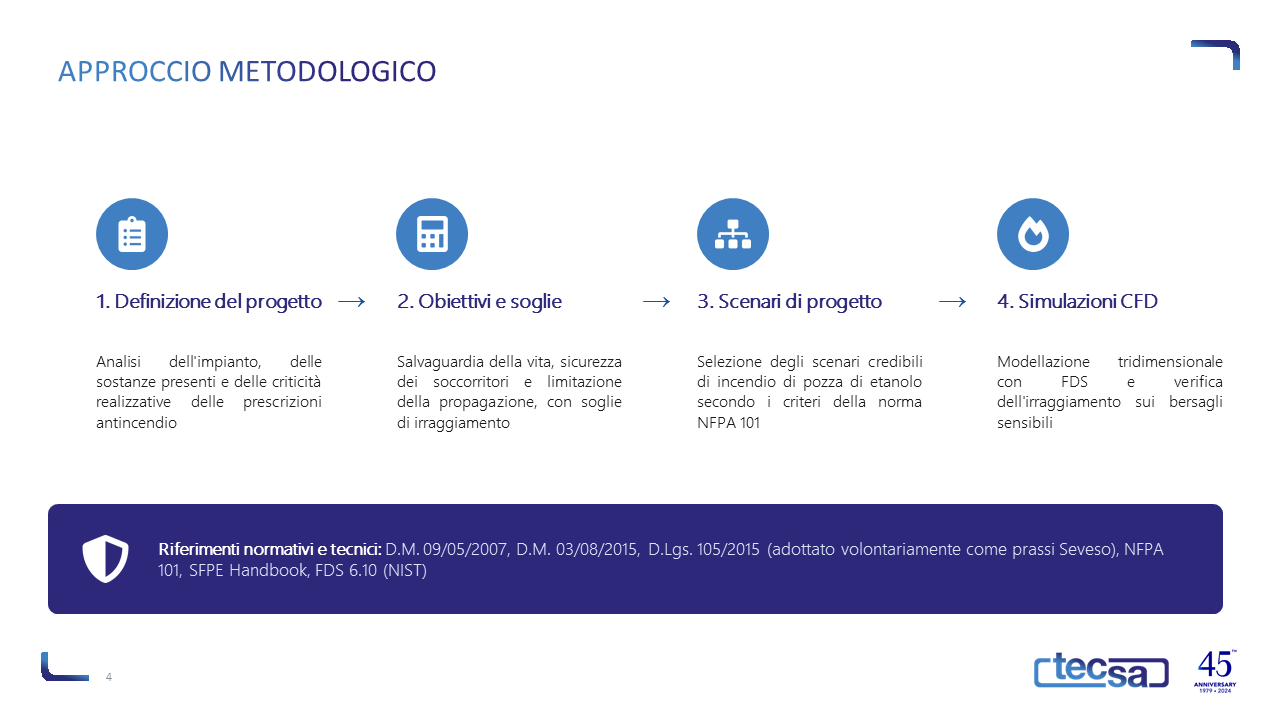
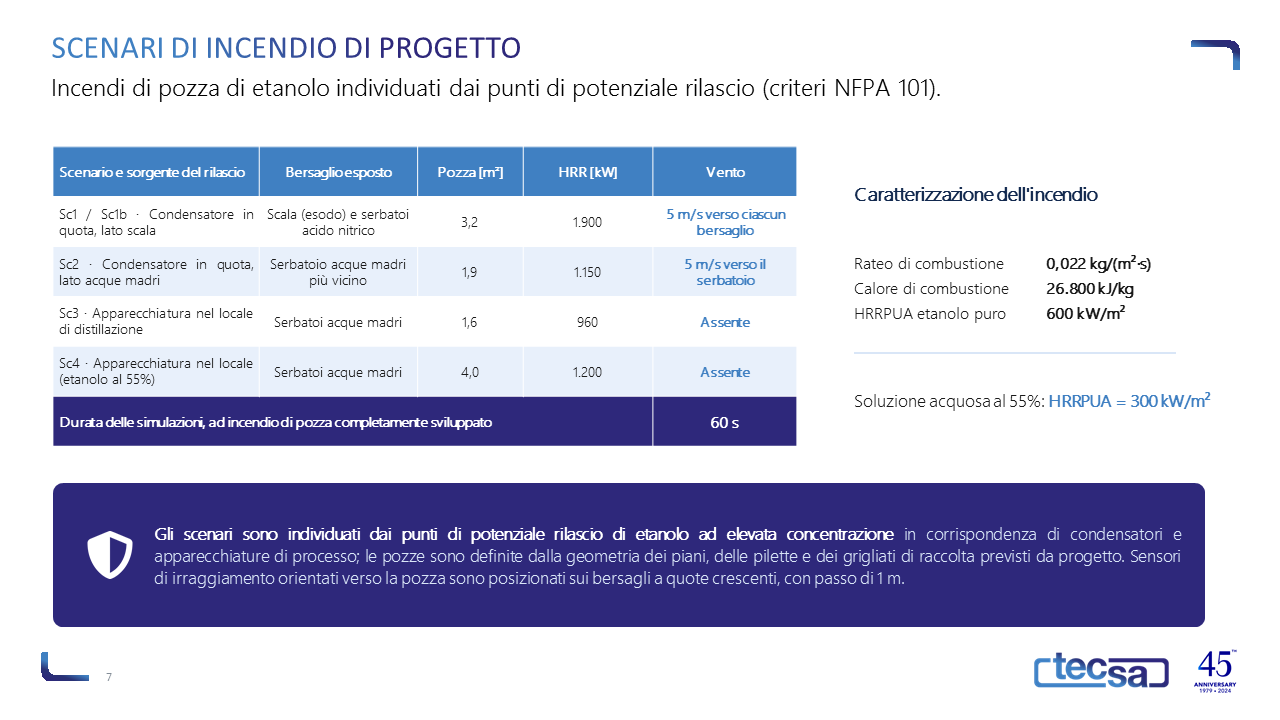
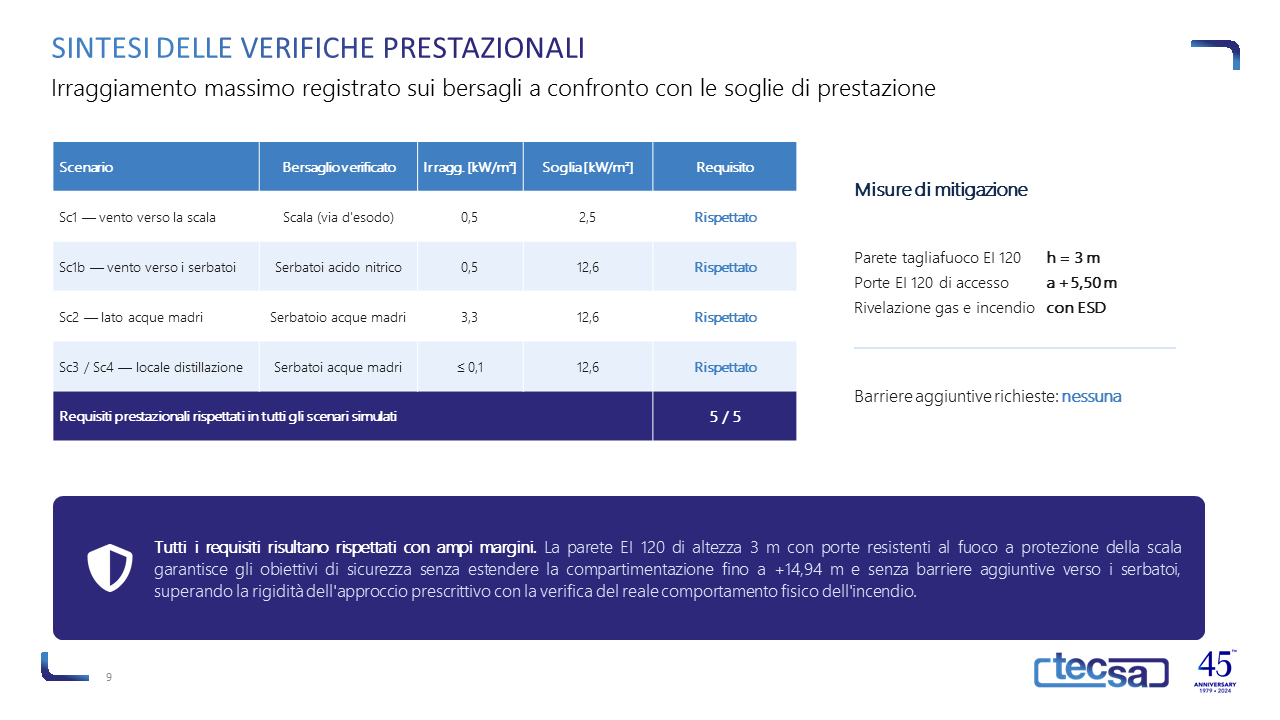
The study, developed by TECSA as a Technical Variation Report, applied the Fire Safety Engineering approach in accordance with the criteria of the Ministerial Decree of 9 May 2007: identification of safety objectives (protection of life, safety of rescue personnel, limitation of fire spread), definition of performance thresholds in terms of thermal radiation (2.5 kW/m² for occupants during evacuation, 3 kW/m² for rescue personnel, 12.6 kW/m² for the domino effect, in accordance with the Ministerial Decree of 3 August 2015 and Legislative Decree 105/2015, voluntarily adopted as a reference standard), identification of design fire scenarios in accordance with the criteria of NFPA 101, and three-dimensional computational fluid dynamics (CFD) modelling using NIST’s FDS code. Five ethanol pool fire scenarios were simulated, with a computational domain comprising 16 meshes and over 885,000 cells, conservative wind conditions (5 m/s, directed towards the nearest target, following an analysis of local wind rose data) and radiation sensors positioned on sensitive targets: the escape route and the adjacent tanks.
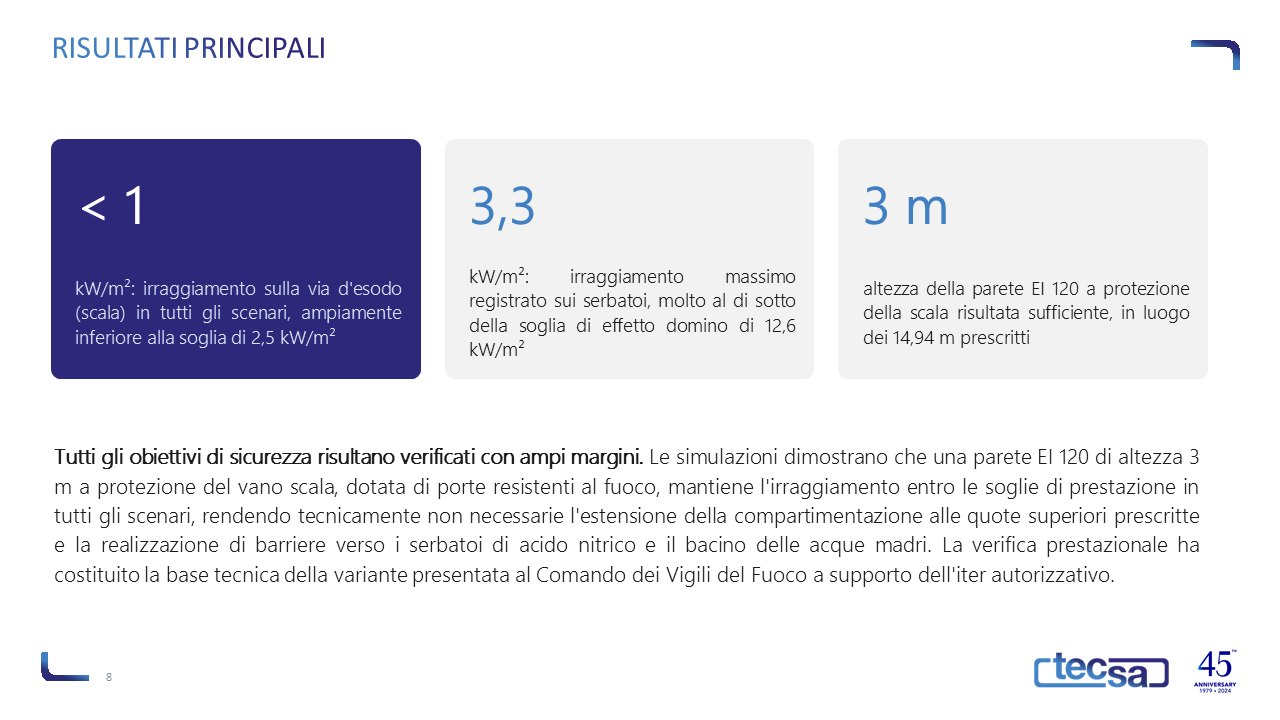
The analysis demonstrated that the radiant heat incident on the targets never exceeds a few kW/m², with a maximum of 3.3 kW/m² compared to the domino effect threshold of 12.6 kW/m², and values consistently below 1 kW/m² along the escape route. A 3-metre-high EI 120 wall protecting the stairwell, fitted with fire-resistant doors, proved sufficient to ensure compliance with all safety objectives, making it technically unnecessary to extend the fire compartmentation to the prescribed heights or to install additional barriers towards the adjacent tanks. The study thus overcame the rigidity of the prescriptive approach by verifying the actual physical behaviour of the fire and formed the technical basis for the variation submitted to the Command, in support of the project’s authorisation process.