Context
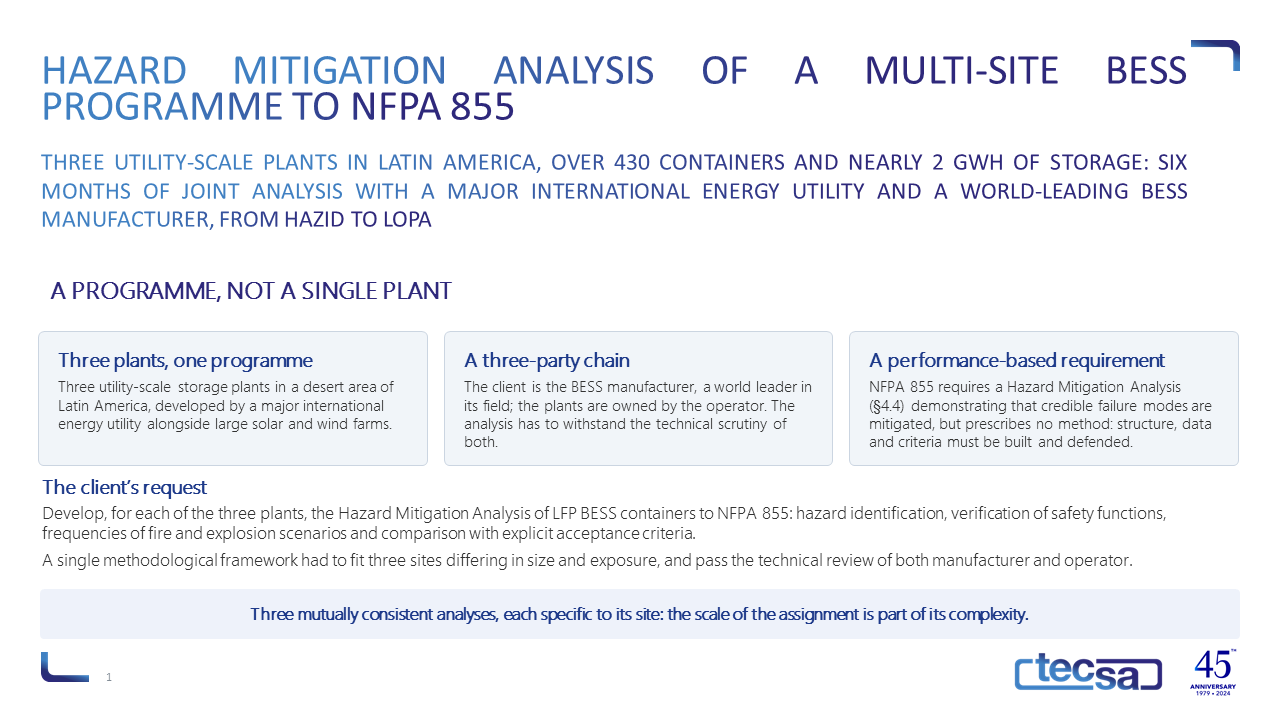
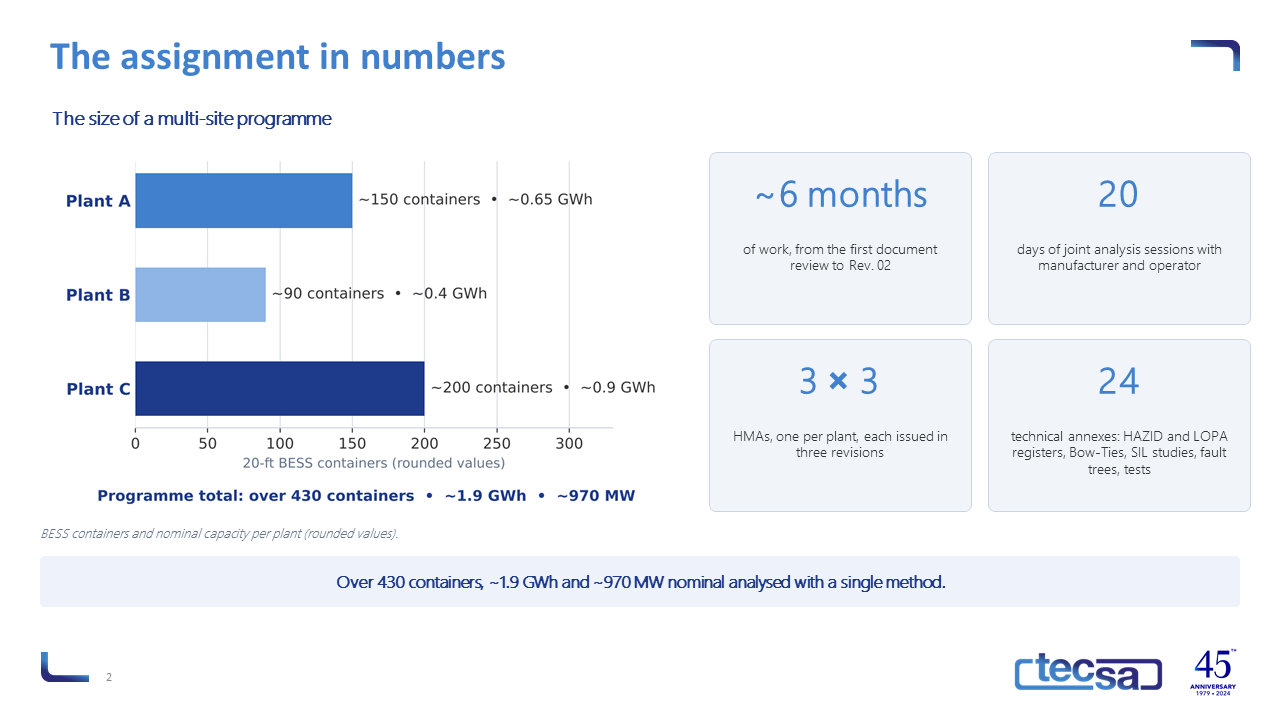
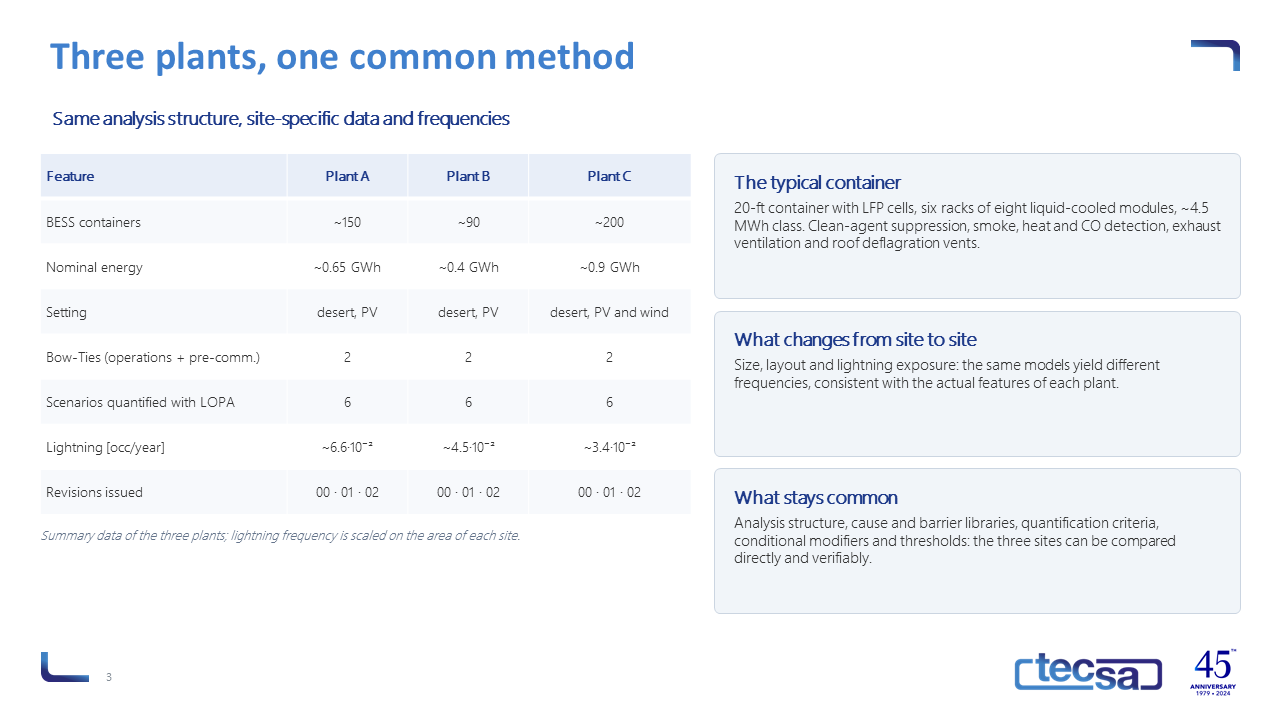
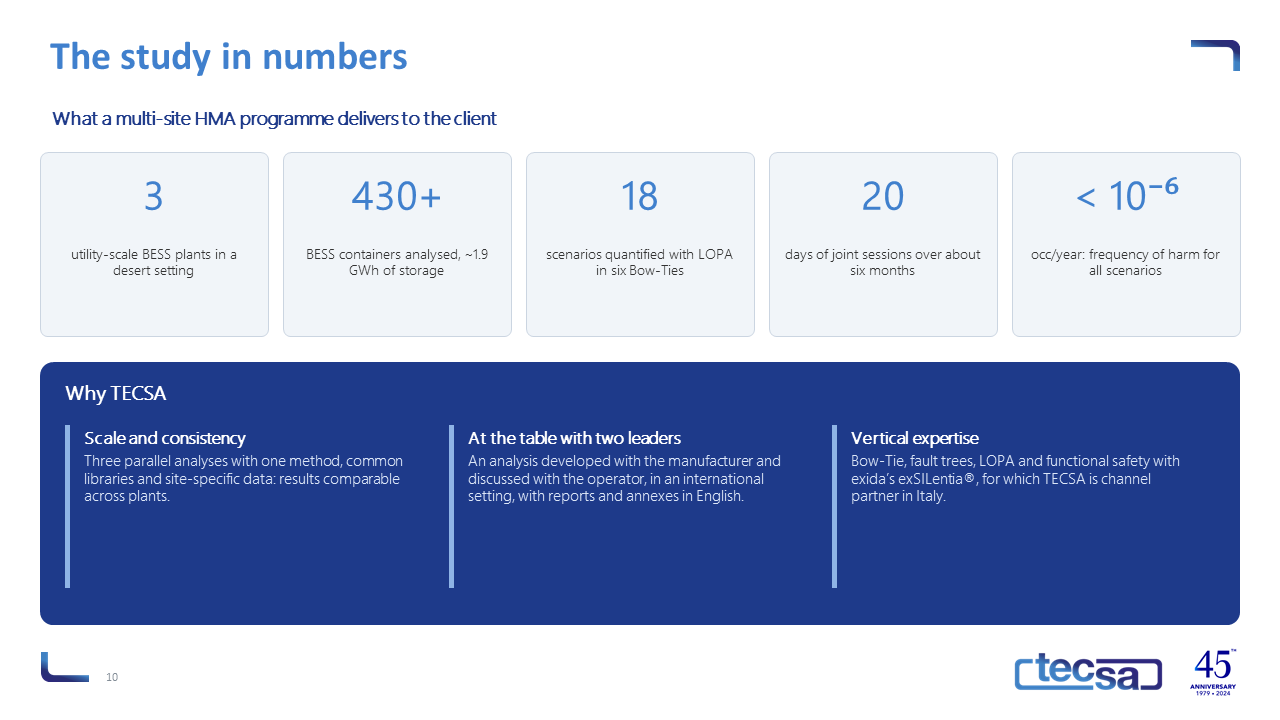
A world-leading manufacturer of battery energy storage systems commissioned TECSA to deliver the Hazard Mitigation Analysis required by NFPA 855 for three utility-scale BESS plants that a major international energy utility is building in a desert area of Latin America, alongside large solar and wind farms. The programme covers over 430 20-ft containers with LFP cells, for about 1.9 GWh of nominal capacity. The challenge was not only technical: a single methodological framework had to fit three sites differing in size and exposure, and pass the technical review of both the manufacturer, as client, and the operator, as plant owner.
Approach
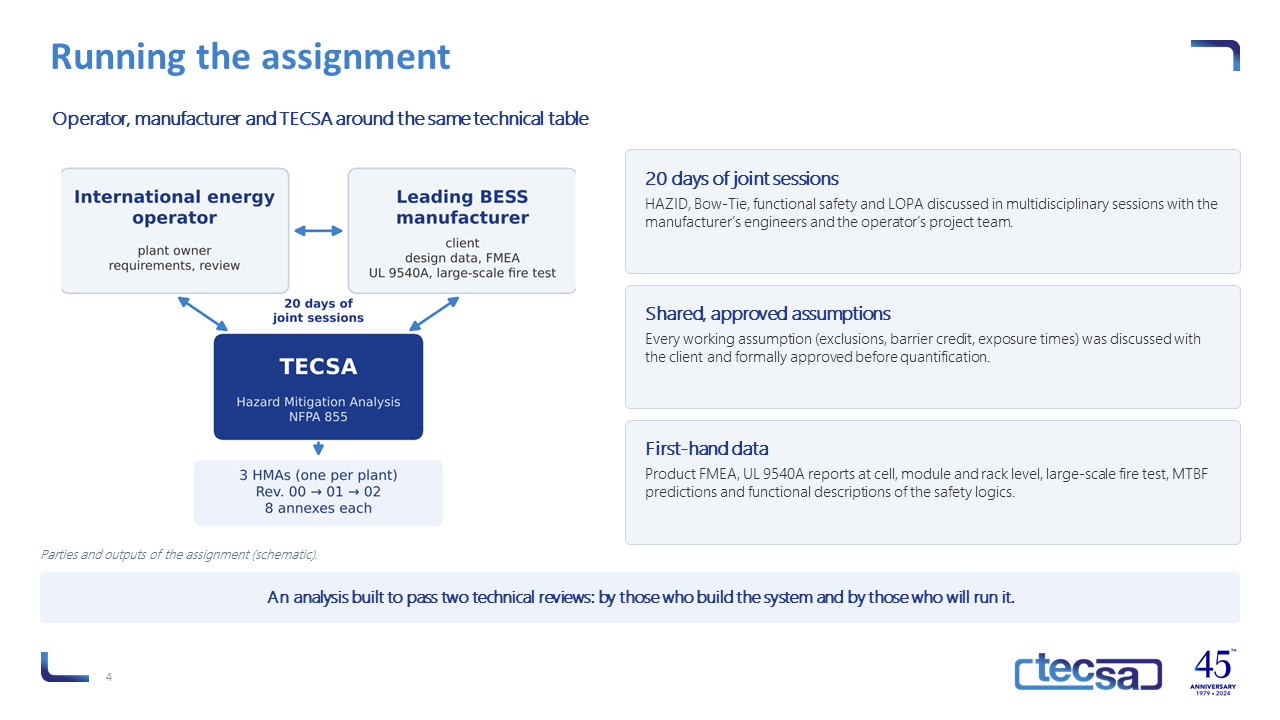
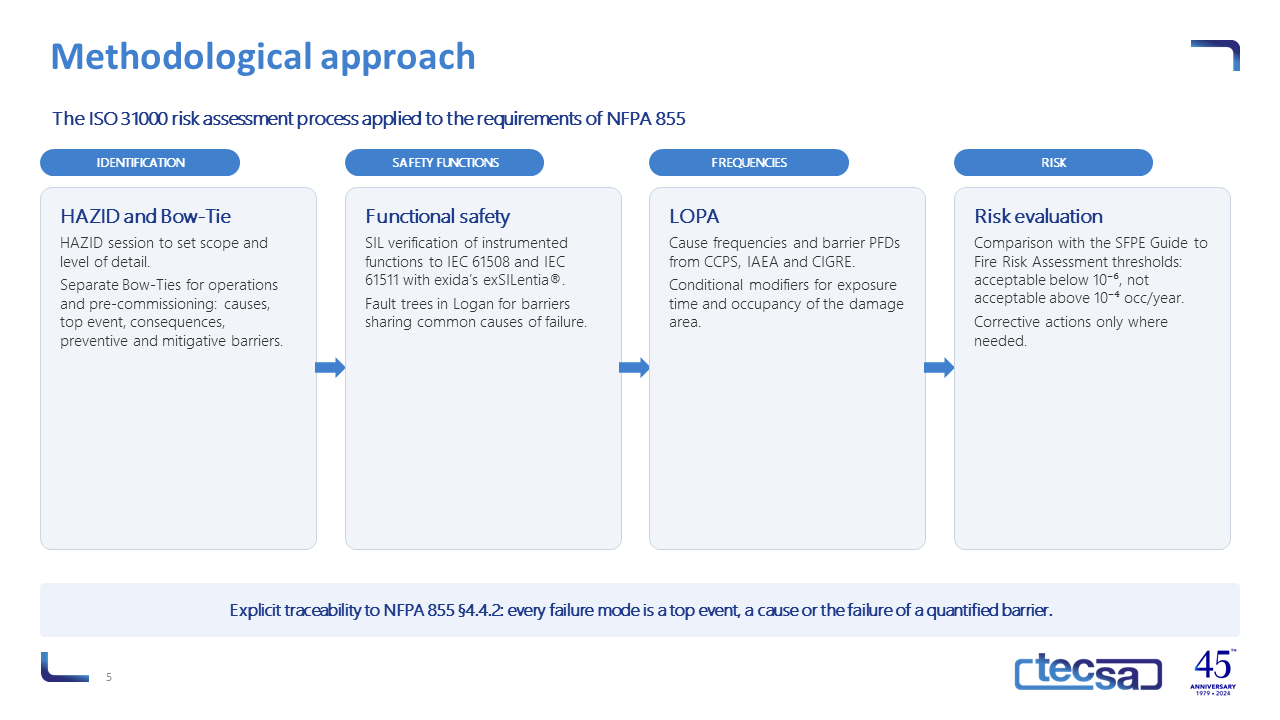
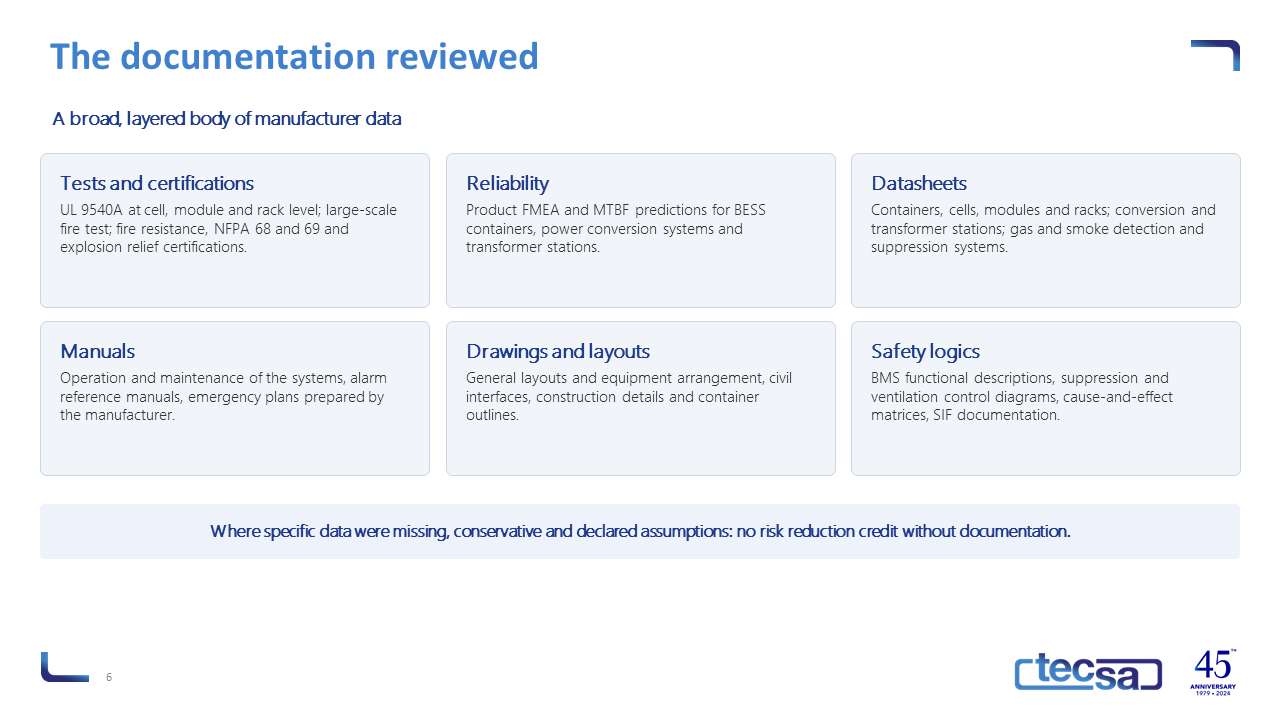
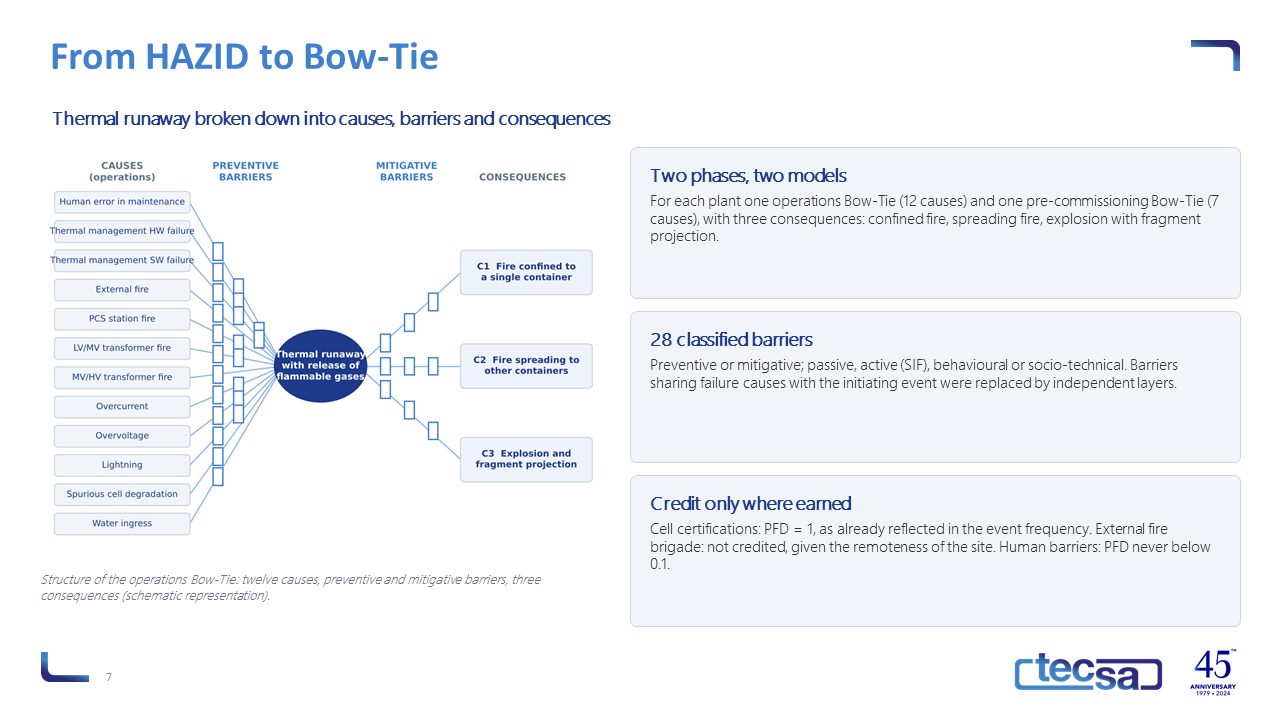
Over about six months of work and 20 days of joint analysis sessions with the manufacturer’s engineers and the operator’s project team, TECSA reviewed a broad body of documentation (UL 9540A reports at cell, module and rack level, a large-scale fire test, product FMEA, MTBF predictions, safety logics and cause-and-effect matrices) and developed, for each plant, a HAZID session and two separate Bow-Ties for operations and pre-commissioning.
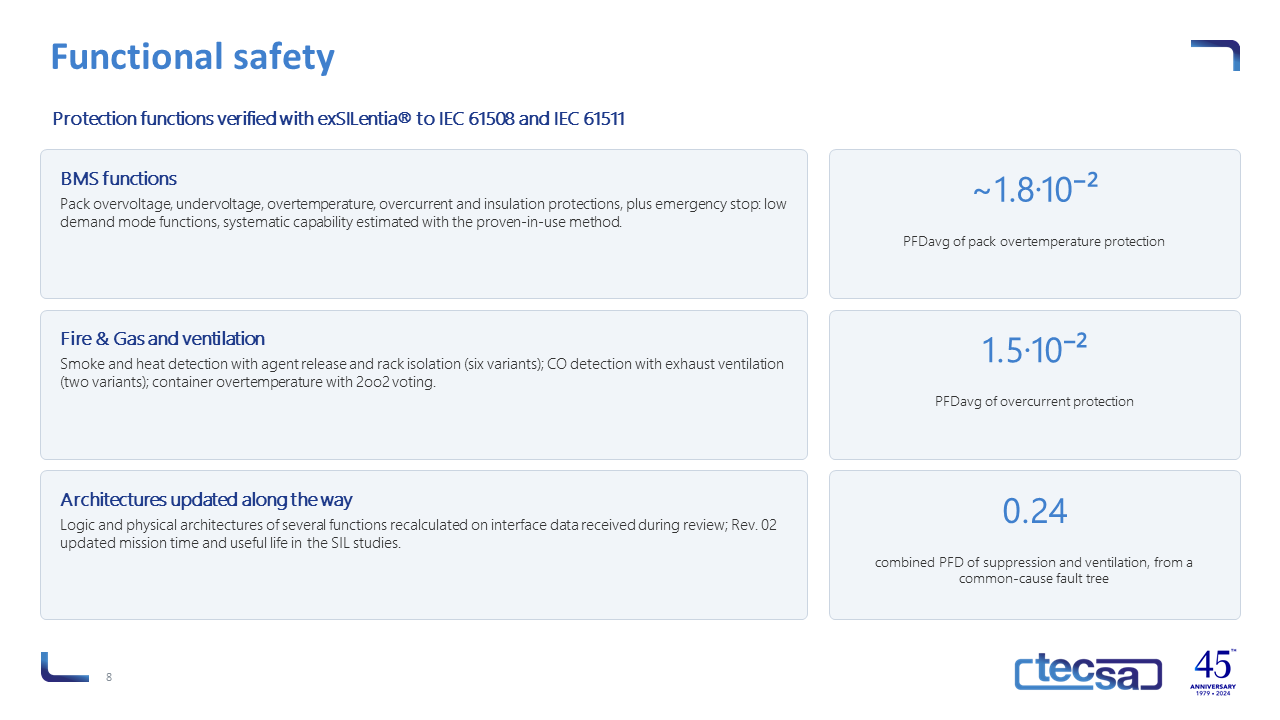
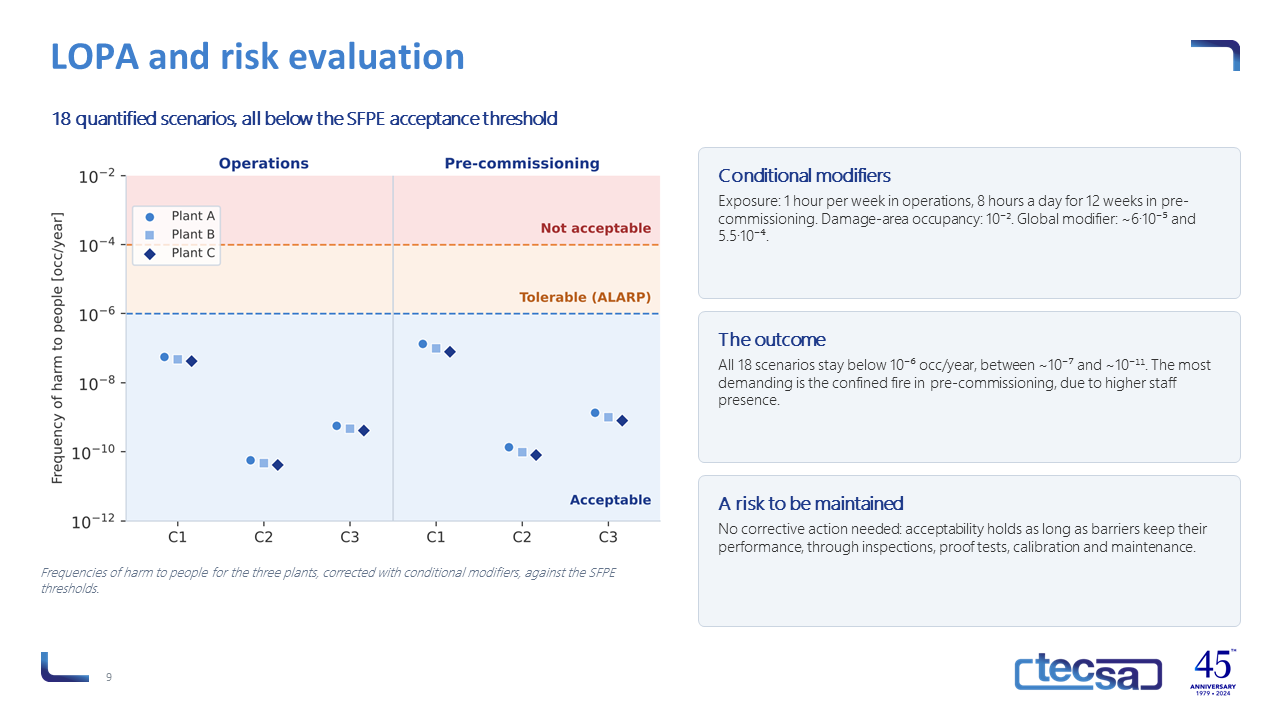
Safety instrumented functions were verified to IEC 61508 and IEC 61511 with exida’s exSILentia®; barriers sharing common causes of failure were handled with fault trees built in Logan. Scenario frequencies were quantified through LOPA using CCPS, IAEA and CIGRE references, corrected with conditional modifiers for exposure and occupancy, and compared with the thresholds of the SFPE Guide to Fire Risk Assessment.
Results
Three Hazard Mitigation Analyses, each with eight technical annexes and issued in three revisions that addressed the parties’ comments: from adding water ingress among the causes, to removing barriers not independent of the initiating event, to updating the SIL studies. All 18 quantified scenarios (confined fire, spreading fire and explosion, in operations and pre-commissioning) remain below the acceptability threshold of 10⁻⁶ occ/year, provided the barriers keep their expected performance over time.
Why TECSA
A programme of this scale calls for consistency as much as expertise: one method, common libraries of causes and barriers, site-specific data and the ability to hold a technical discussion with two international leaders. TECSA brings risk analysis, functional safety and LOPA together in the same team and is exida’s channel partner in Italy.