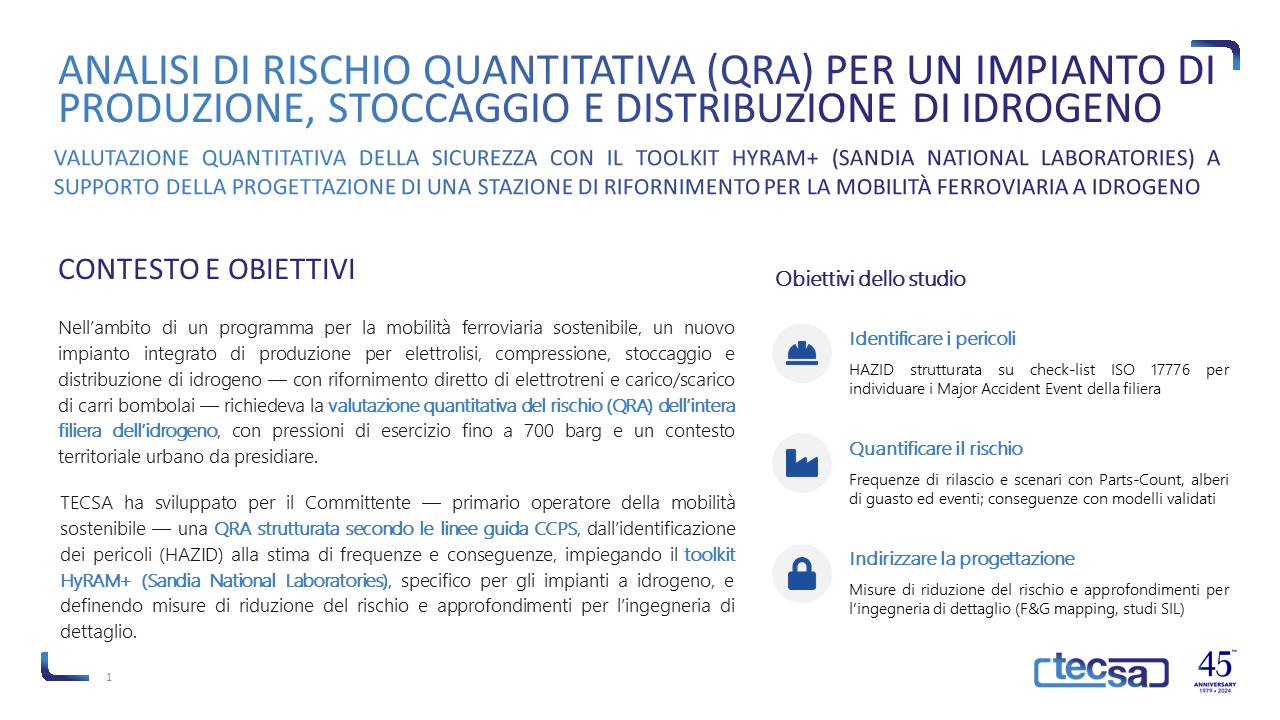
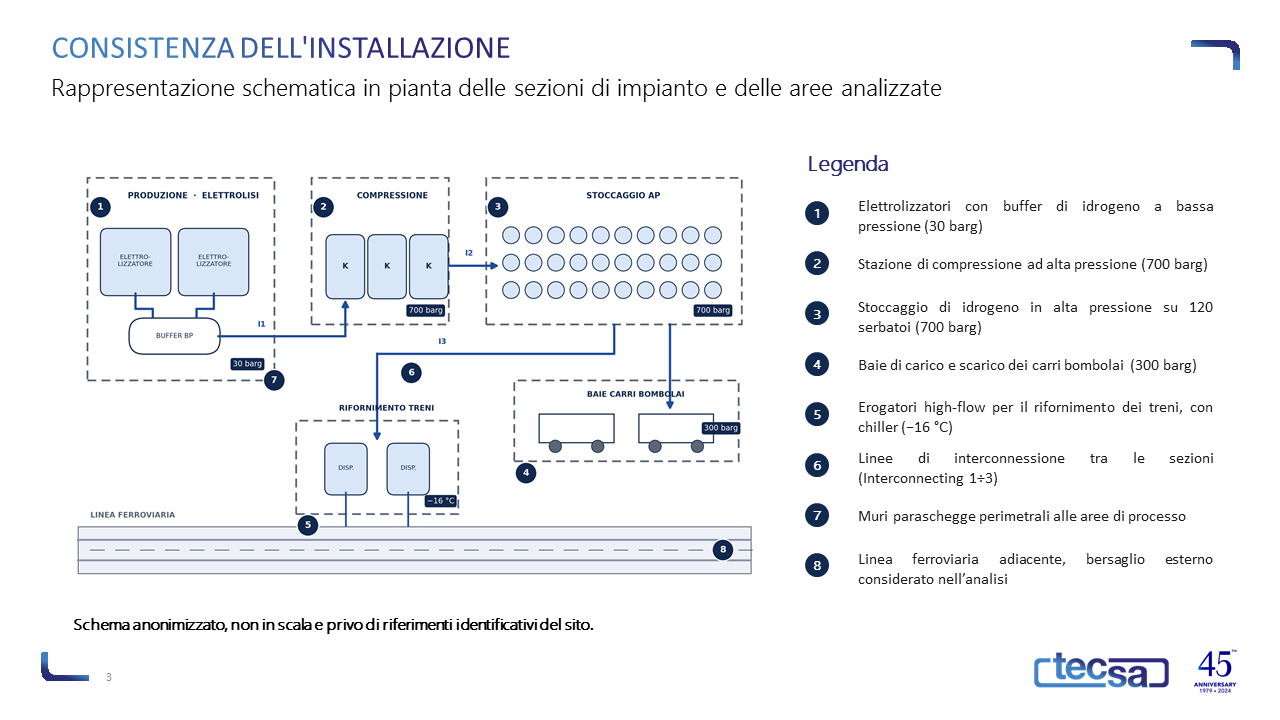
As part of a programme for sustainable rail transport, the Client — a leading operator in sustainable transport — commissioned TECSA to carry out a quantitative risk assessment (QRA) of a new integrated plant for the production of hydrogen via electrolysis, compression and high-pressure storage (up to 700 barg across 120 tanks), the direct refuelling of electric trains via high-flow dispensers with pre-cooling to −16 °C, and the loading/unloading of cylinder wagons at 300 barg. The installation, which — according to the Client — does not fall within the scope of the legislation on the prevention of major accidents (Legislative Decree 105/2015), is situated in an urban area adjacent to a railway line: it was therefore important to assess the possibility of a hydrogen containment failure and the extent of the areas potentially affected by the consequences.
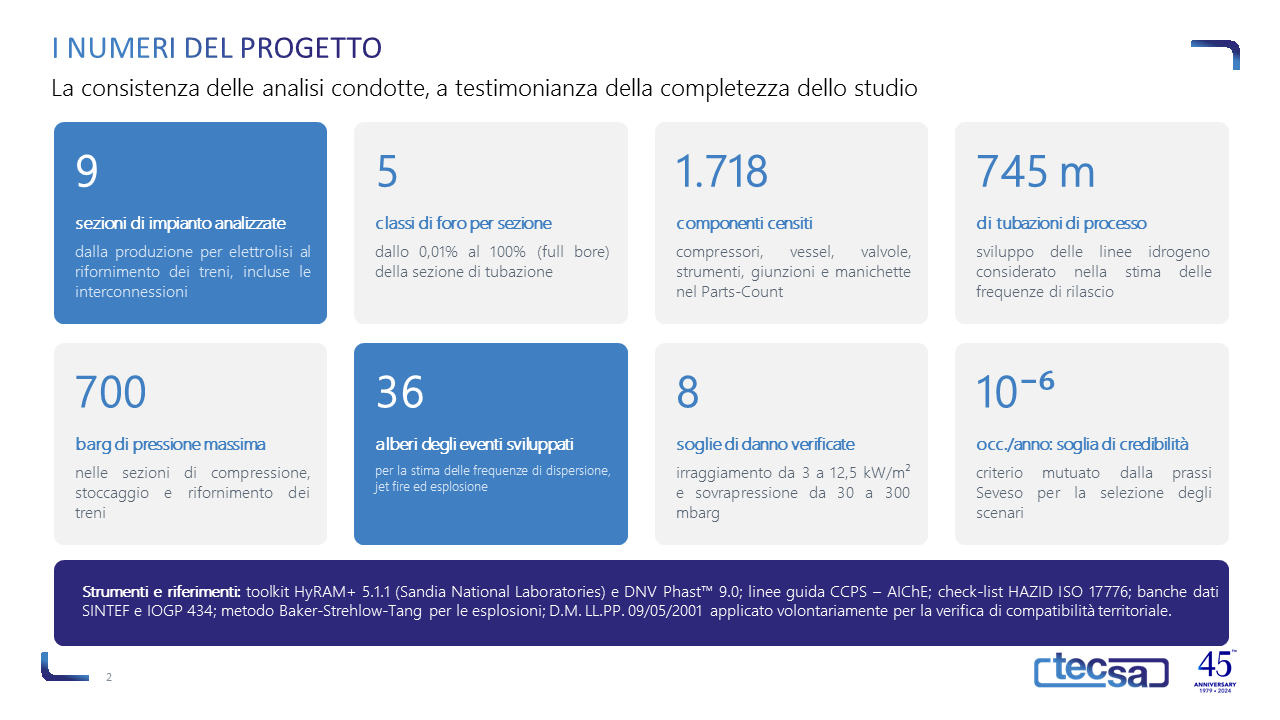
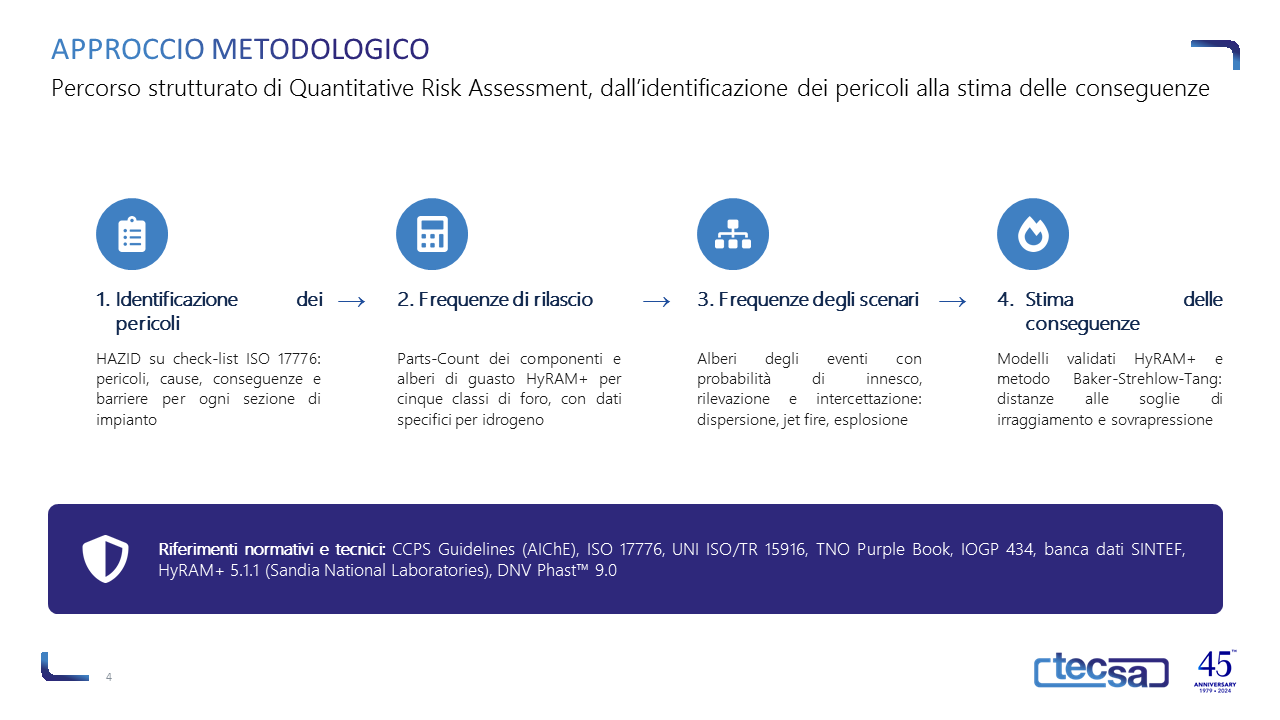
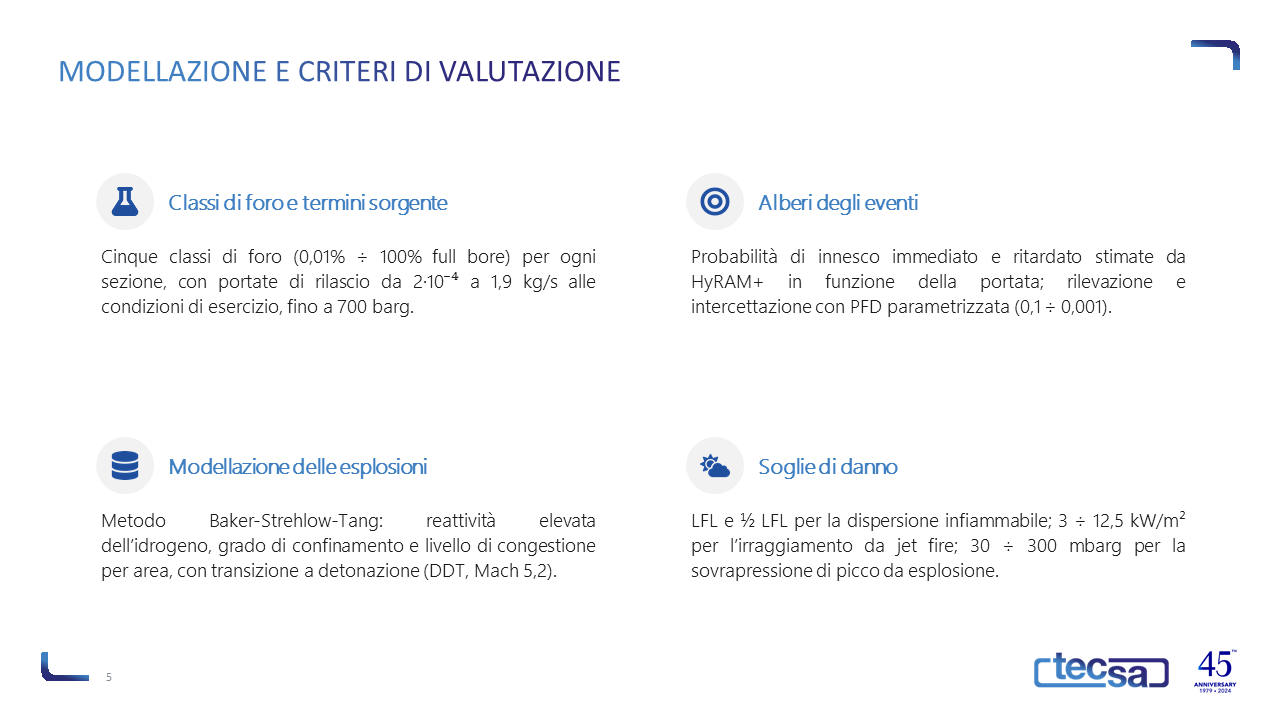
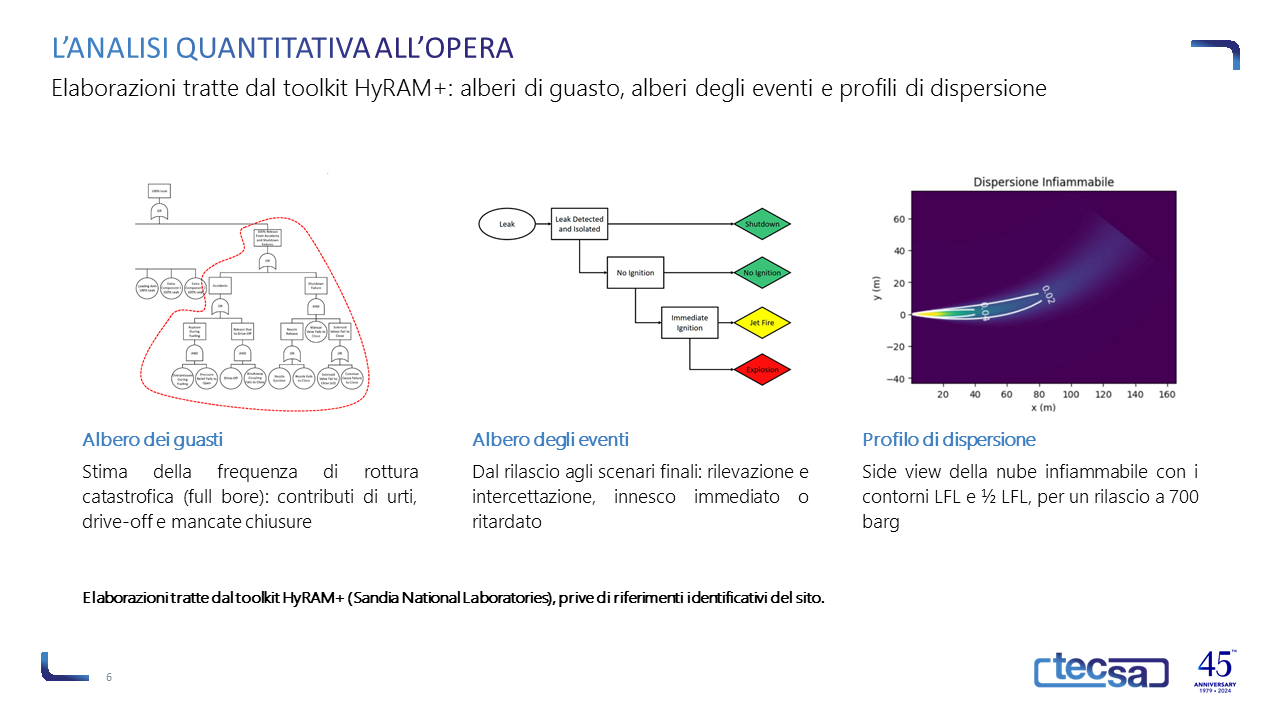
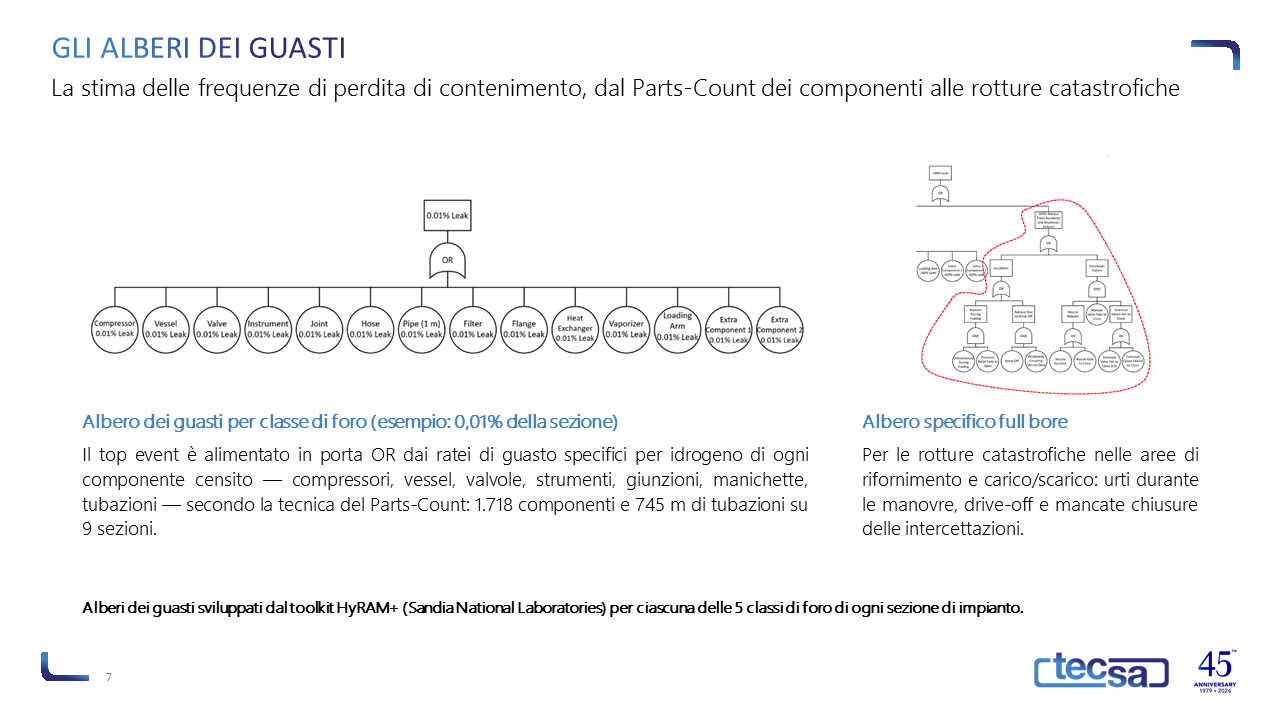
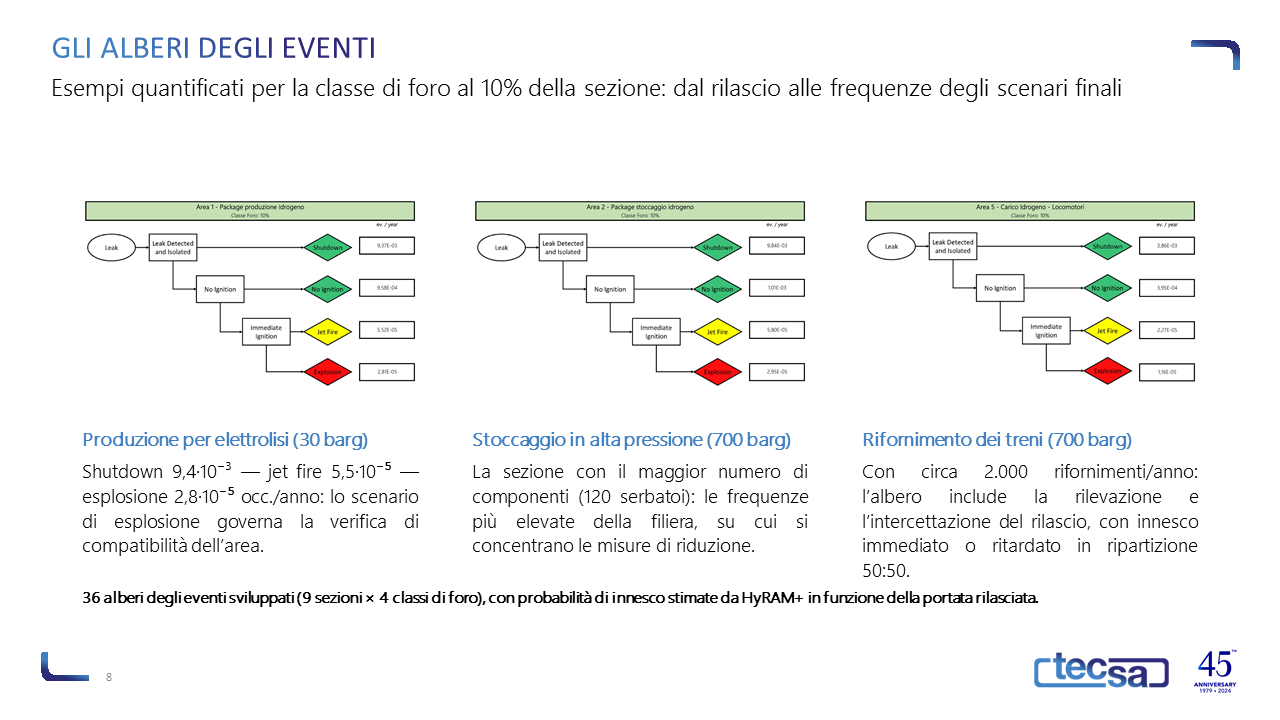
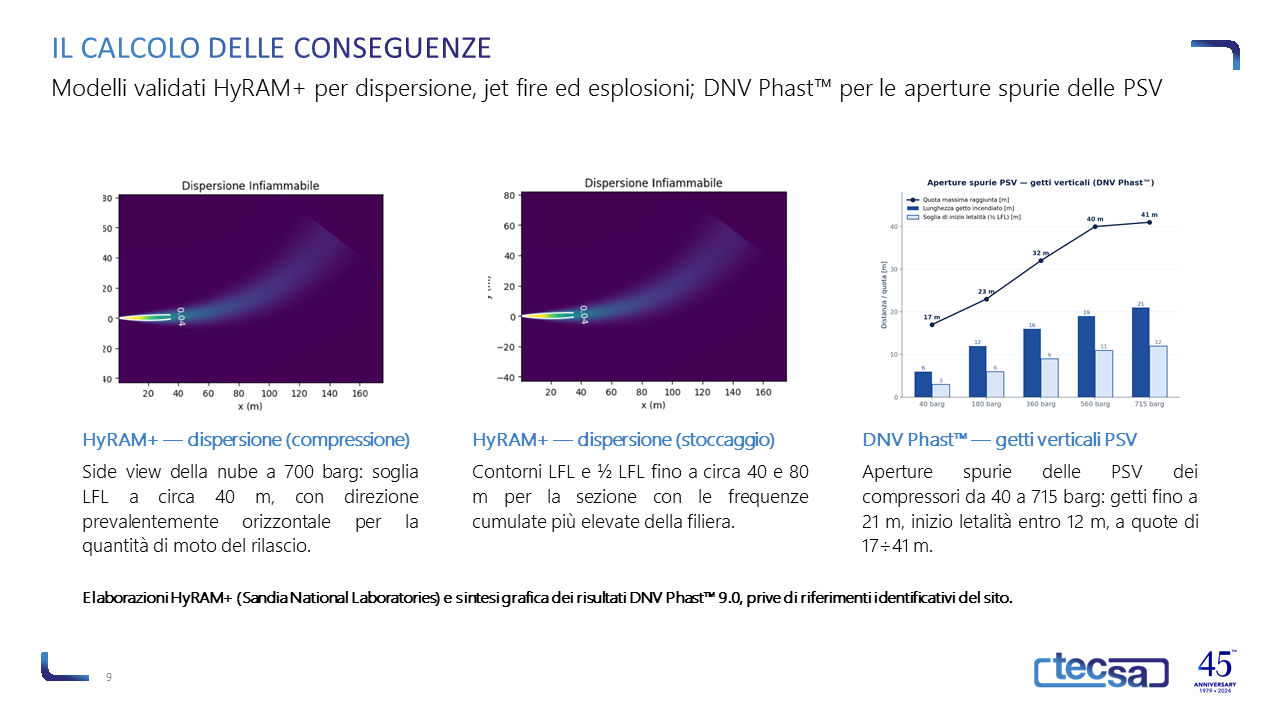
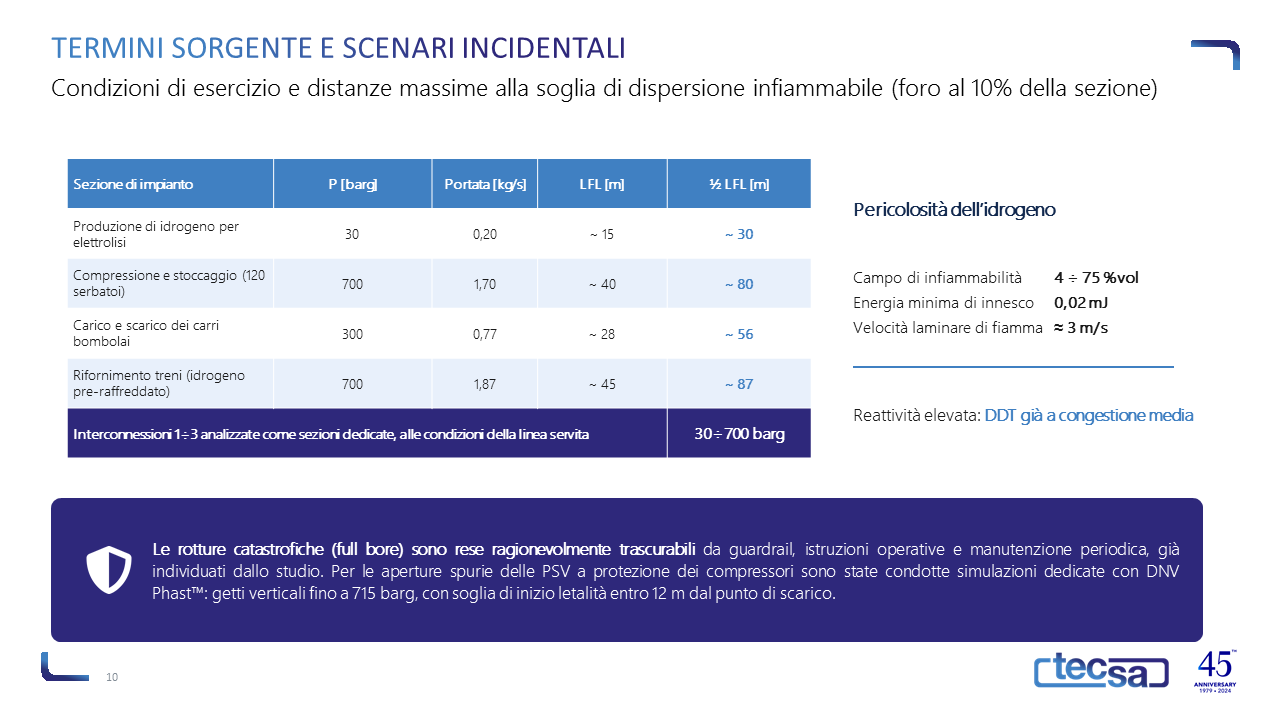
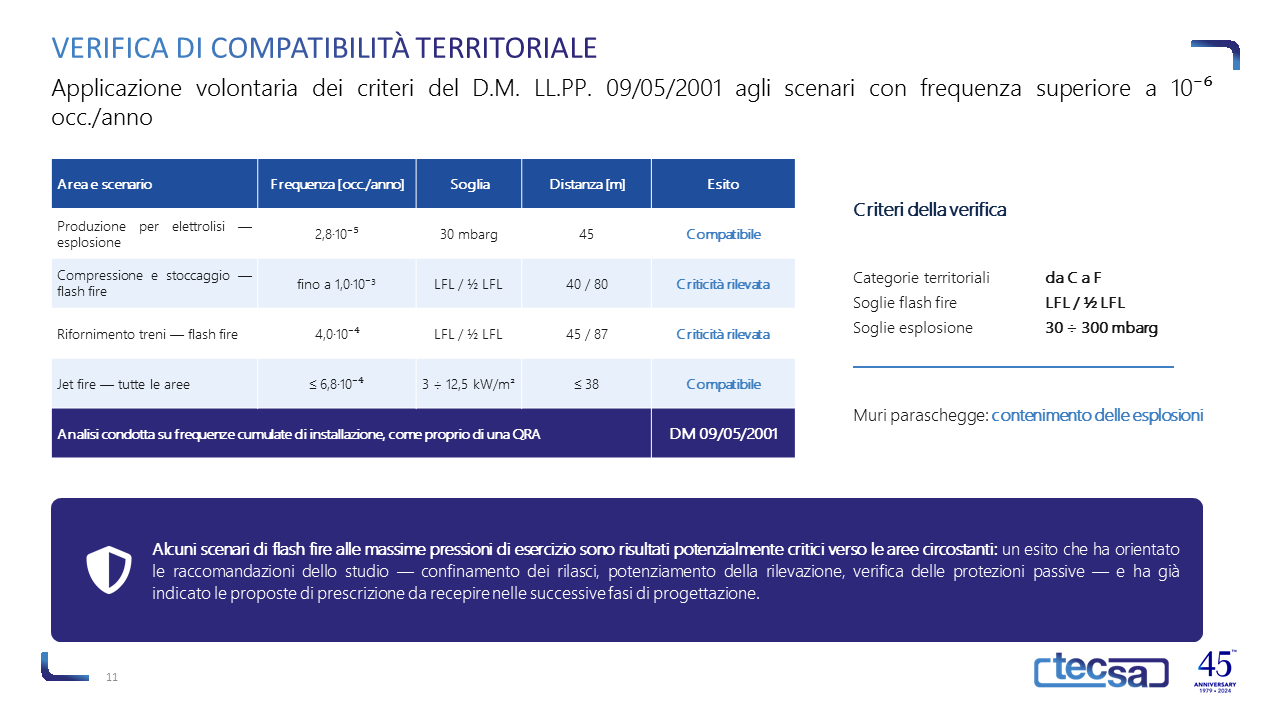
The study applied a structured Quantitative Risk Assessment methodology in accordance with the CCPS (AIChE) guidelines, ranging from hazard identification to the quantitative estimation of frequencies and consequences. A HAZID analysis conducted using the ISO 17776 checklist examined hazards, causes, consequences and defences for all sections of the plant, confirming hydrogen as the sole hazardous substance warranting further process safety investigation. The quantification was carried out using the HyRAM+ 5.1.1 toolkit (Sandia National Laboratories), specifically designed for installations that produce, process, store and transfer hydrogen, and equipped with failure rates specific to components operating with hydrogen: using the Parts-Count technique, 1,718 components and 745 m of pipework were surveyed across nine plant sections, estimating release frequencies for five leak size classes (ranging from 0.01% to 100% of the section’s full bore) and, using event trees with initiation probabilities calculated by the code, the frequencies of flammable release scenarios, jet fires and explosions. The consequences were quantified using validated HyRAM+ models — LFL and ½ LFL thresholds for dispersion, radiant heat fluxes ranging from 3 to 12.5 kW/m² for jet fires, overpressures ranging from 30 to 300 mbarg for explosions modelled using the Baker-Strehlow-Tang method, taking into account the high reactivity of hydrogen and the possible transition to detonation (DDT) — whilst spurious openings of the compressor PSVs were simulated using DNV Phast™ for vertical releases up to 715 barg. Scenarios with a frequency exceeding the credibility threshold of 10⁻⁶ occurrences per year were finally subjected to a voluntary territorial compatibility assessment in accordance with the criteria of the Ministerial Decree of the Ministry of Public Works dated 9 May 2001.
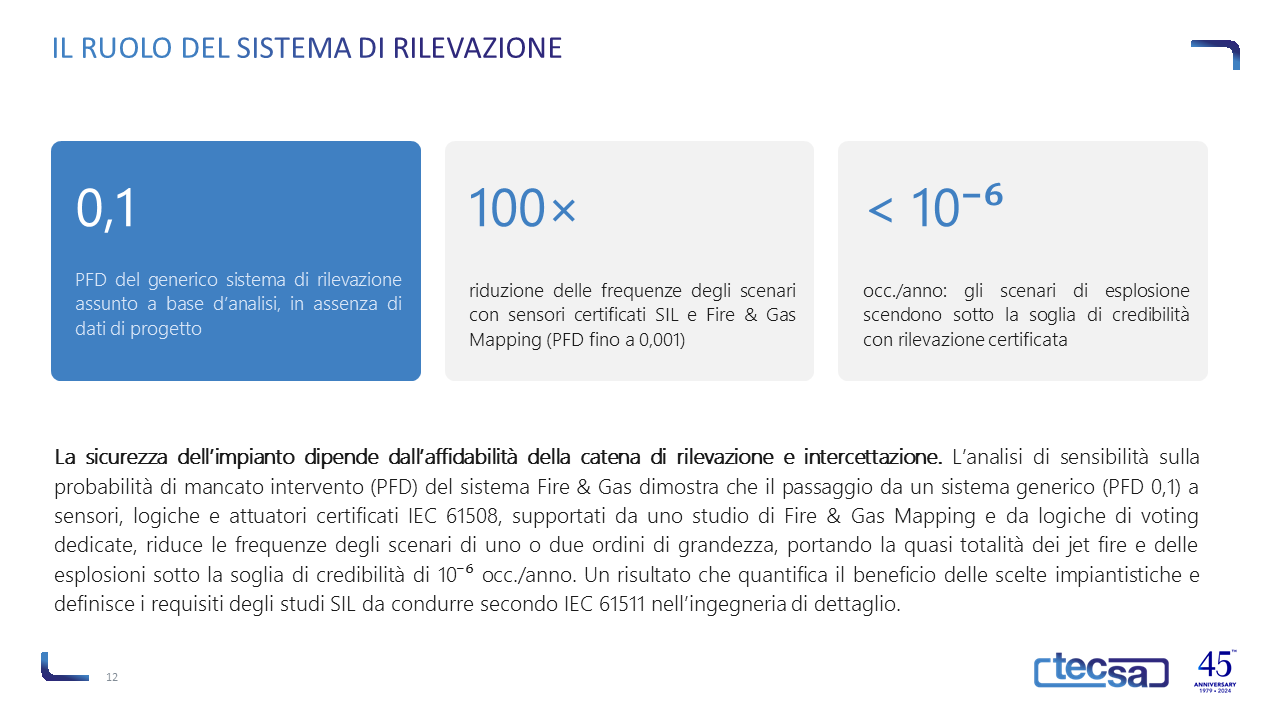
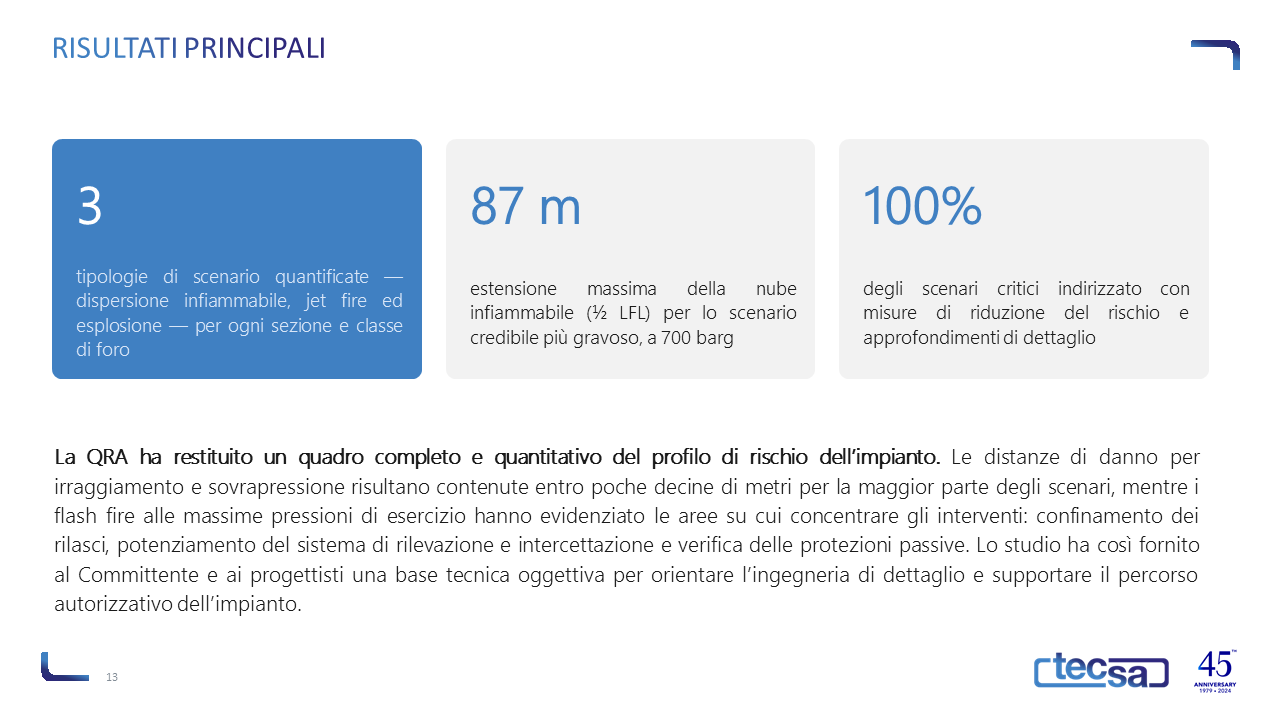
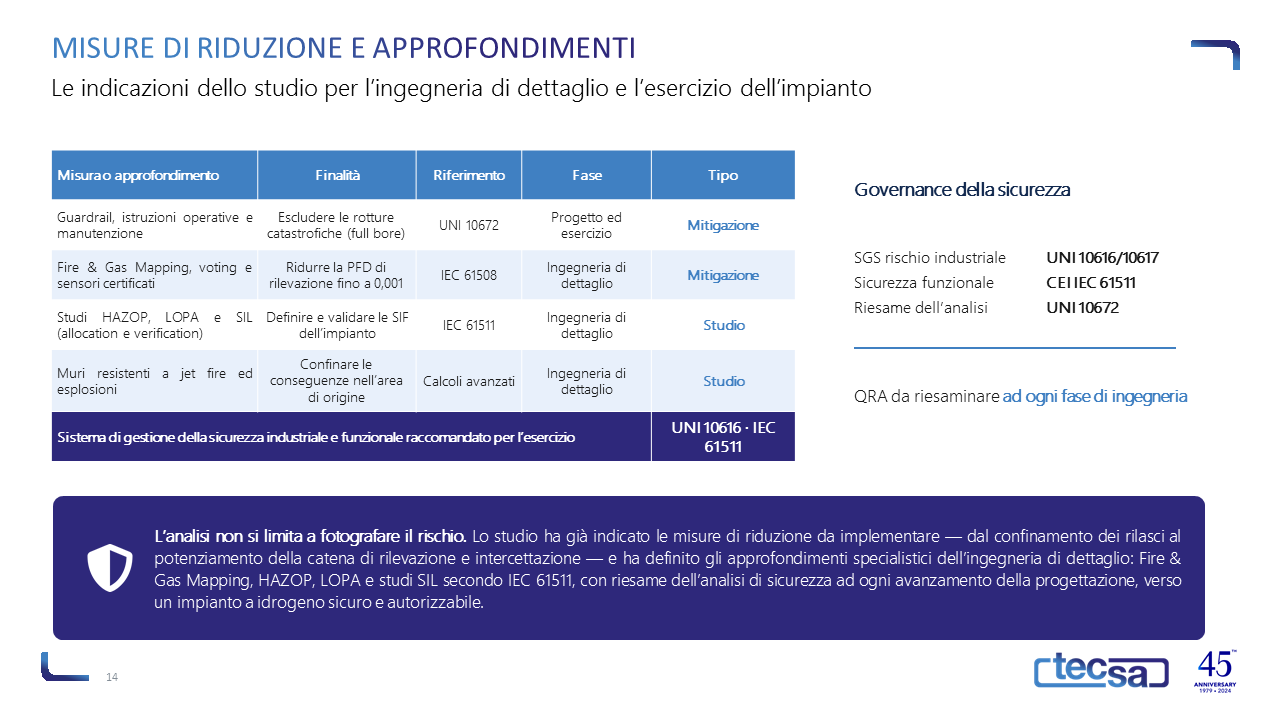
The analysis provided a comprehensive picture of the risk profile: damage distances due to radiation and overpressure limited to a few tens of metres for most scenarios; maximum extensions of the flammable cloud of up to approximately 87 m (½ LFL) for the most severe credible release; and some flash fire scenarios, at maximum operating pressures, found to be potentially critical for surrounding areas. Based on this evidence, the study has already identified the risk mitigation measures to be implemented — guardrails, operational instructions and maintenance to render catastrophic failures reasonably negligible; upgrading the detection and shut-off system with IEC 61508-certified sensors, Fire & Gas Mapping and voting logic, capable of reducing the frequency of such scenarios by up to two orders of magnitude; verification of walls resistant to jet fires and explosions to confine the consequences to the areas of origin — and has defined the specialist analyses required for the subsequent detailed engineering phases: HAZOP, LOPA and SIL studies in accordance with IEC 61511, review of the safety analysis at each stage of the design process, and adoption of an industrial and functional safety management system (UNI 10616/10617, CEI IEC 61511). The study thus provided the Client and the designers with an objective technical basis to support the plant design decisions and the plant’s authorisation process.