A leading operator in the electricity generation sector commissioned TECSA to carry out a Hazard Mitigation Analysis (HMA) of a large-scale BESS (Battery Energy Storage System) facility, built within the perimeter of an existing thermal power station: 44 20-foot ‘non-walk-in’ containers housing lithium iron phosphate (LFP) cells, distributed across 22 technical islands, with a total power output of approximately 100 MW and a nominal capacity of approximately 220 MWh.
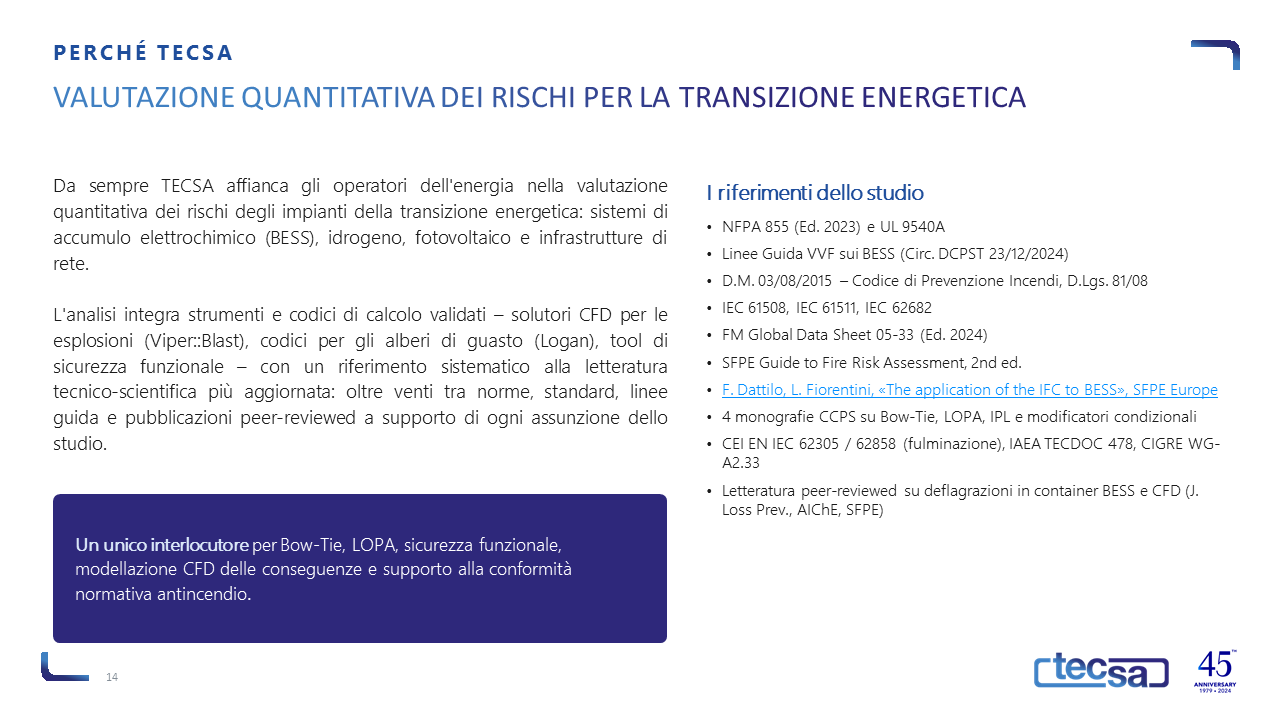
The hazard analysed is the thermal runaway reaction of the cells, involving the release of flammable gases, which could potentially trigger fire and explosion scenarios. The study was conducted in accordance with NFPA 855 and the National Fire Brigade’s Guidelines on energy storage systems (DCPST Circular of 23 December 2024), to support the site’s safety documentation (VRI, DPCE and PEI). TECSA has always supported energy operators in the quantitative risk assessment of energy transition facilities, including electrochemical energy storage in BESS.
The methodological approach
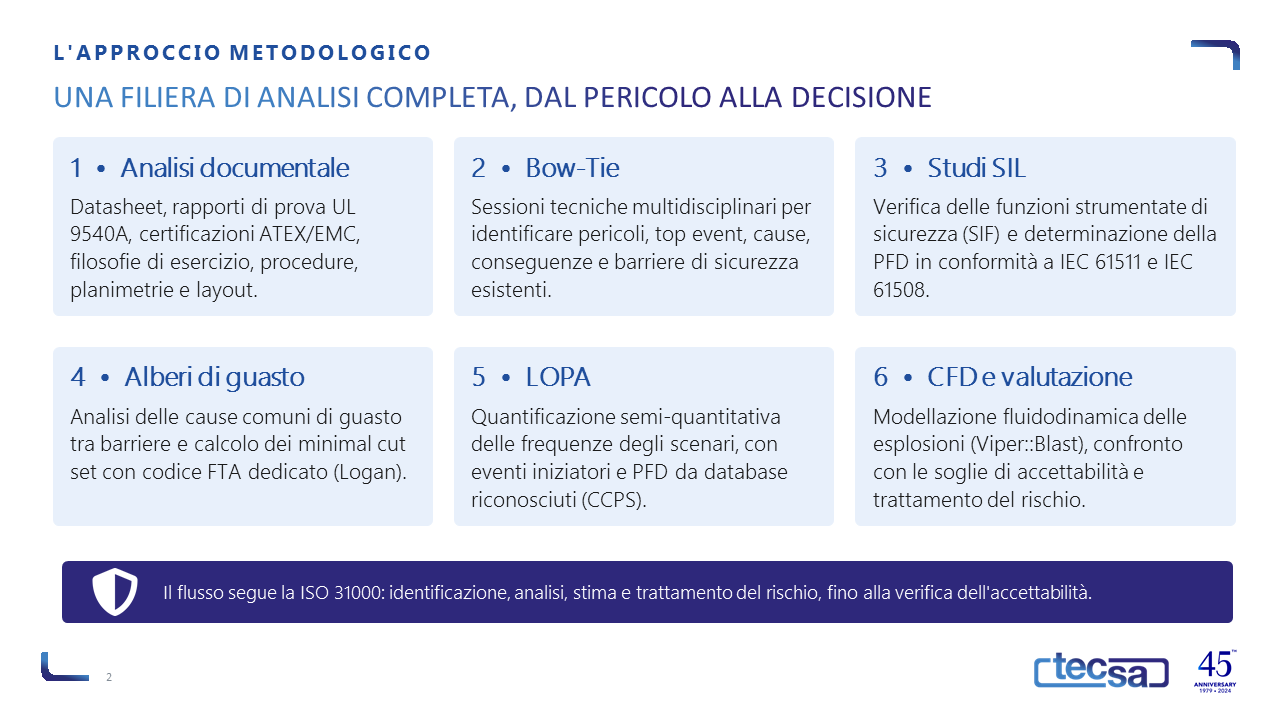
The analysis integrated qualitative, semi-quantitative and advanced numerical calculation techniques into a single, coherent framework consistent with ISO 31000:
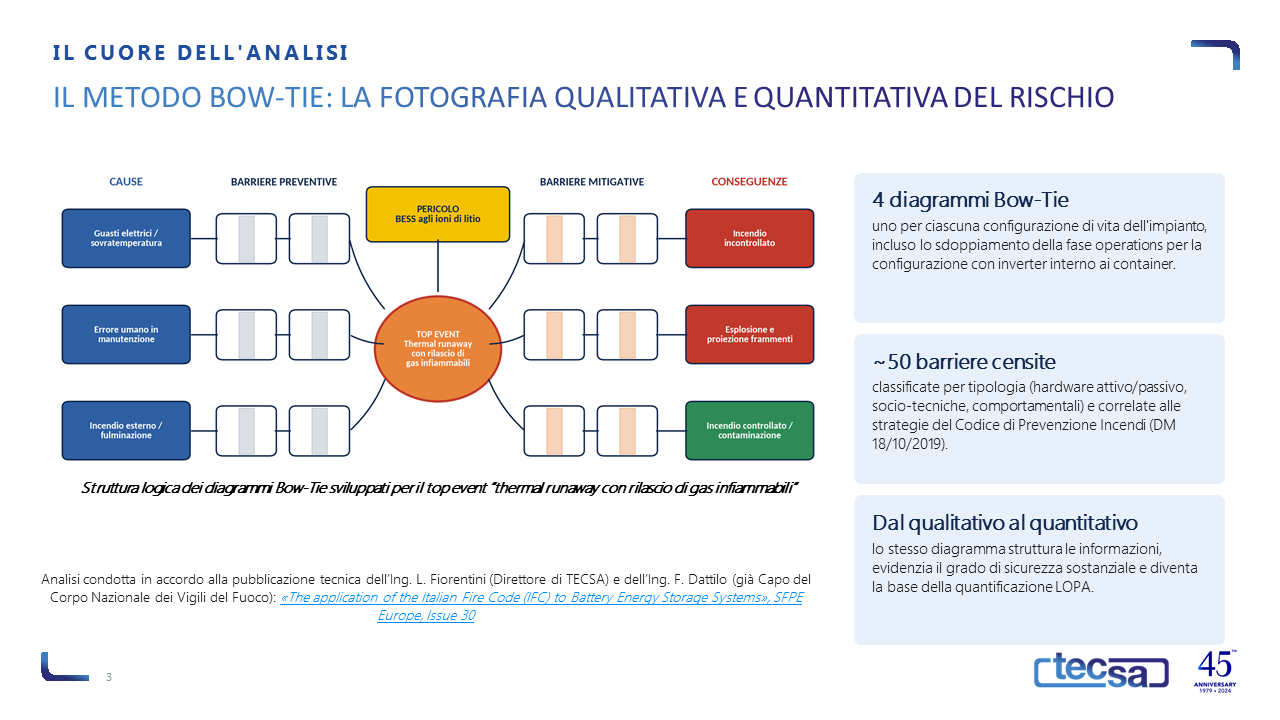
- Bow-Tie Method – the central component of the study: four diagrams, one for each phase of the plant’s life cycle (operations in two configurations, pre-commissioning and storage), developed during multidisciplinary technical sessions, with around 50 barriers identified, classified and correlated with the fire prevention strategies set out in the Fire Prevention Code (Ministerial Decree of 18 October 2019). The Bow-Tie captures the essence of the assessment in both qualitative and quantitative terms, immediately highlighting the level of inherent safety and potential areas for improvement.
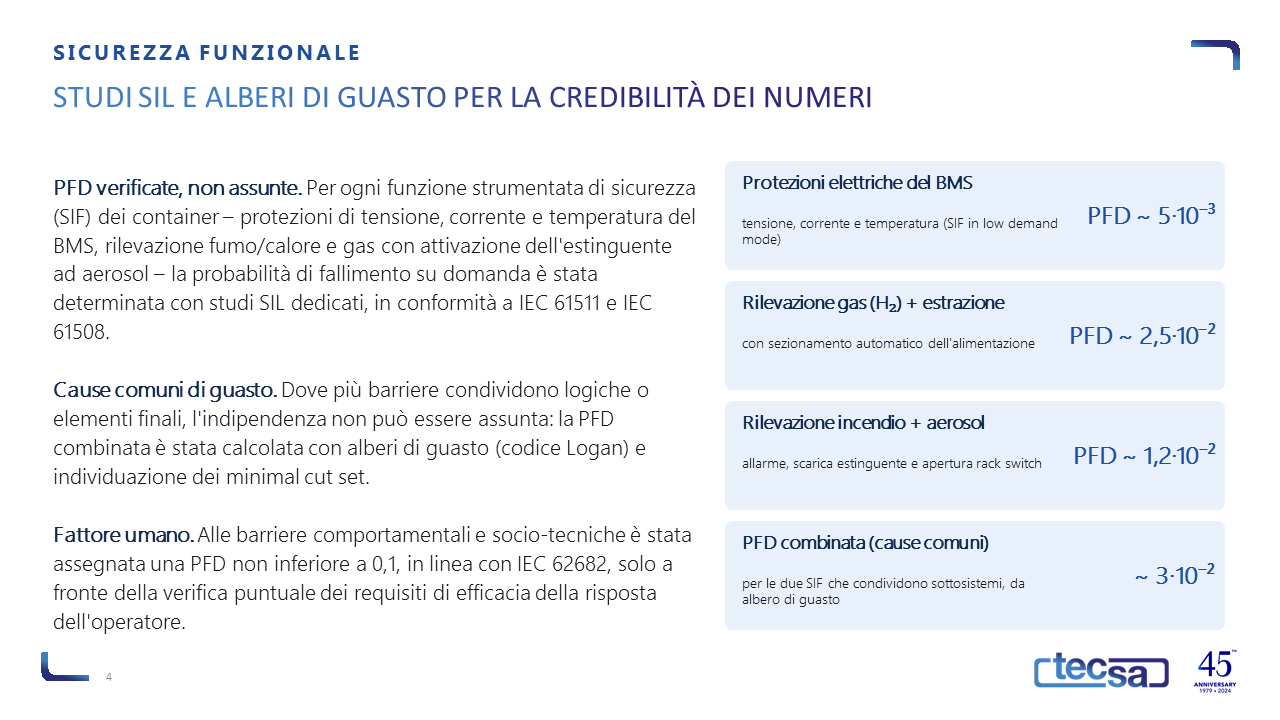
- Functional safety – SIL studies in accordance with IEC 61511 and IEC 61508 to determine the probability of failure on demand (PFD) of the containers’ safety-instrumented functions (BMS protection, fire and gas detection, aerosol suppression).
- Fault trees – analysis of common causes of failure amongst non-independent barriers, identifying minimal cut sets and calculating combined PFDs using dedicated FTA software.
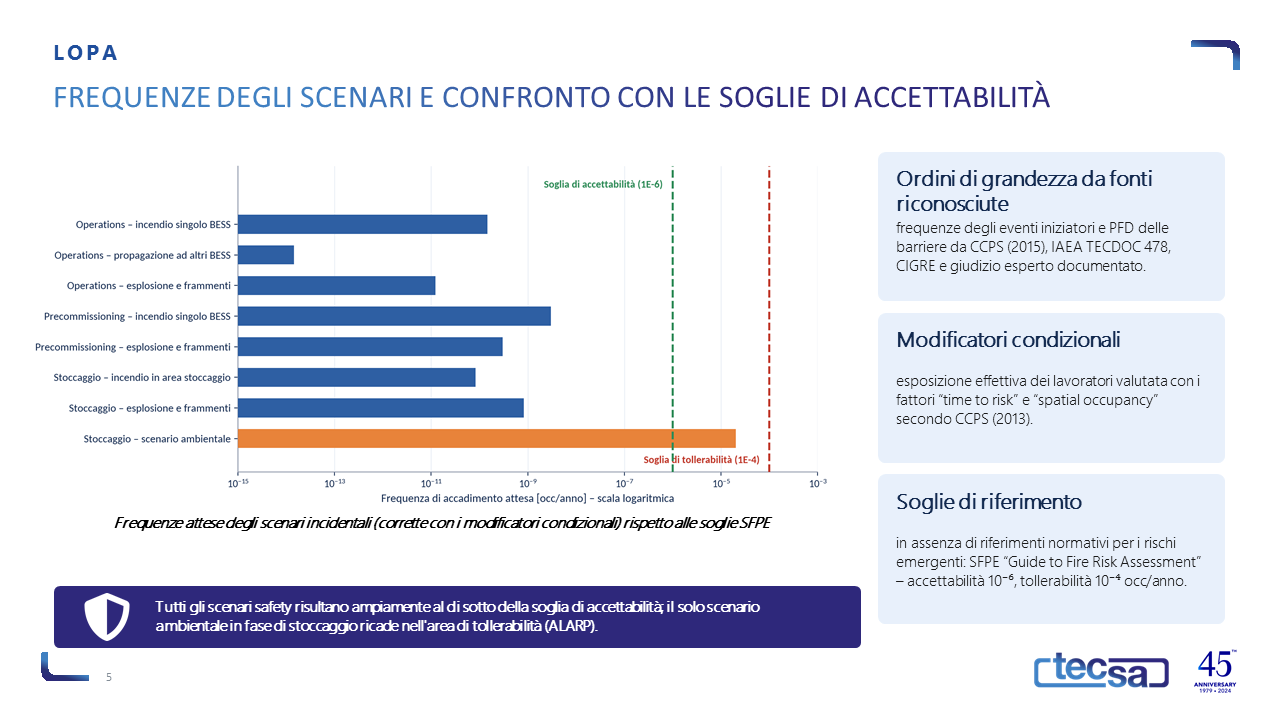
- LOPA analysis – quantification by order of magnitude of scenario frequencies, with initiating events and PFDs drawn from recognised sources (CCPS, IAEA, CIGRE) and conditional modifiers (time to risk, spatial occupancy) for the effective exposure of workers.
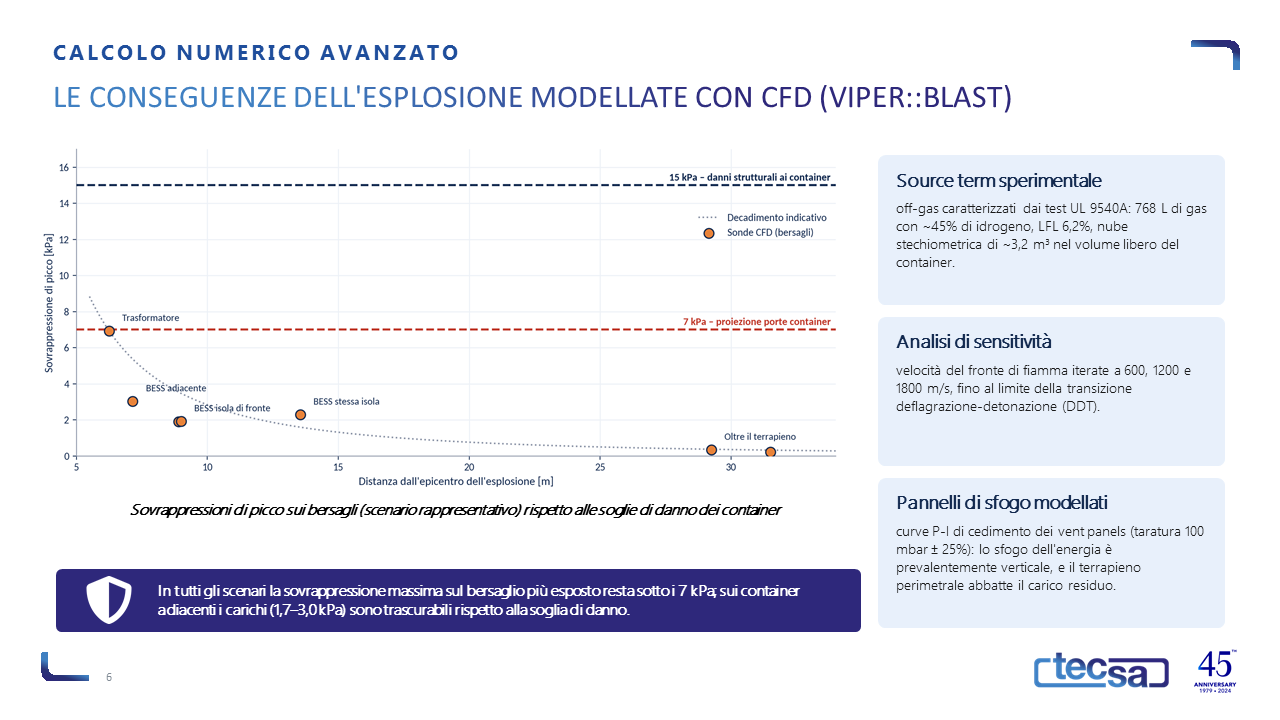
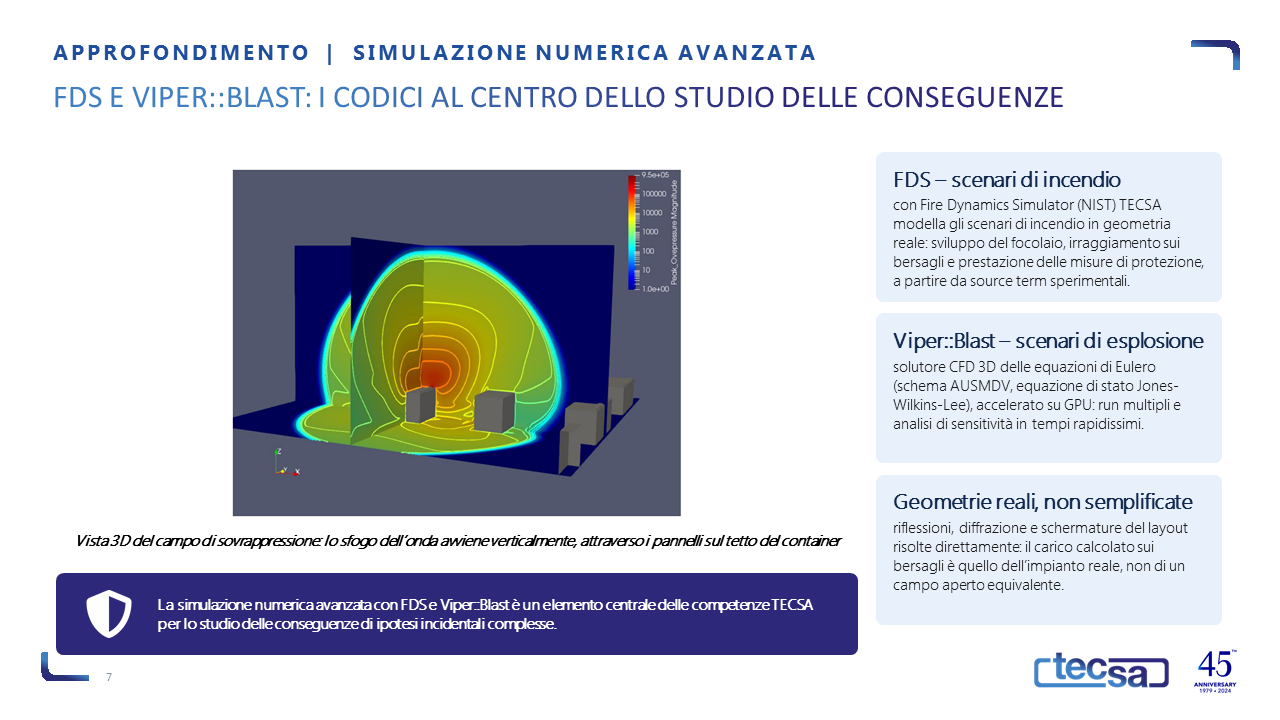
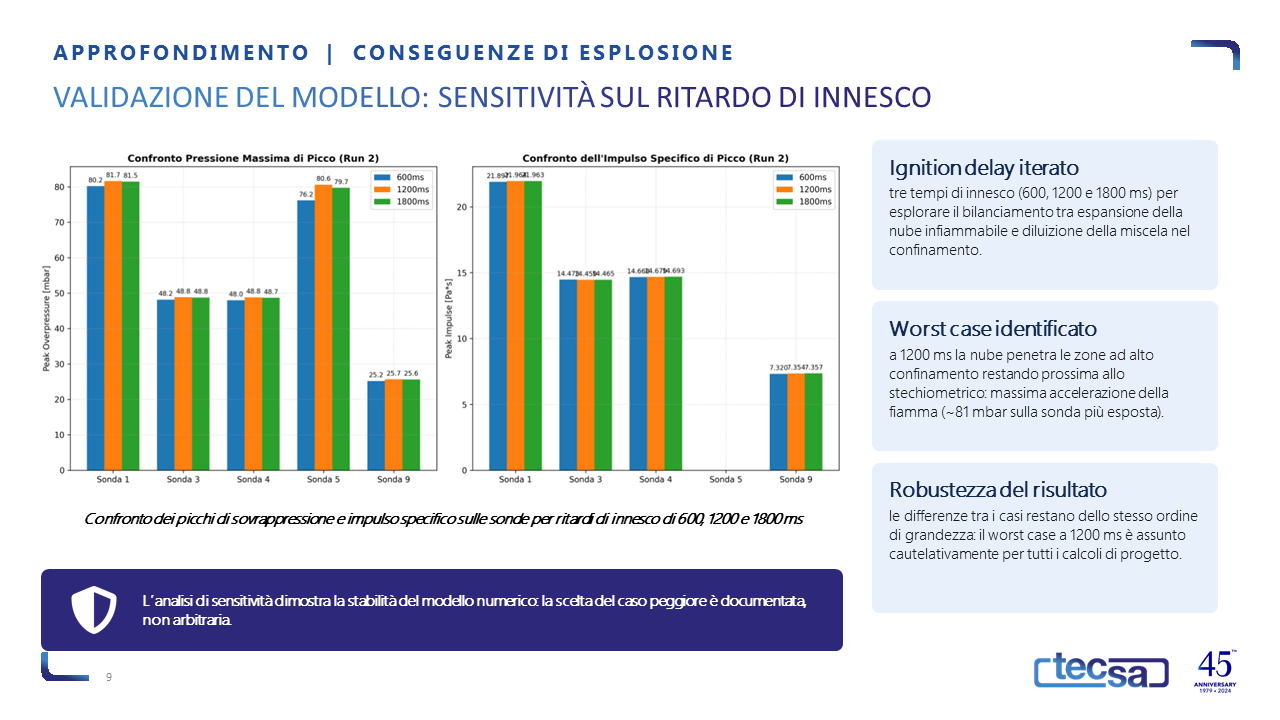
- CFD modelling of explosions – fluid dynamics simulations using the Viper::Blast solver, based on off-gases experimentally characterised by UL 9540A tests, with sensitivity analysis on flame front velocity (up to the deflagration–detonation transition limit) and modelling of the failure curves of container vent panels.
The results
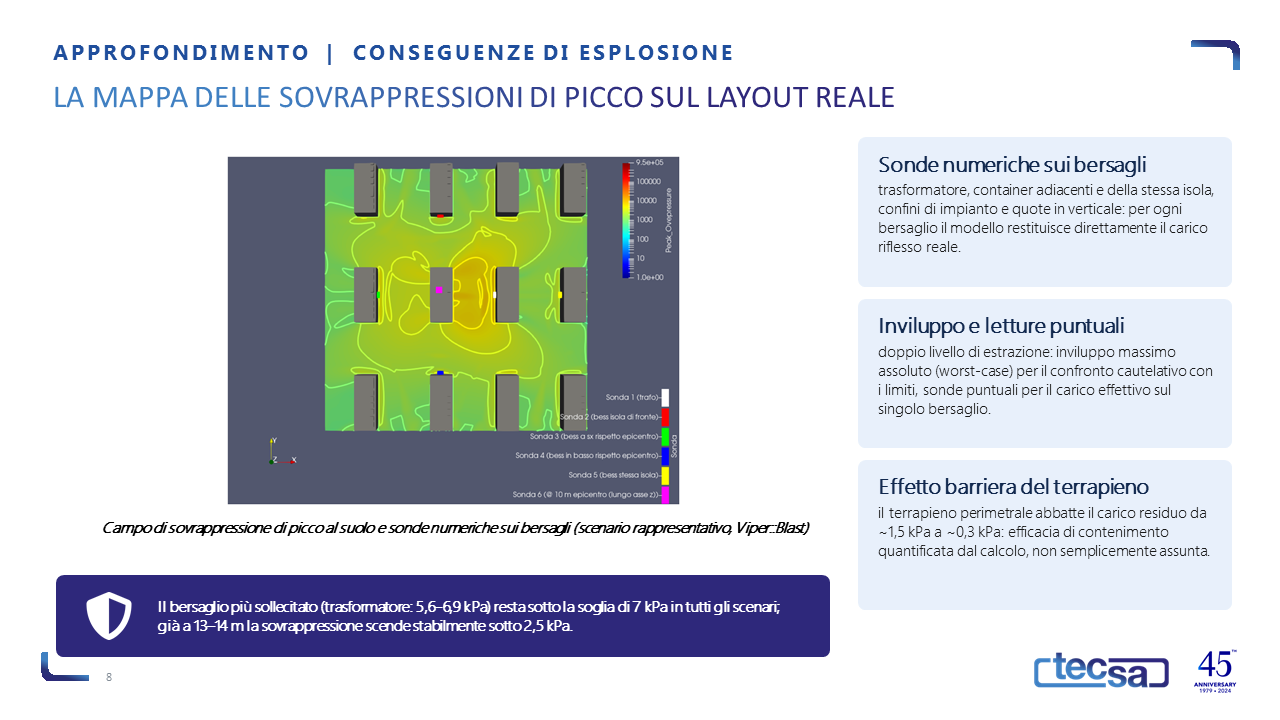
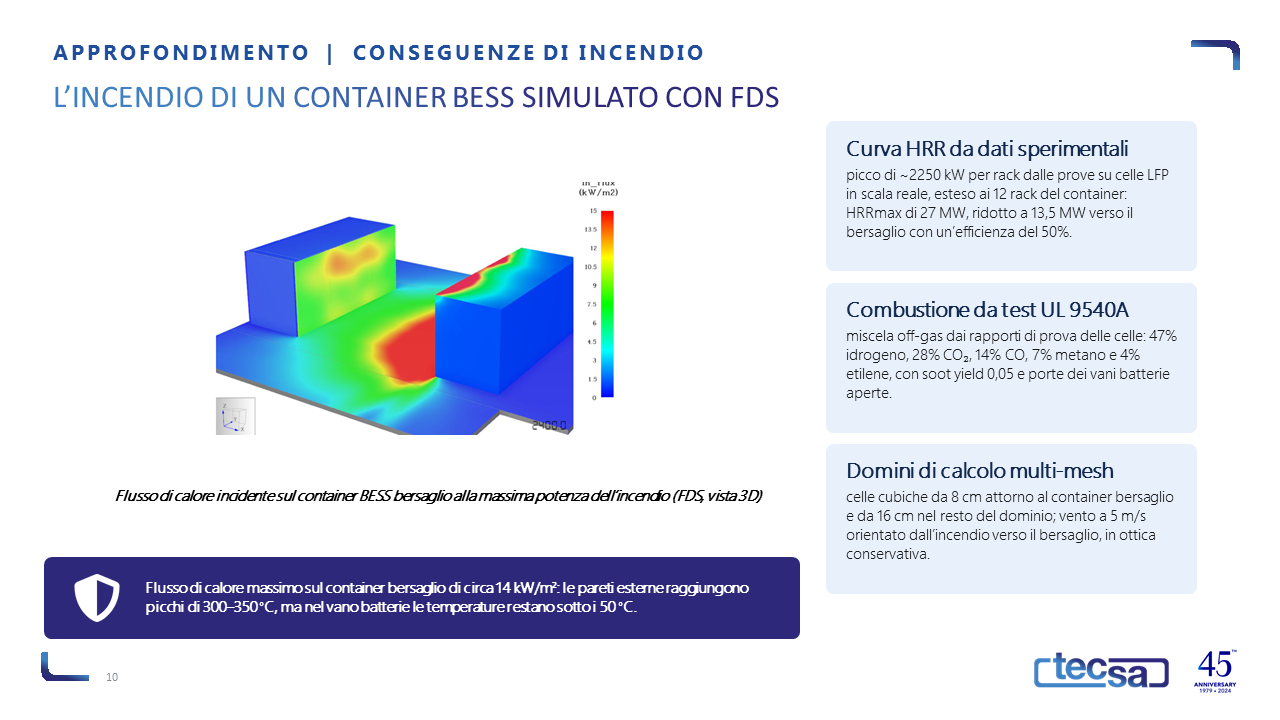
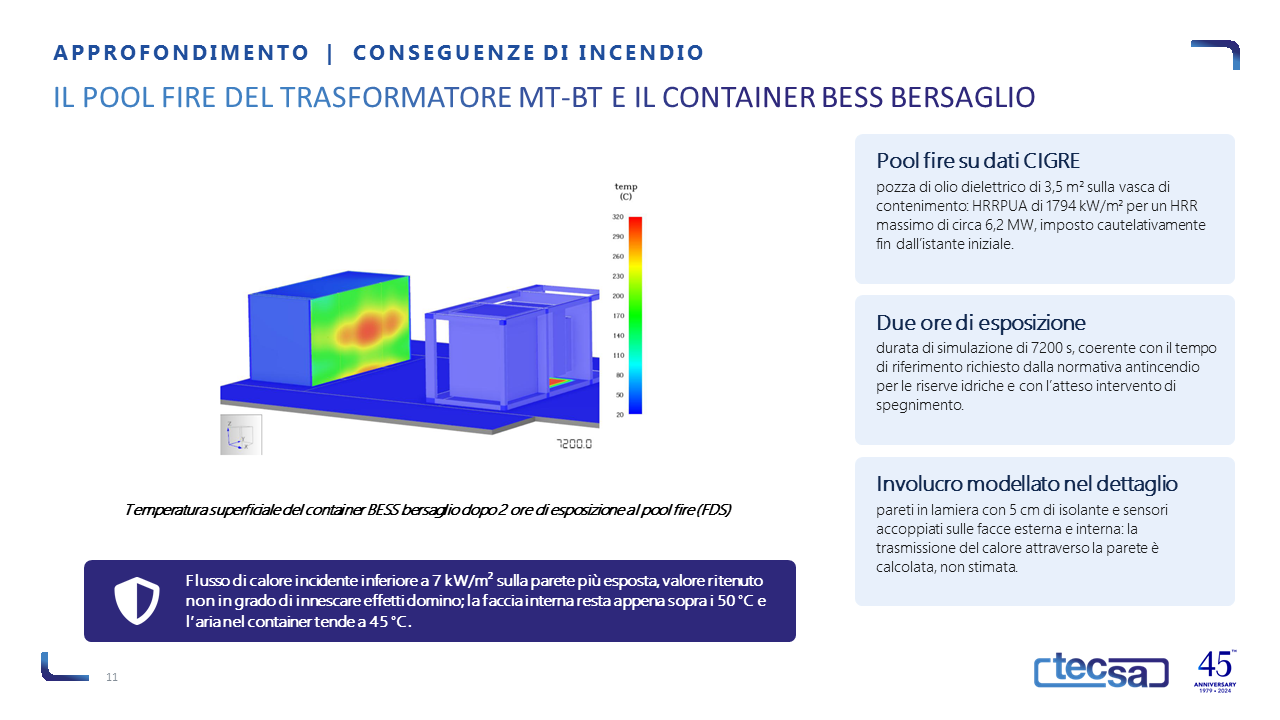
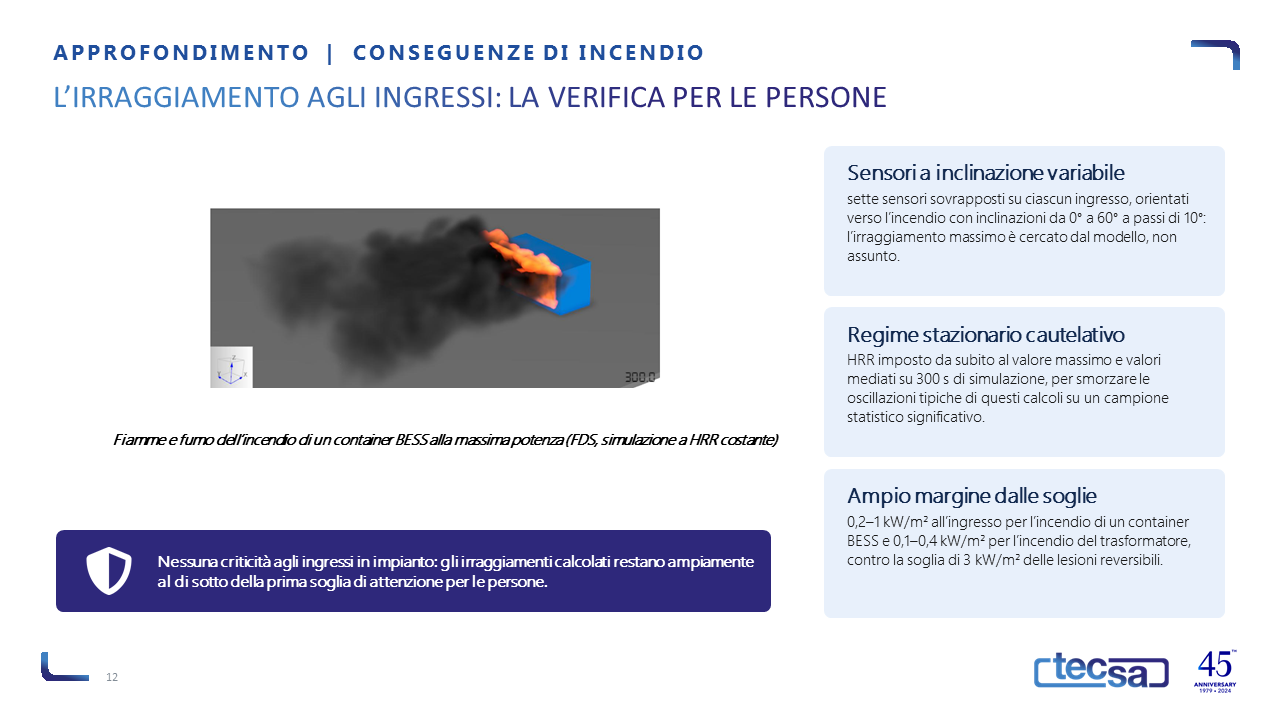
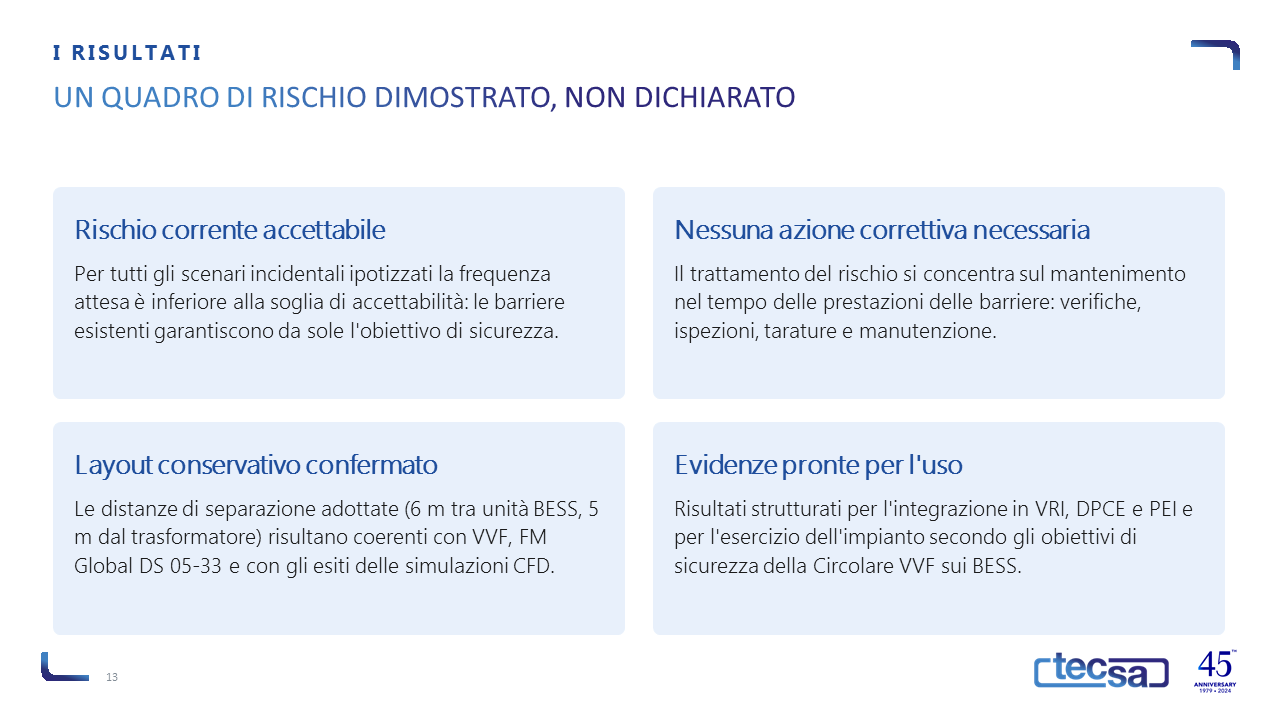
A comparison of the expected frequencies with the SFPE acceptability thresholds (acceptability 10⁻⁶ incidents/year, tolerability 10⁻⁴ incidents/year) demonstrated an acceptable current risk for all safety incident scenarios, with no need for corrective action: risk management focuses on maintaining the performance of existing barriers over time. The CFD simulations confirmed the soundness of the layout: the maximum overpressure on the most exposed target remains below the damage threshold of 7 kPa, and the energy dissipation, guided by the blast panels, occurs predominantly in a vertical direction, with negligible loads on adjacent containers.
The study utilised validated calculation tools and codes, as well as over twenty references including regulations, standards, guidelines and peer-reviewed scientific literature, to ensure the soundness of every assumption.