As part of the design of a new regenerative thermal oxidation (RTO) plant for the abatement of volatile organic compound emissions, complete with a post-treatment section, to serve a chemical-pharmaceutical plant, a leading manufacturer of emissions treatment plants commissioned TECSA to verify the safety integrity level (SIL – Safety Integrity Level) achieved by the safety instrumented functions (SIFs) identified during the design phase. The correct assessment of the SIL of critical safety functions — required by IEC 61511 as part of the safety lifecycle and central to LOPA studies on protection levels — is essential as early as the design phase of instrumented systems, when architectures can still be adapted at minimal cost.
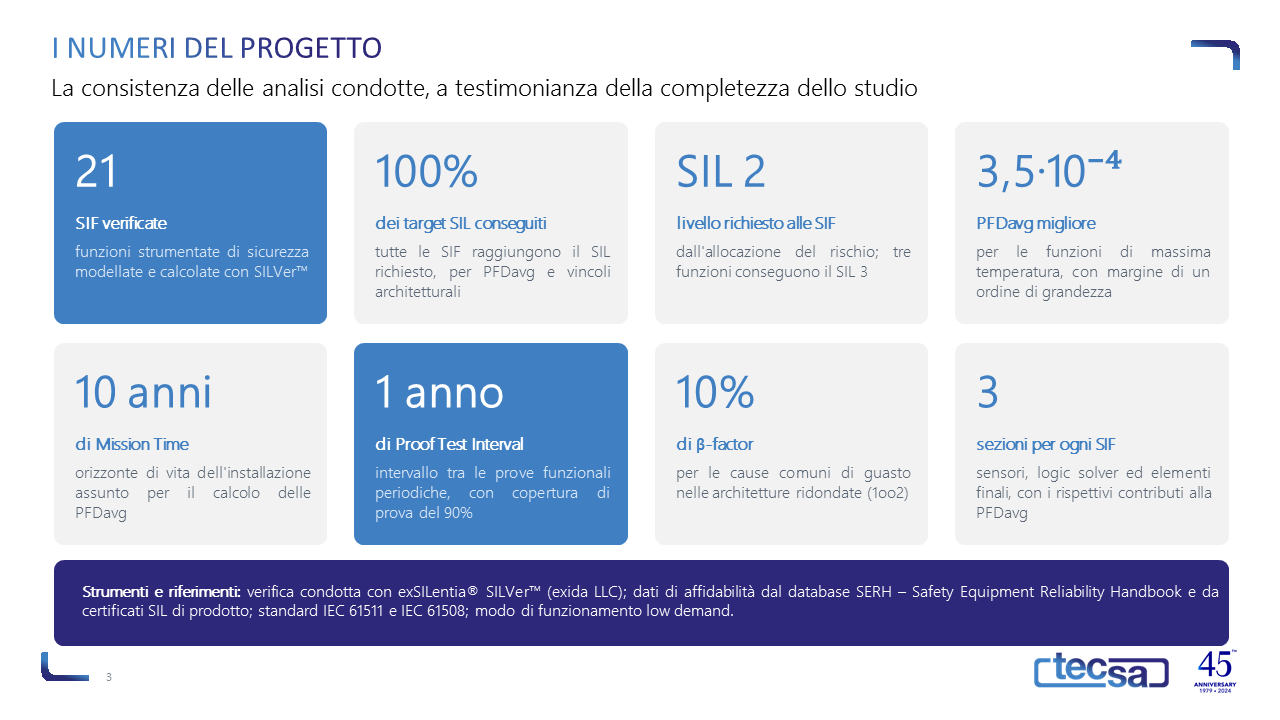
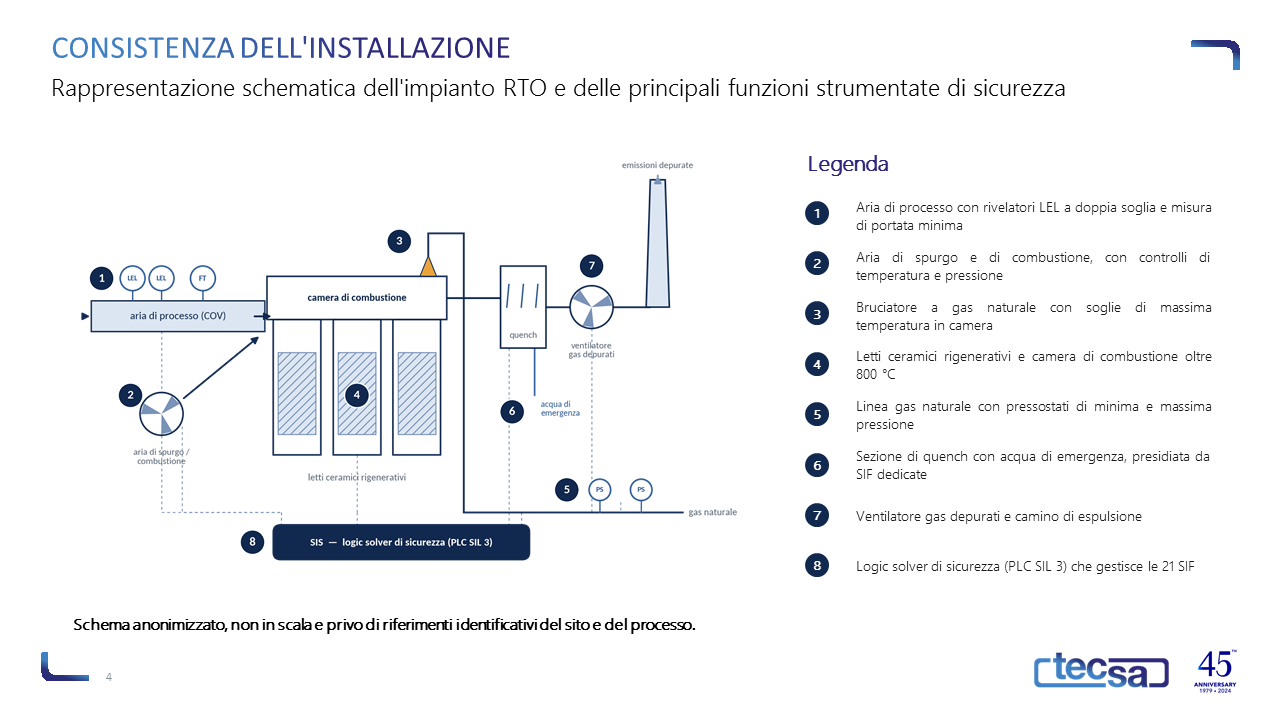
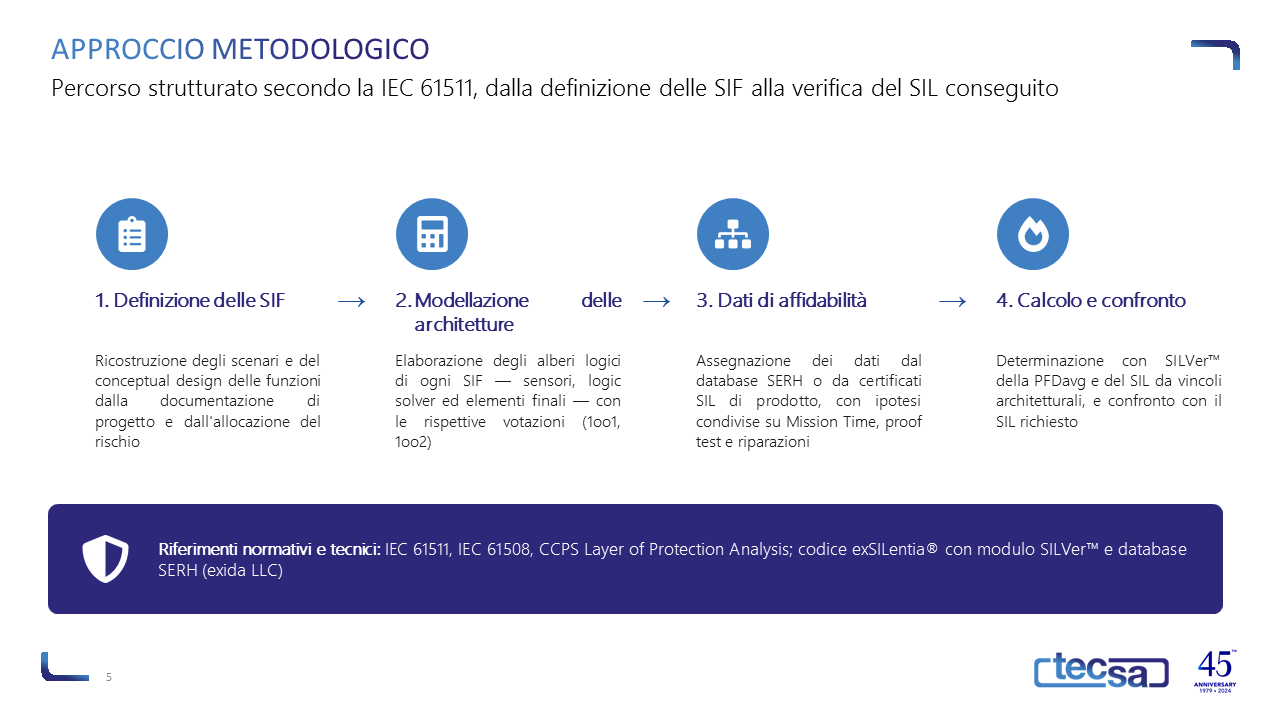
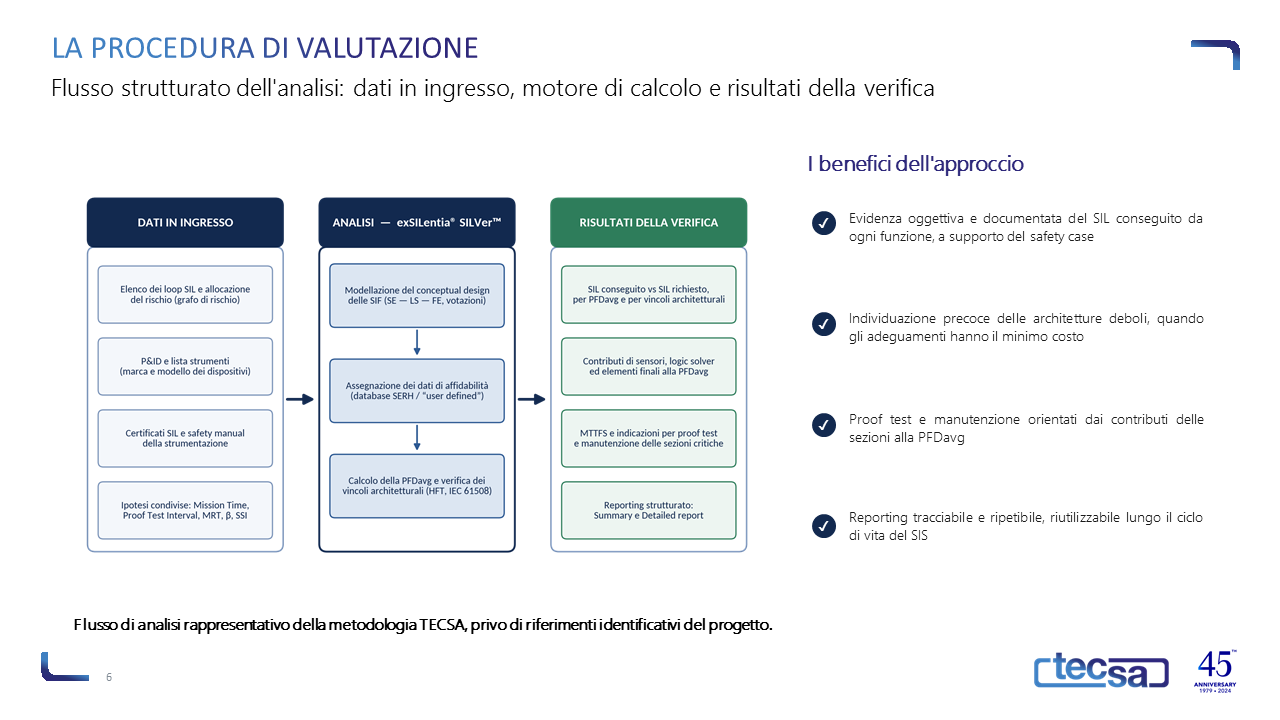
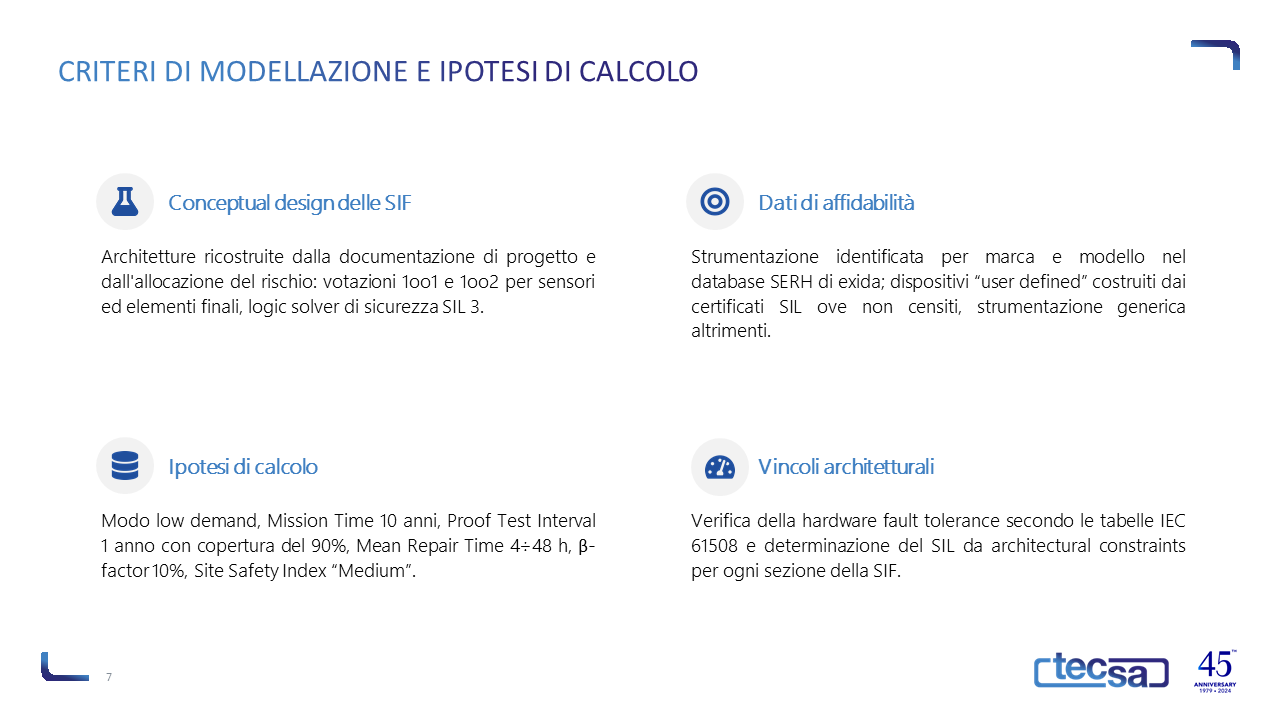
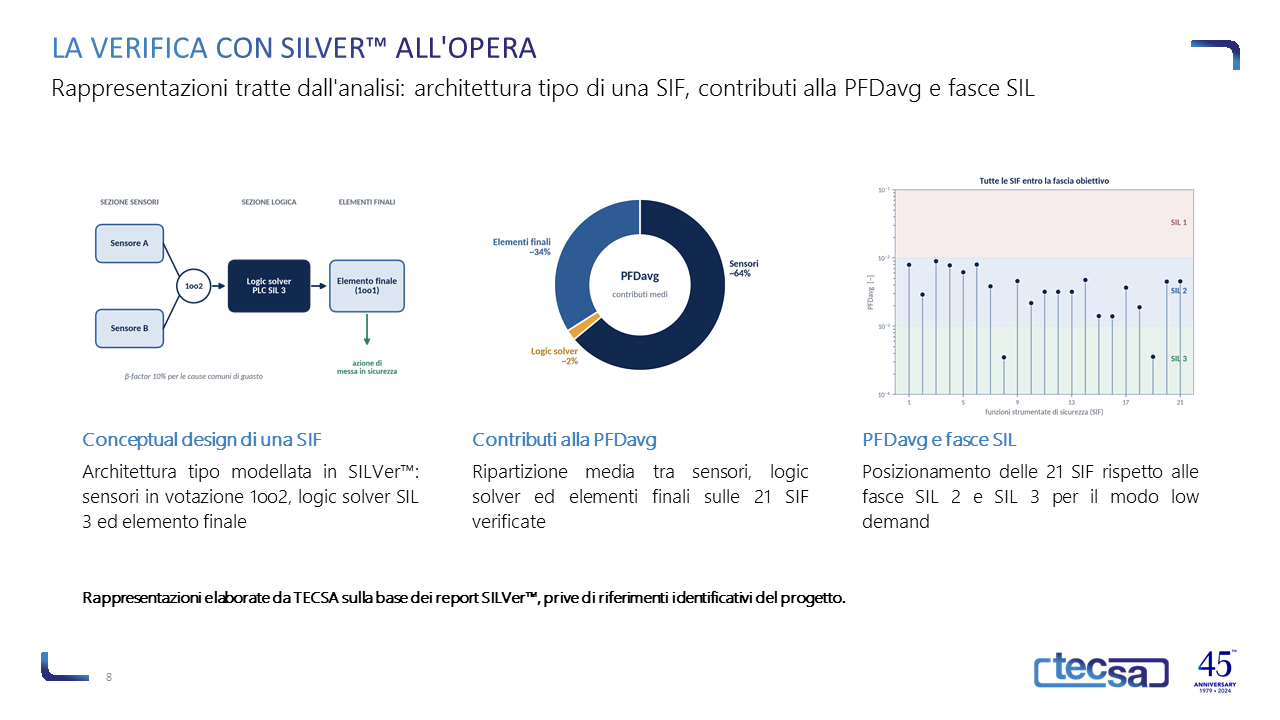
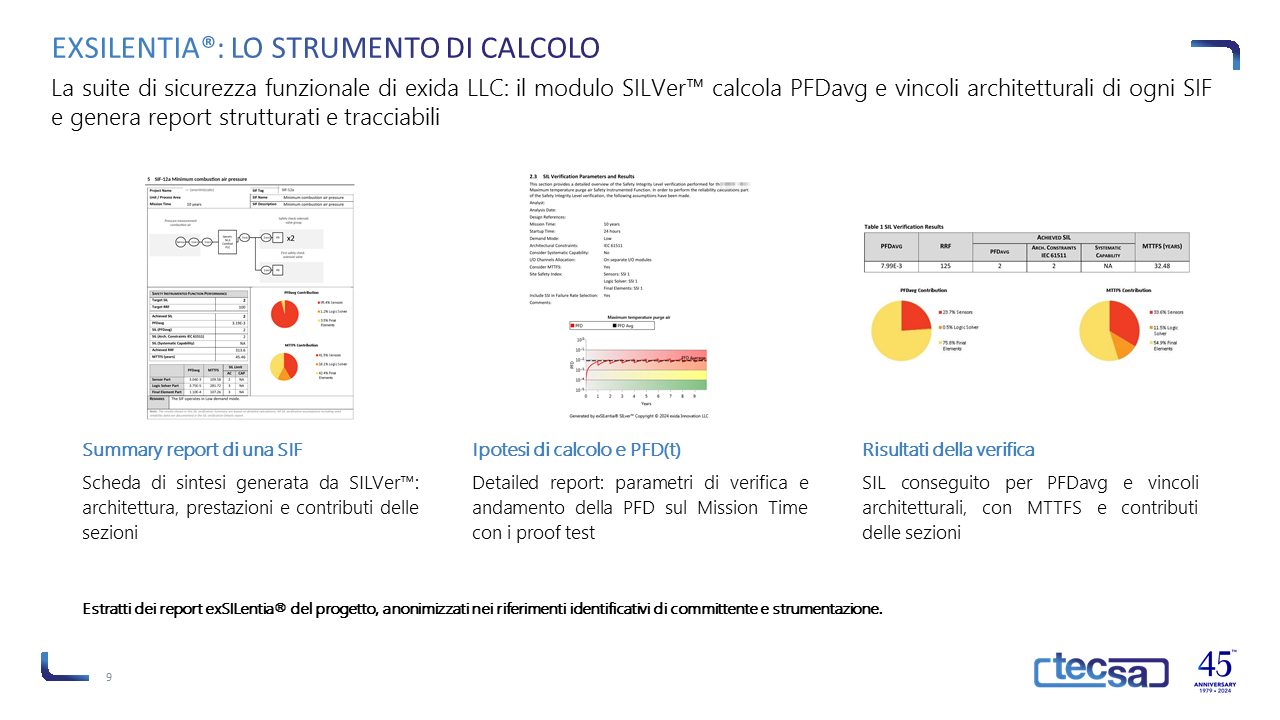
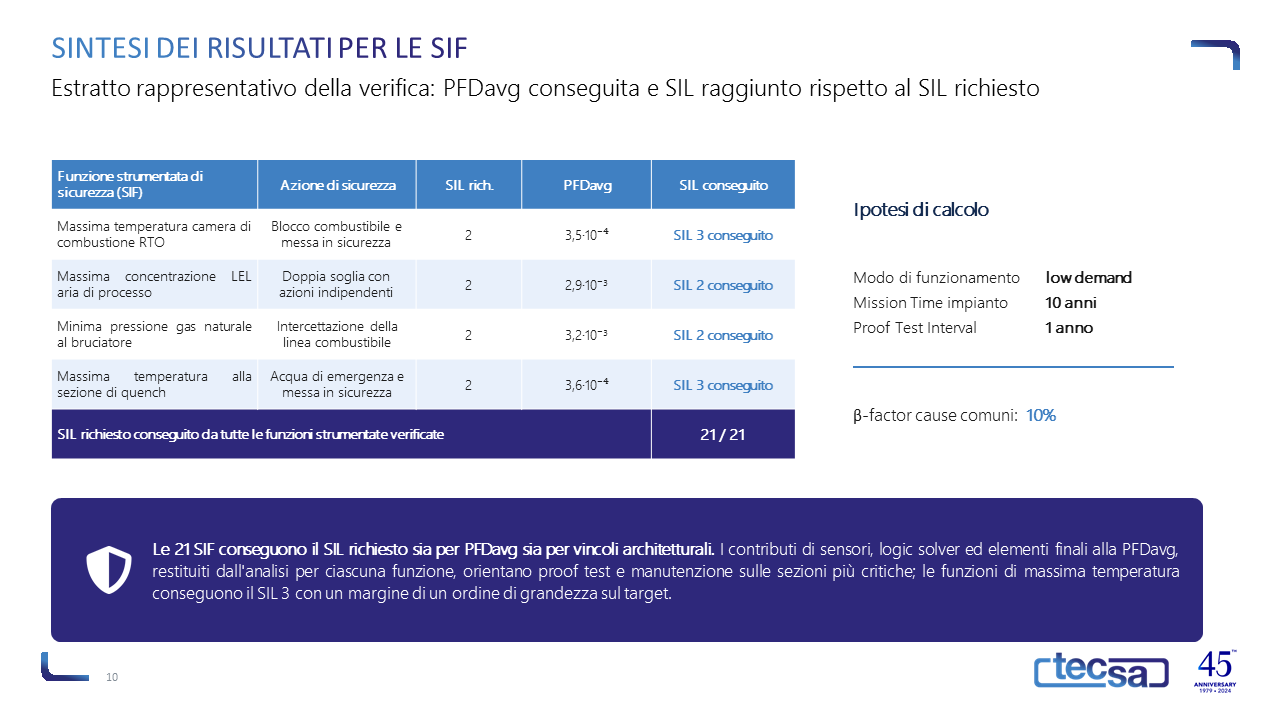
The study applied a structured analysis and reporting methodology in accordance with the international standards IEC 61511 and IEC 61508, using the exSILentia® calculation code from exida LLC and, in particular, the SILVer™ module dedicated to SIL verification. For each of the 21 SIFs identified — including maximum combustion chamber temperatures, LEL thresholds in the process air, minimum and maximum natural gas pressures, and the protections in the quench section — the scenarios and conceptual design were reconstructed, and logic trees for the architectures were drawn up (sensors, logic solvers and output elements, using 1oo1 and 1oo2 configurations), reliability data was assigned from the SERH (Safety Equipment Reliability Handbook) database or from product SIL certificates via ‘user-defined’ devices, and shared calculation assumptions were defined: low-demand operating mode, a Mission Time of 10 years, a Proof Test Interval of 1 year with 90% test coverage, a β-factor of 10% for common causes of failure, and a ‘Medium’ Site Safety Index. The achieved SIL was determined both by the PFDavg and by architectural constraints (hardware fault tolerance in accordance with the IEC 61508 tables) and was compared, for each function, with the SIL required by the risk allocation.
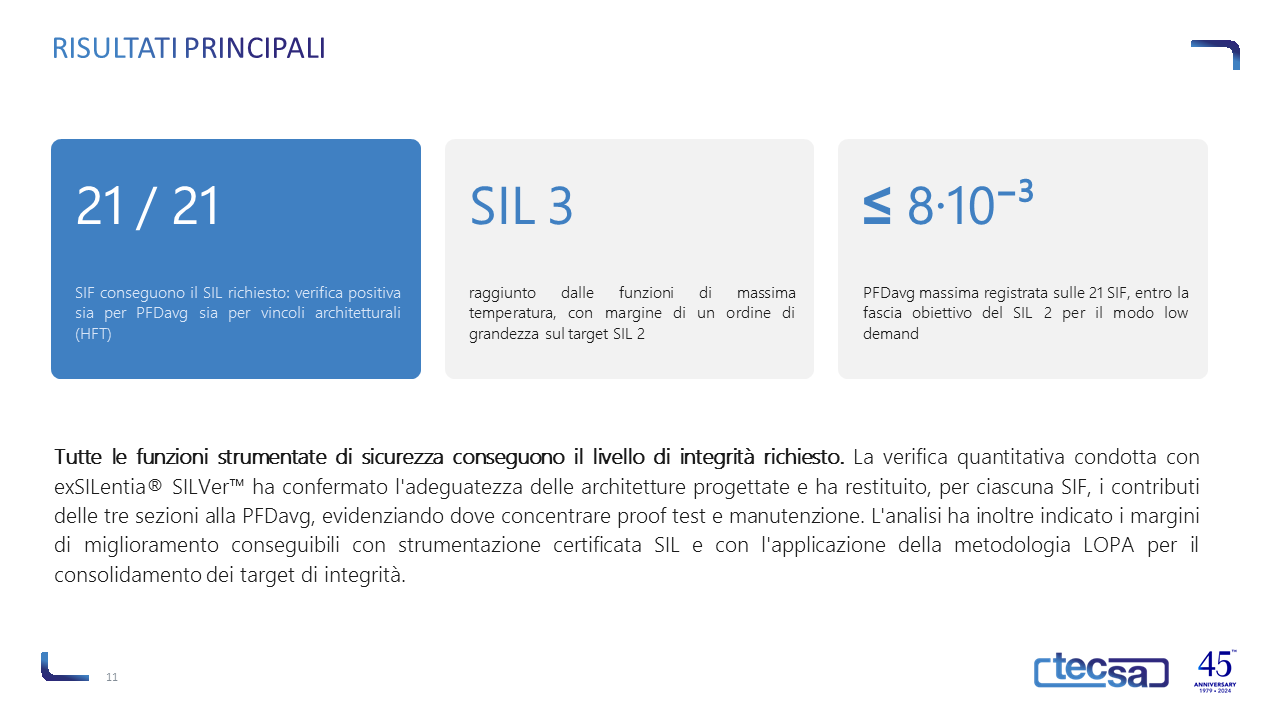
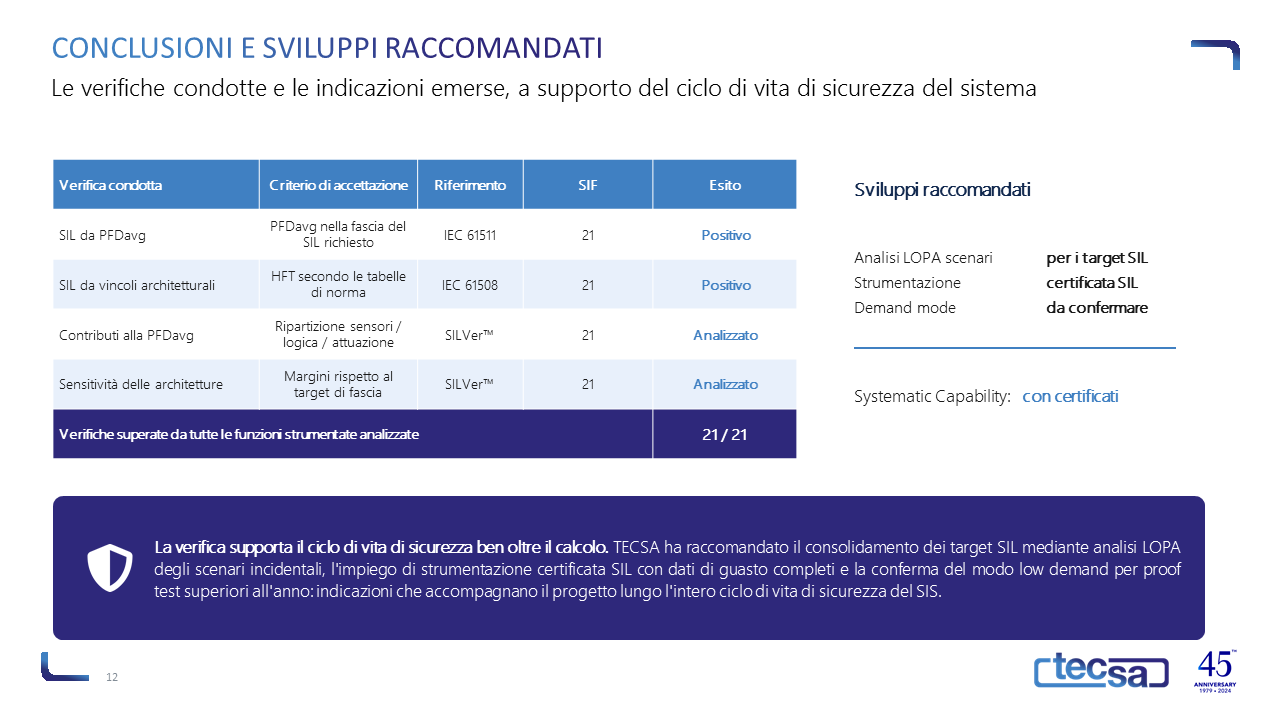
The analysis demonstrated that all 21 SIFs achieve the required SIL 2, with three functions — including maximum chamber and quench temperatures — reaching SIL 3 with a margin of one order of magnitude (PFDavg up to 3.5·10⁻⁴). SILVer™’s structured reporting (Summary and Detailed reports) provided, for each function, the contributions of sensors, logic solvers and output elements to the PFDavg, guiding proof testing and maintenance towards the most critical sections of the architectures. The study also formulated recommendations to support the system’s safety lifecycle: the consolidation of SIL targets through the application of the LOPA methodology to incident scenarios, the use of SIL-certified instrumentation with comprehensive failure data, and the confirmation of the low-demand operating mode for test intervals exceeding one year.