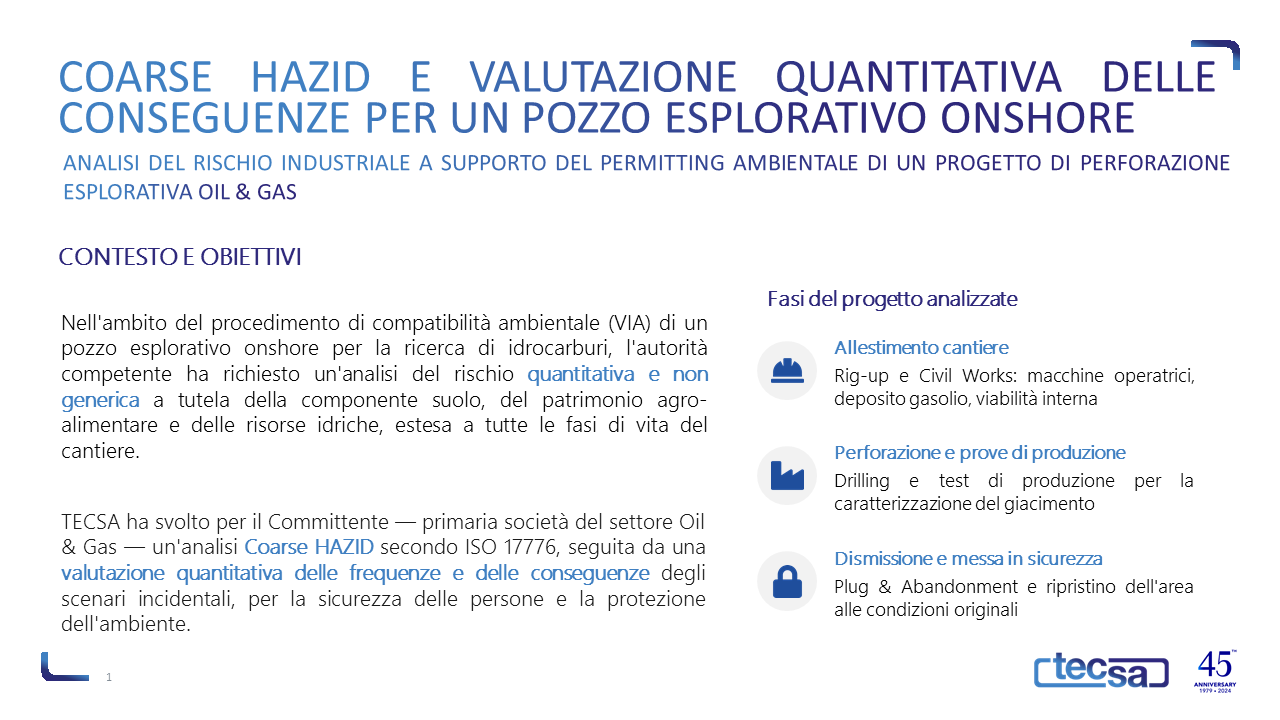
As part of the environmental impact assessment (EIA) procedure for a project to drill an onshore exploration well in search of liquid and gaseous hydrocarbons, the competent authority requested that the Client — a leading company operating in the Oil & Gas sector — carry out a quantitative, non-generic risk analysis to protect the soil, the agri-food sector and water resources, covering the construction, drilling and decommissioning/safety measures phases.
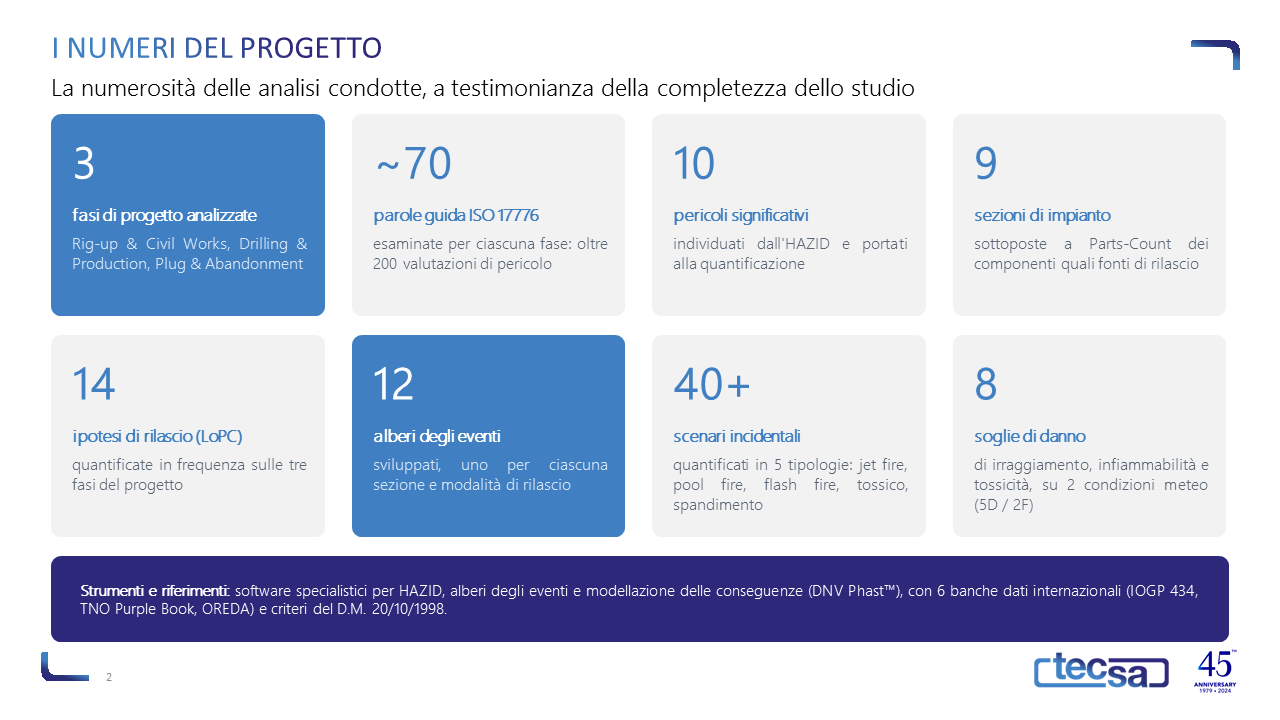
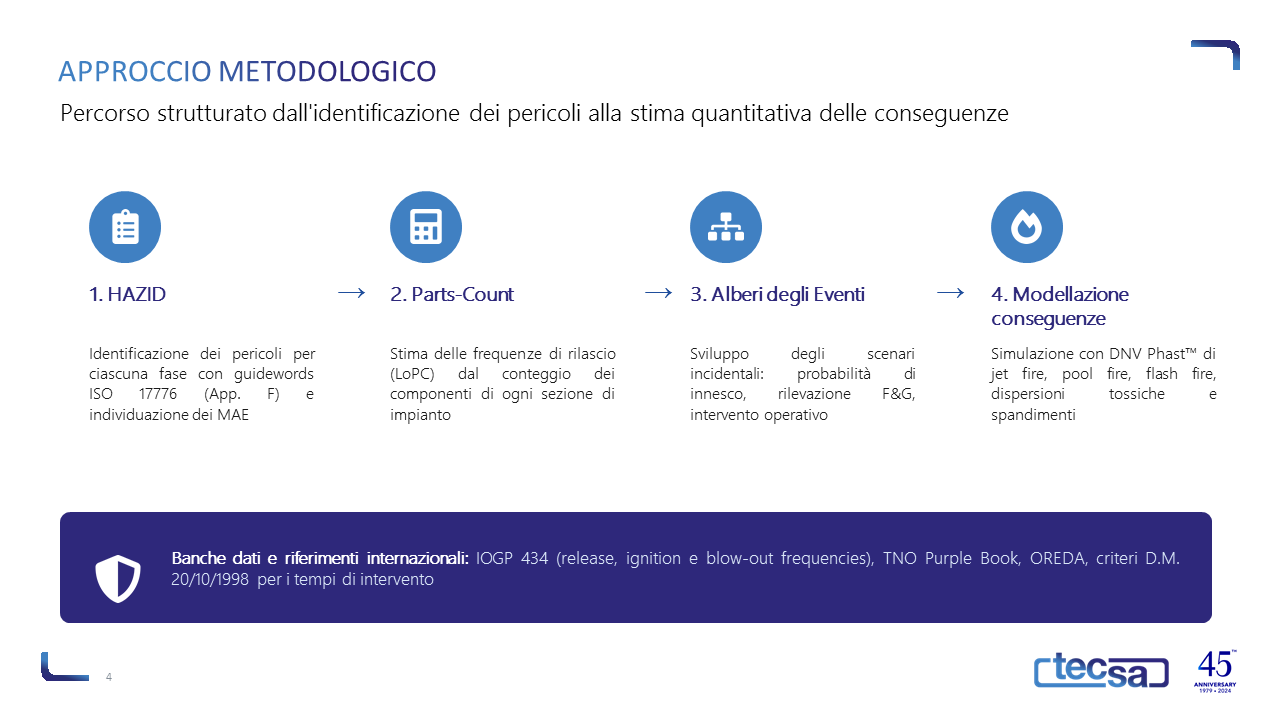
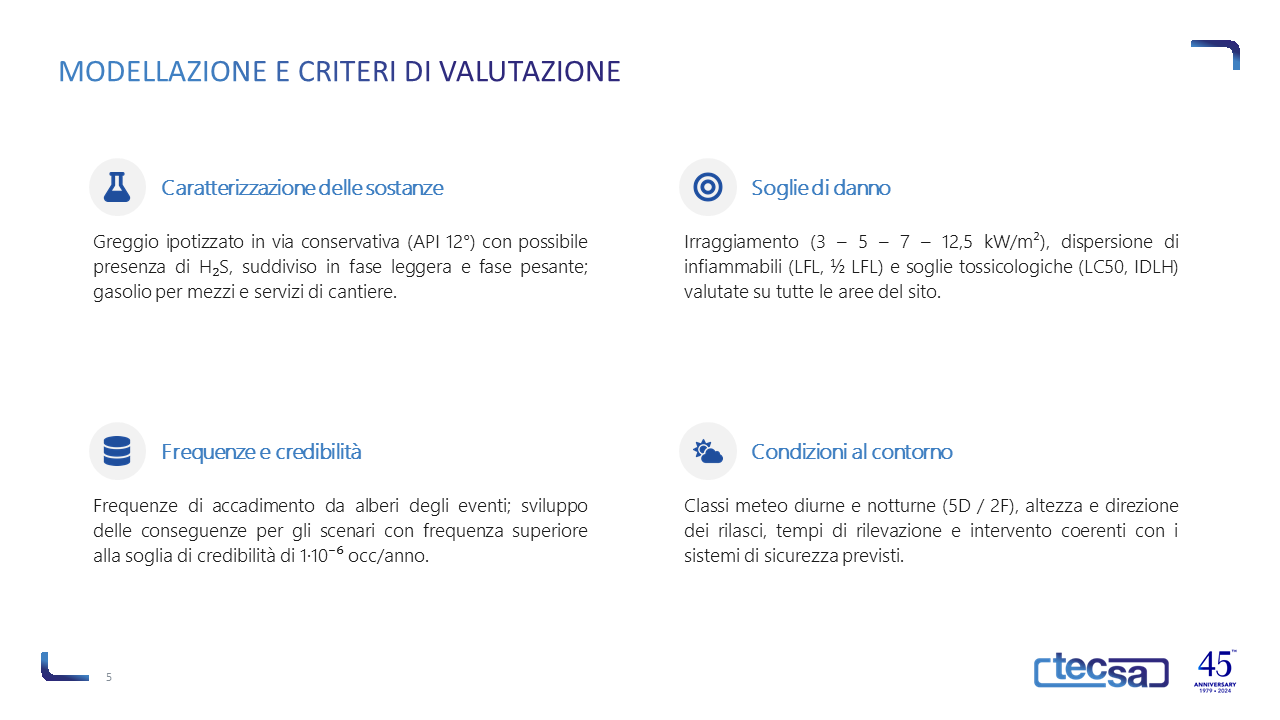
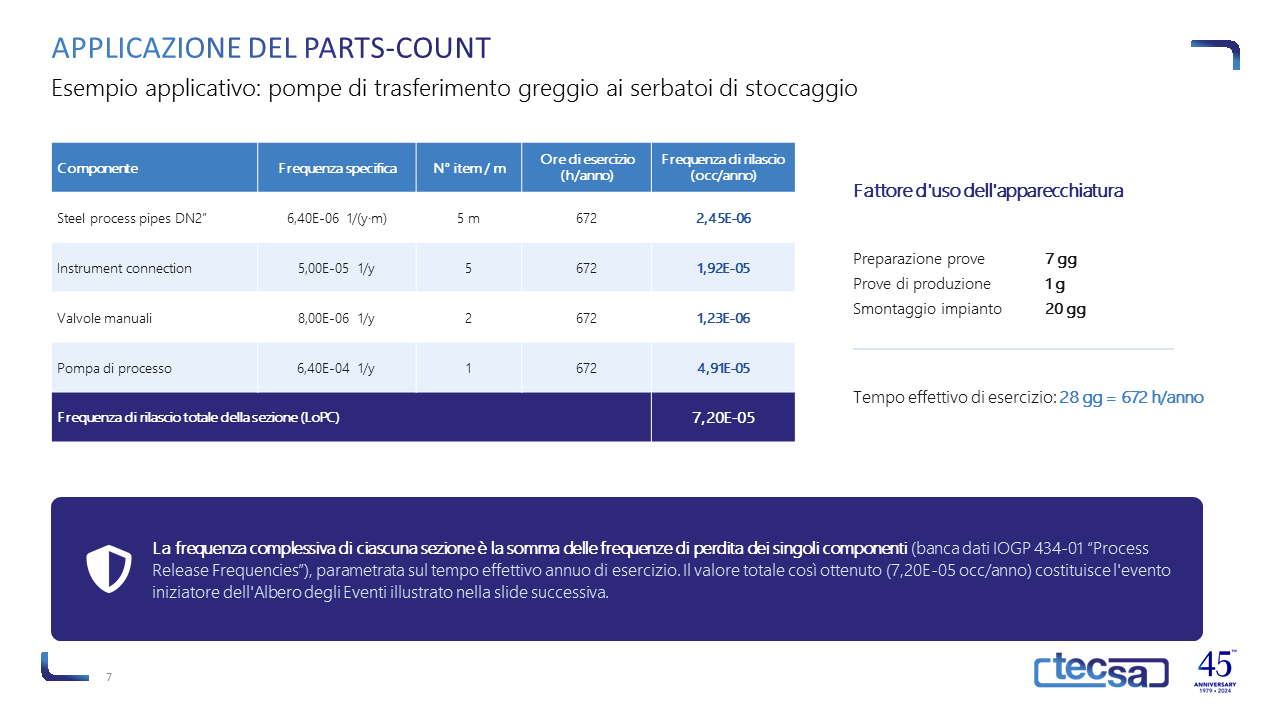
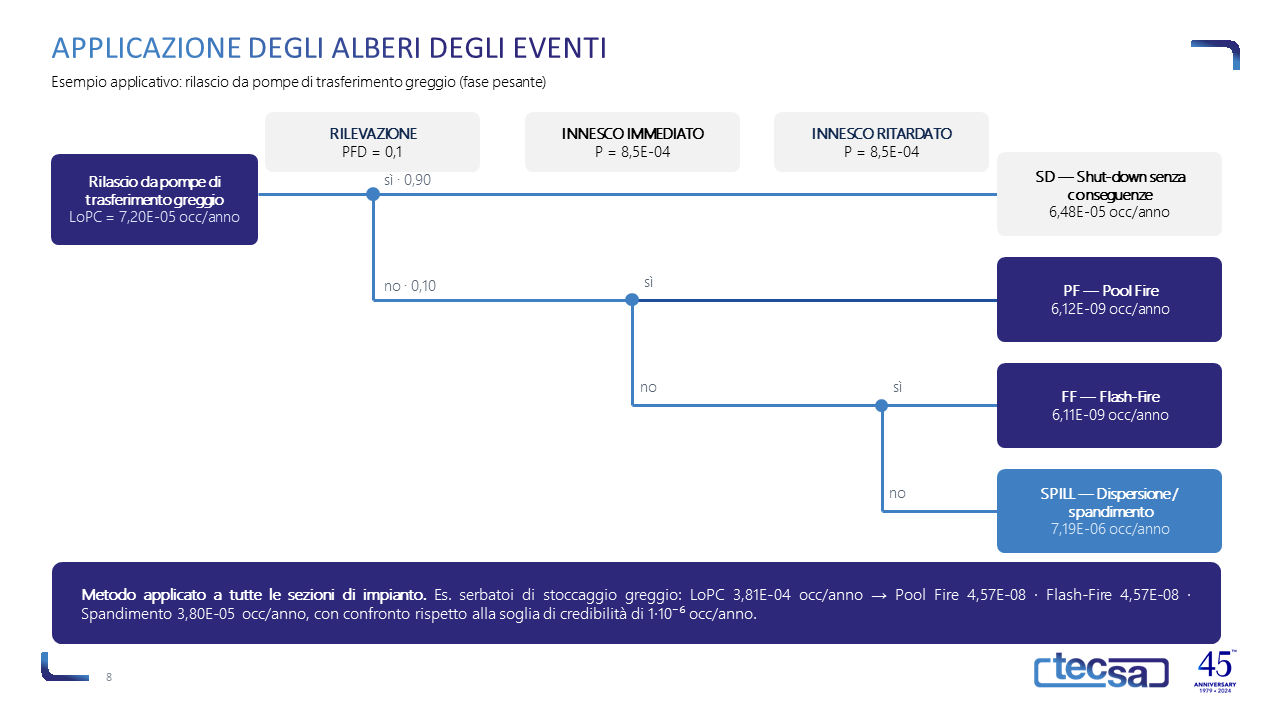
The study, carried out by TECSA, involved a preliminary ‘Coarse HAZID’ hazard analysis conducted in accordance with the principles of ISO 17776 (guidewords as set out in Appendix F), applied to all phases of the site’s life cycle: site set-up (Rig-up and Civil Works), drilling and production testing (Drilling & Production) and decommissioning/safety measures (Plug & Abandonment). Based on the hazards identified, a quantitative risk assessment was carried out: identification of primary containment failures (LoPC), estimation of release frequencies using the Parts-Count technique with international databases (IOGP, TNO Purple Book, OREDA), development of accident scenarios using Event Trees (probability of initiation, Fire & Gas detection, operational response with response times compliant with Ministerial Decree 20/10/1998) and modelling of consequences using the DNV Phast™ tool for jet fire, pool fire, flash fire, toxic dispersion and spill scenarios.
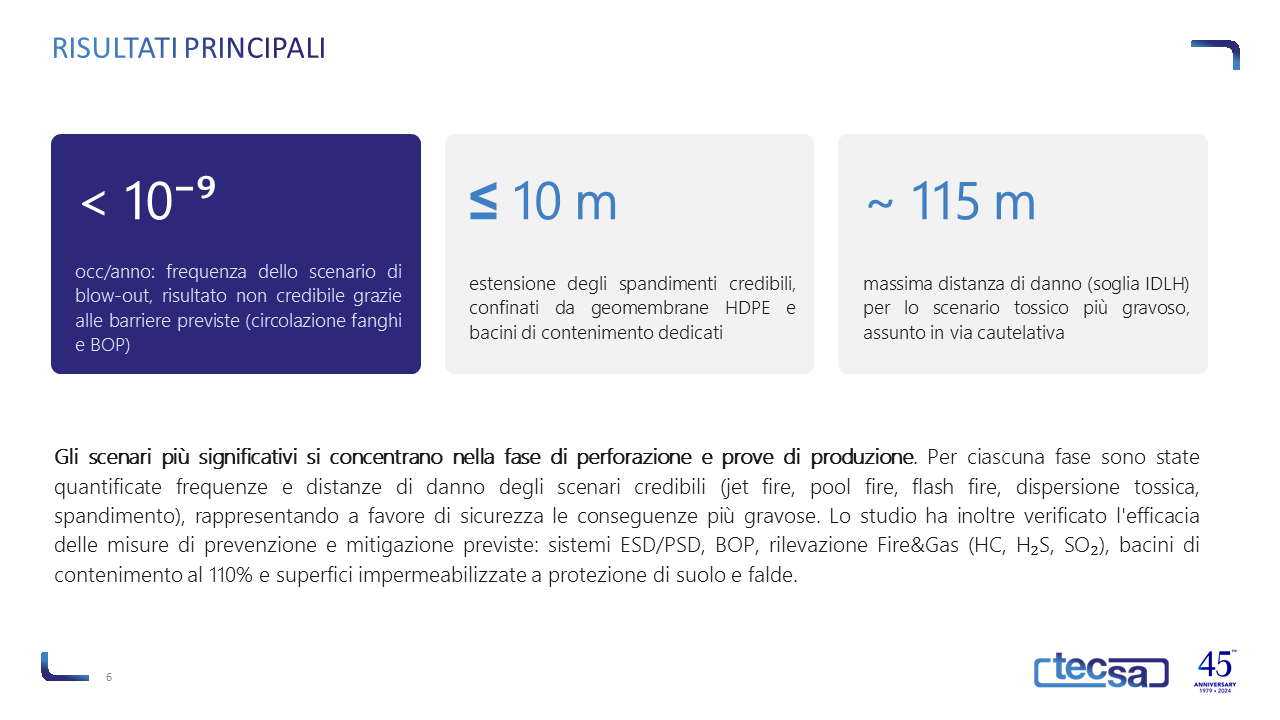
The analysis demonstrated that the blowout scenario was implausible due to the planned barriers (mud circulation and BOP), quantified the frequencies and distances of damage for plausible scenarios — assuming the most severe consequences for the sake of safety — and verified the effectiveness of prevention and mitigation measures (ESD/PSD systems, gas and fire detection, retention basins and impermeable surfaces), confirming that spills would be contained to protect the soil and groundwater. The study thus provided a detailed response to the environmental requirement, serving as supporting evidence for the project’s authorisation process.