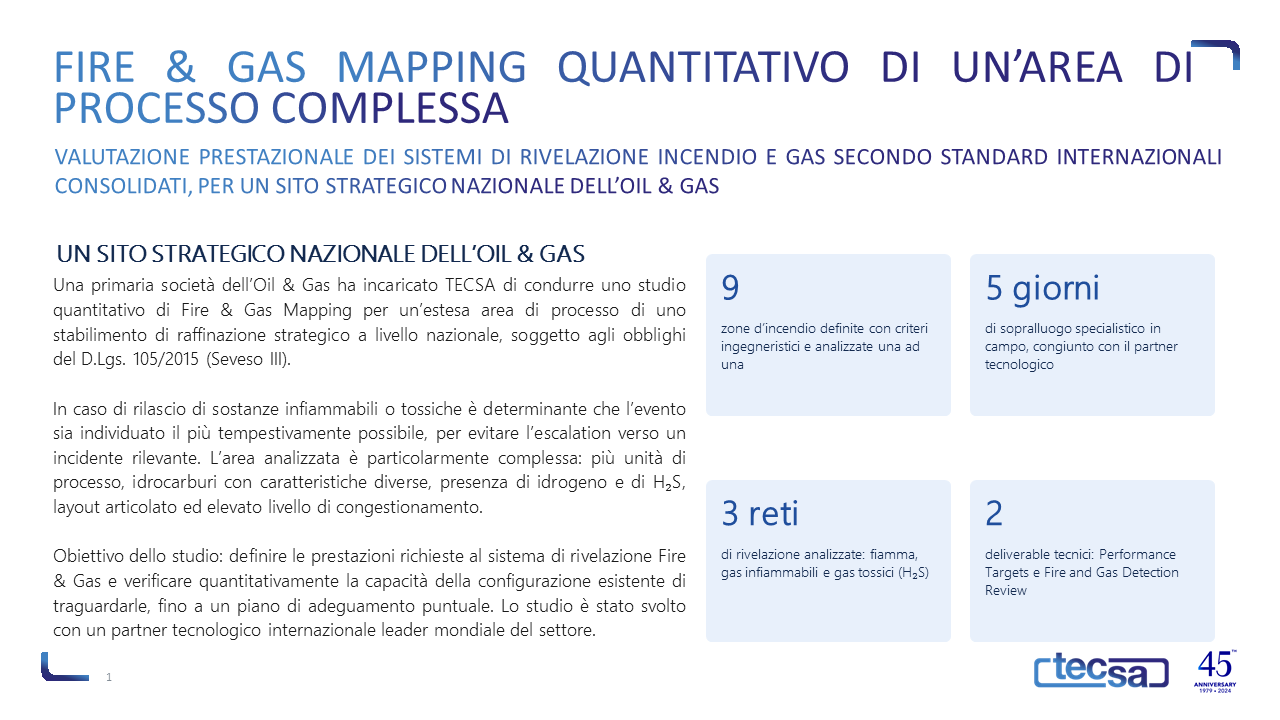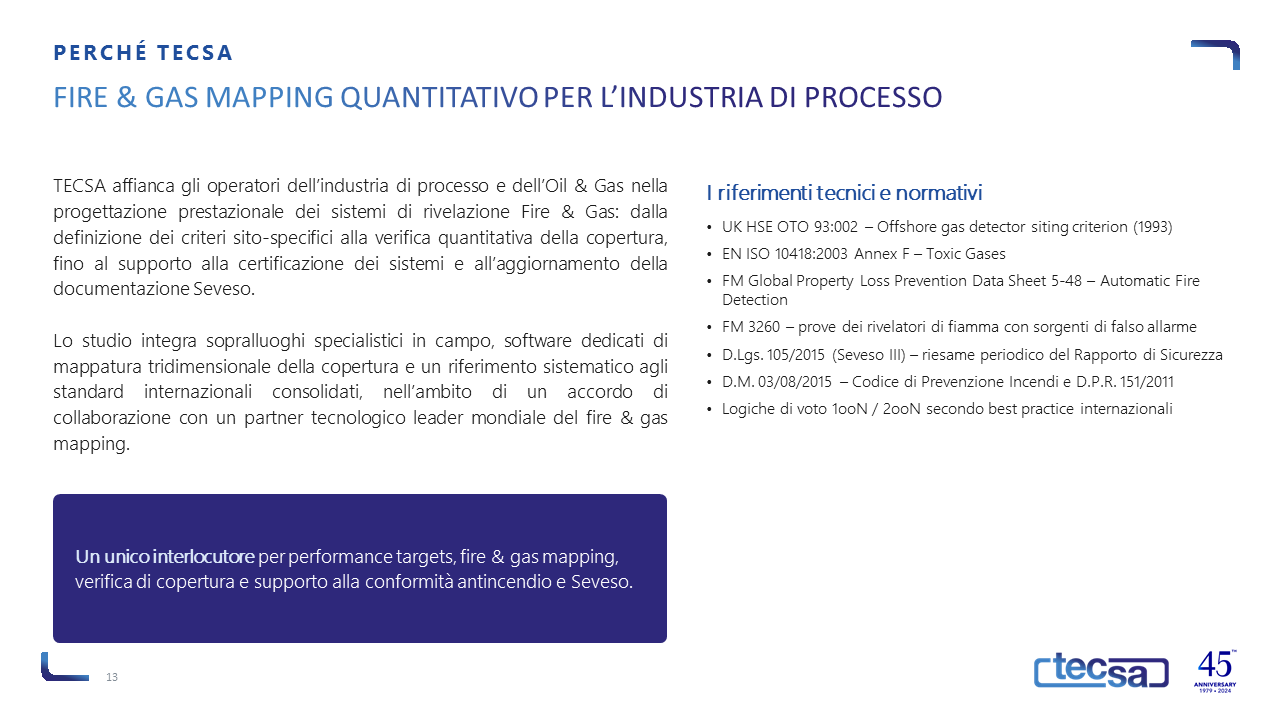
A leading Oil & Gas company commissioned TECSA to carry out a quantitative Fire & Gas Mapping study for an extensive process area at a nationally strategic refinery, subject to the requirements of Legislative Decree 105/2015 (Seveso III). In the event of a release of flammable or toxic substances, it is crucial that the incident is detected as promptly as possible to prevent it from escalating into a major accident: the aim of the study was to define, using quantitative criteria, the performance requirements for the fire and gas detection system and to verify whether the existing configuration was capable of meeting them, in an area that is particularly complex in terms of the number of process units, the variety of fluids processed (hydrocarbons, hydrogen, H₂S), the layout’s complexity and the level of congestion.
The methodological approach
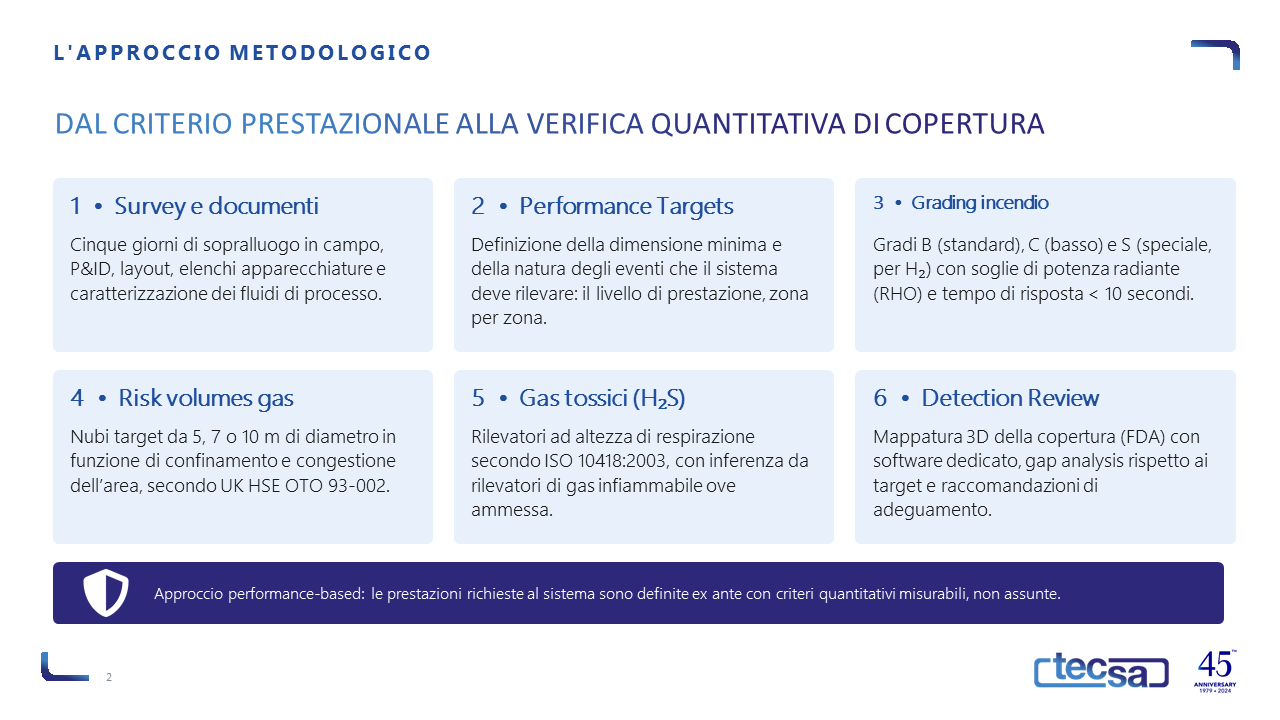
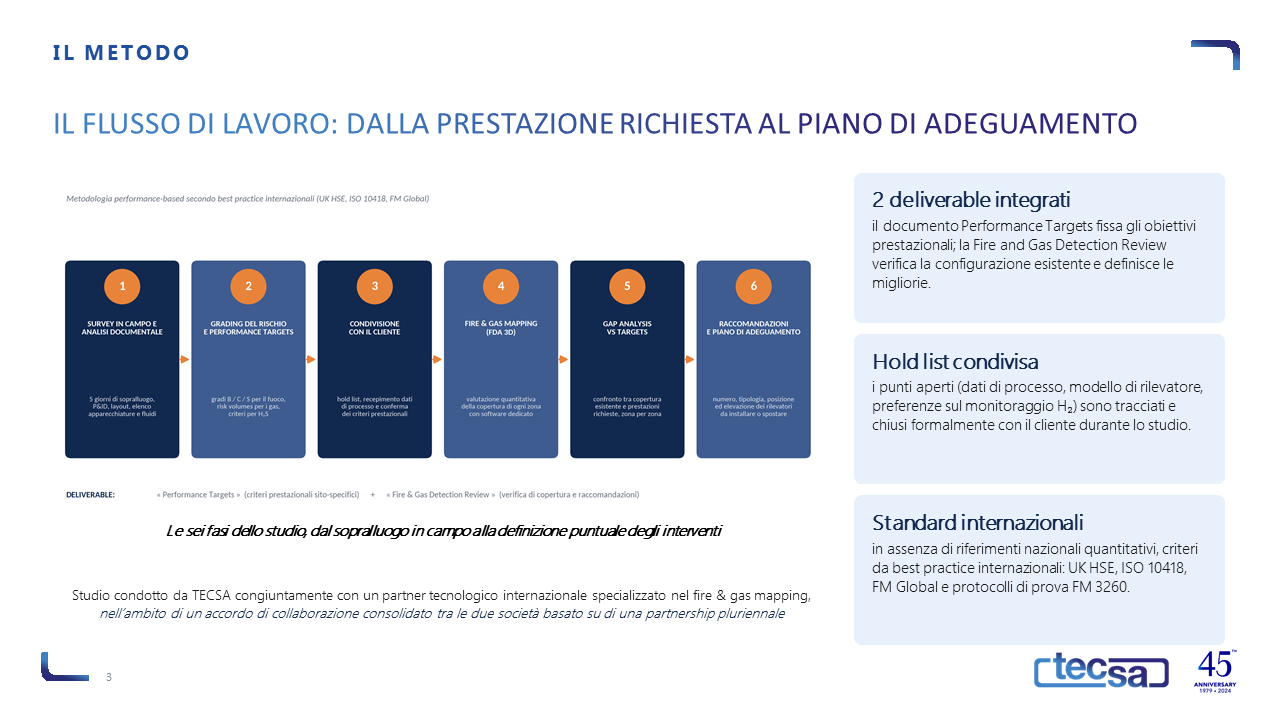
The study, carried out in collaboration with an international technology partner and world leader in fire & gas mapping, followed a performance-based workflow divided into six phases: a five-day specialist site survey and document analysis; definition of site-specific performance targets, namely the minimum size and nature of the events that the system must detect; formal agreement with the client via a detailed hold list; three-dimensional mapping of the coverage (fire and gas mapping) using dedicated software; a gap analysis against the targets; and specific recommendations for improvements.
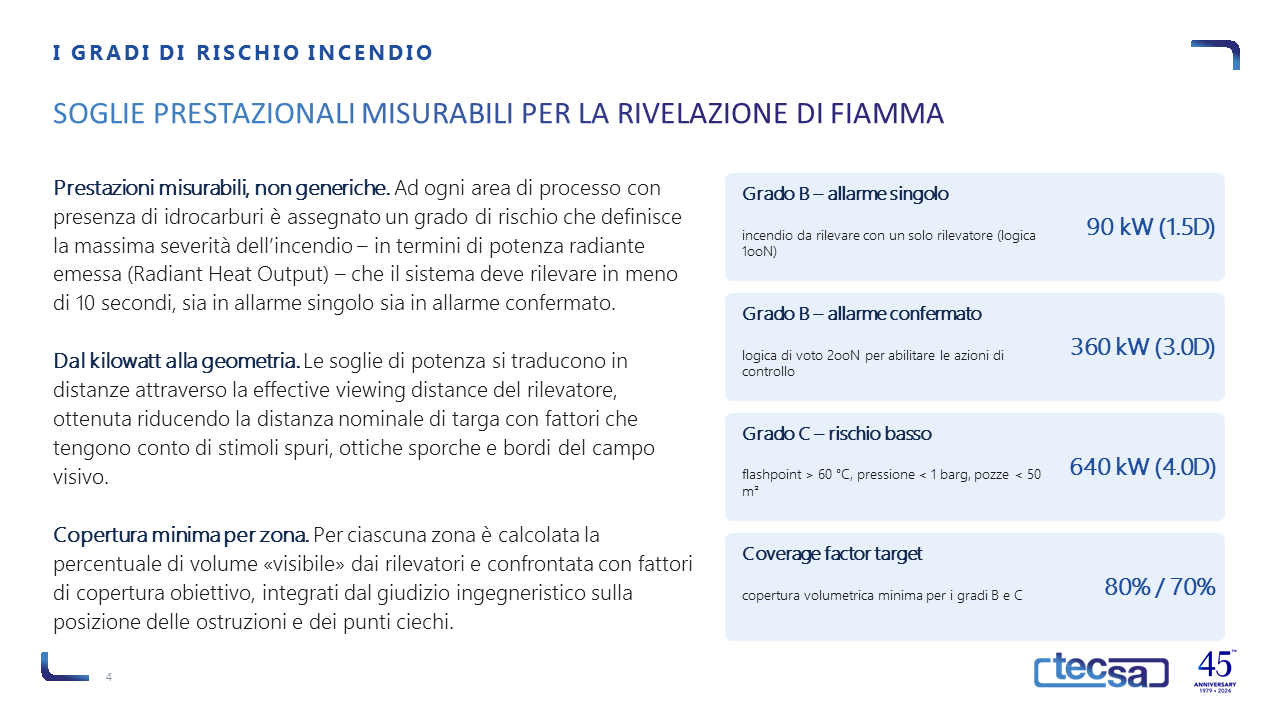
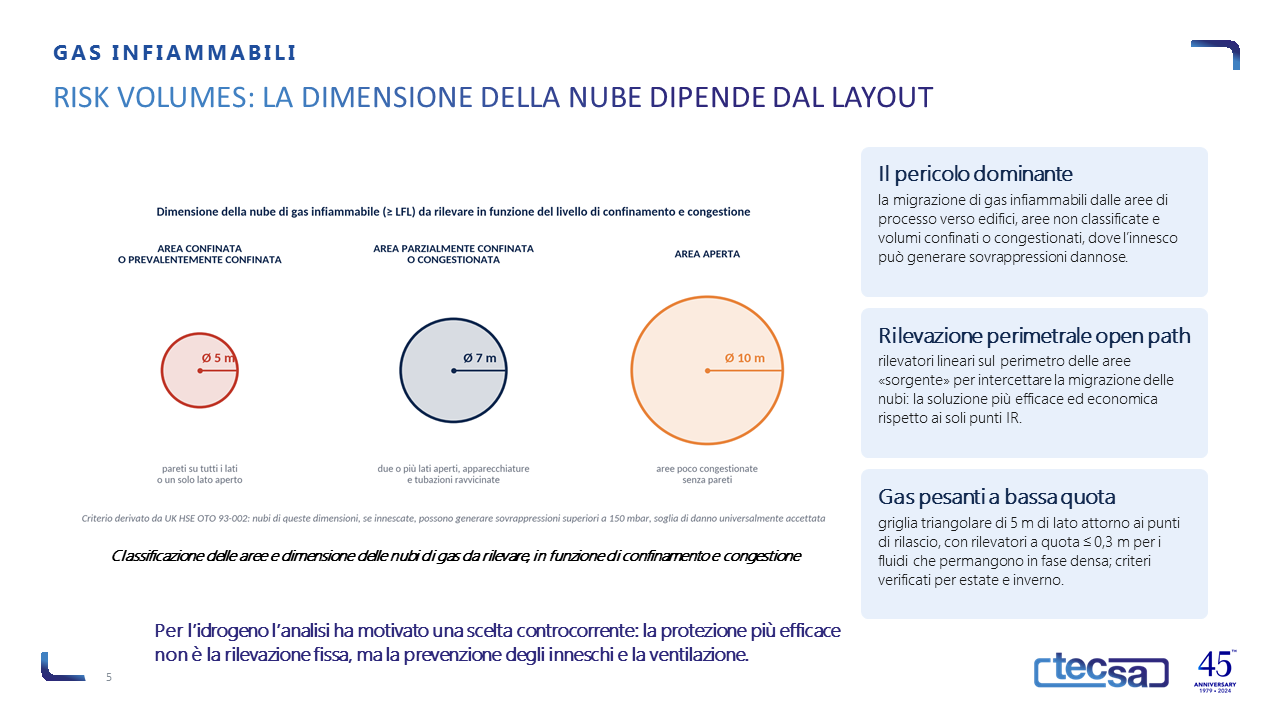
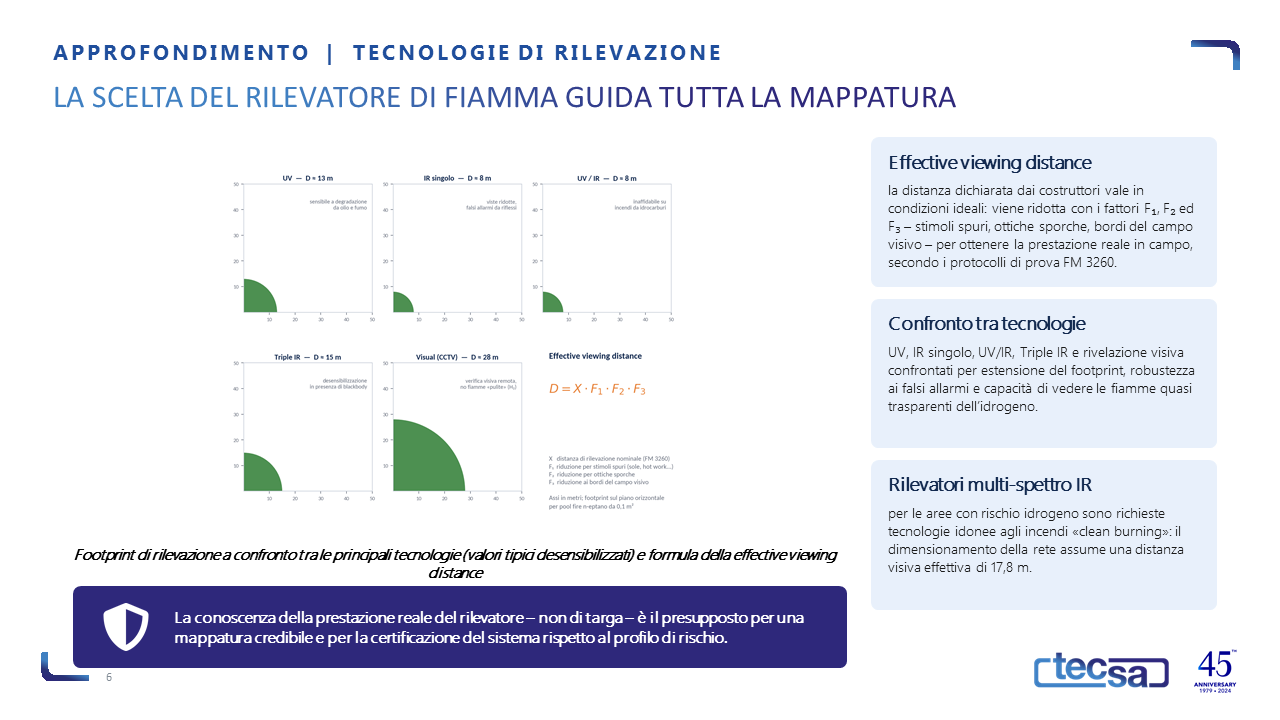
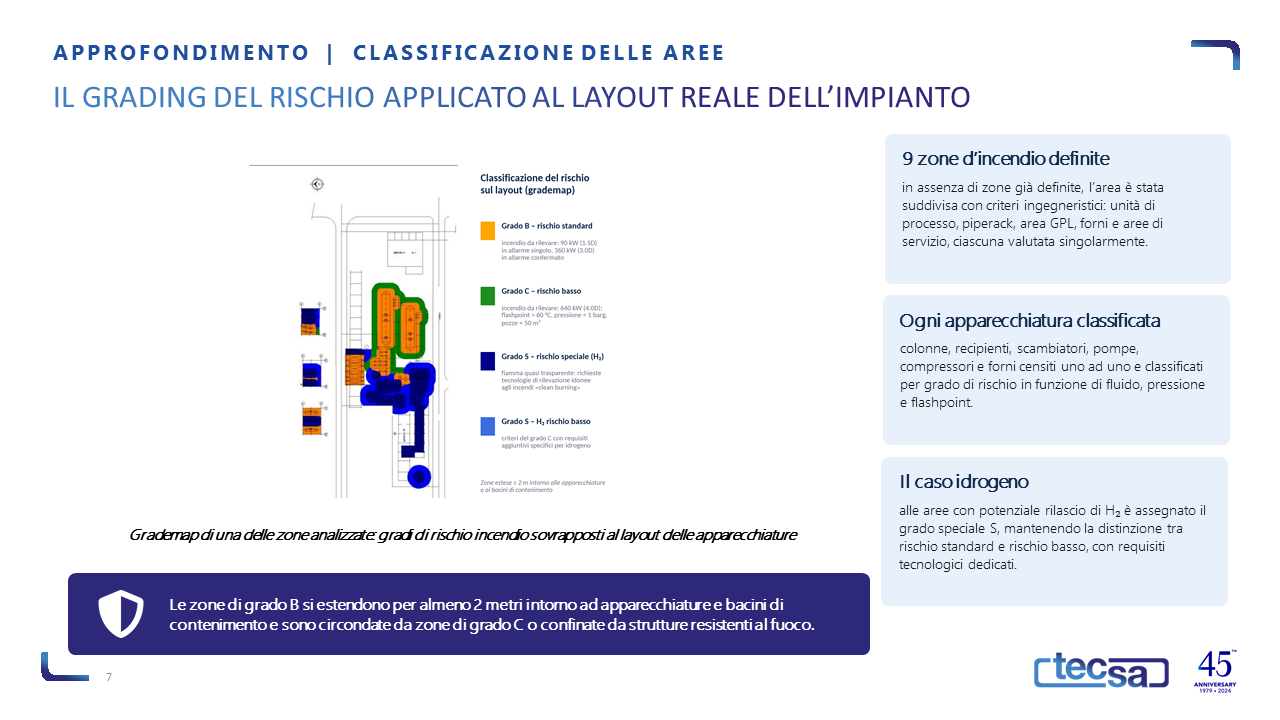
For flame detection, a risk grading system was applied, categorised as Grade B (standard), C (low) and S (special, for areas containing hydrogen), with measurable thresholds for emitted radiant power – ranging from 90 kW for a single alarm to 640 kW – to be detected in less than 10 seconds, and target coverage factors of 80 per cent and 70 per cent. The thresholds are converted into distances using the detectors’ effective viewing distance, calculated by adjusting the nameplate distance in accordance with FM 3260 test protocols. For flammable gases, risk volumes were defined with target clouds of 5, 7 or 10 metres in diameter depending on the confinement and congestion of each area, in accordance with UK HSE OTO 93-002; for toxic gases (H₂S), the detectors were positioned at breathing height in accordance with ISO 10418:2003, at release points, along escape routes and at the entrances to high-risk areas.
The complexity of the analysis
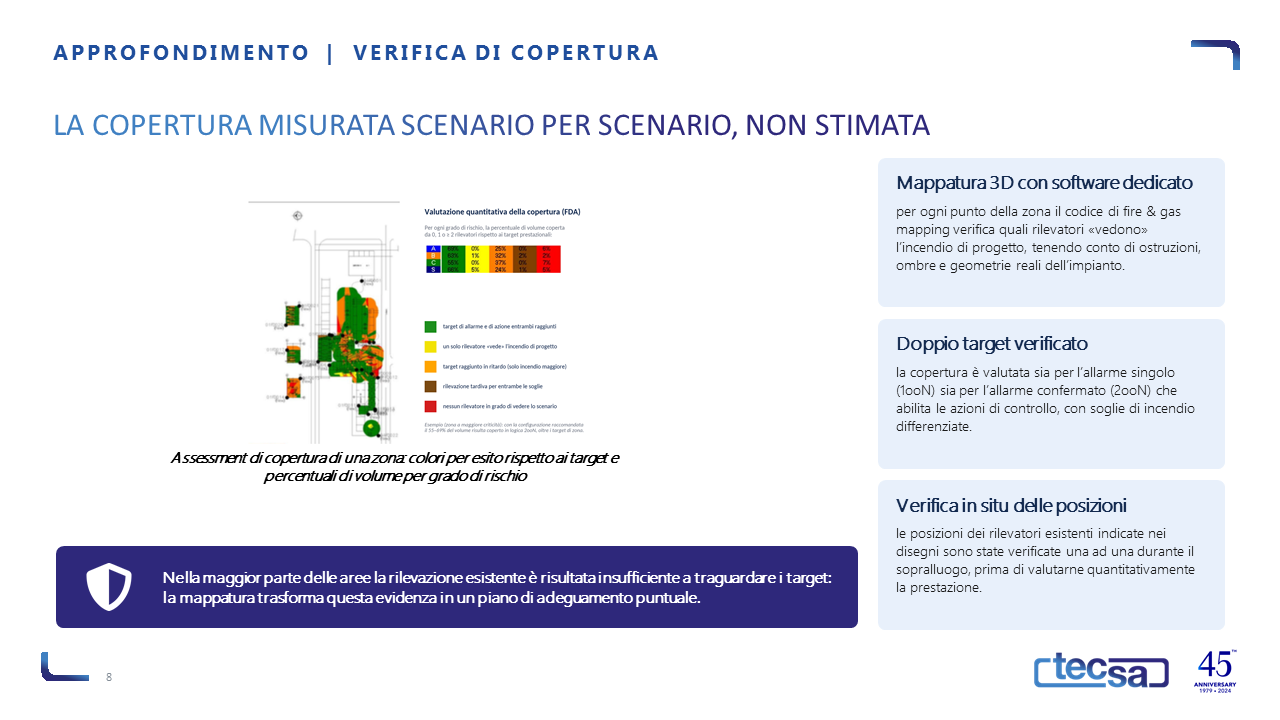
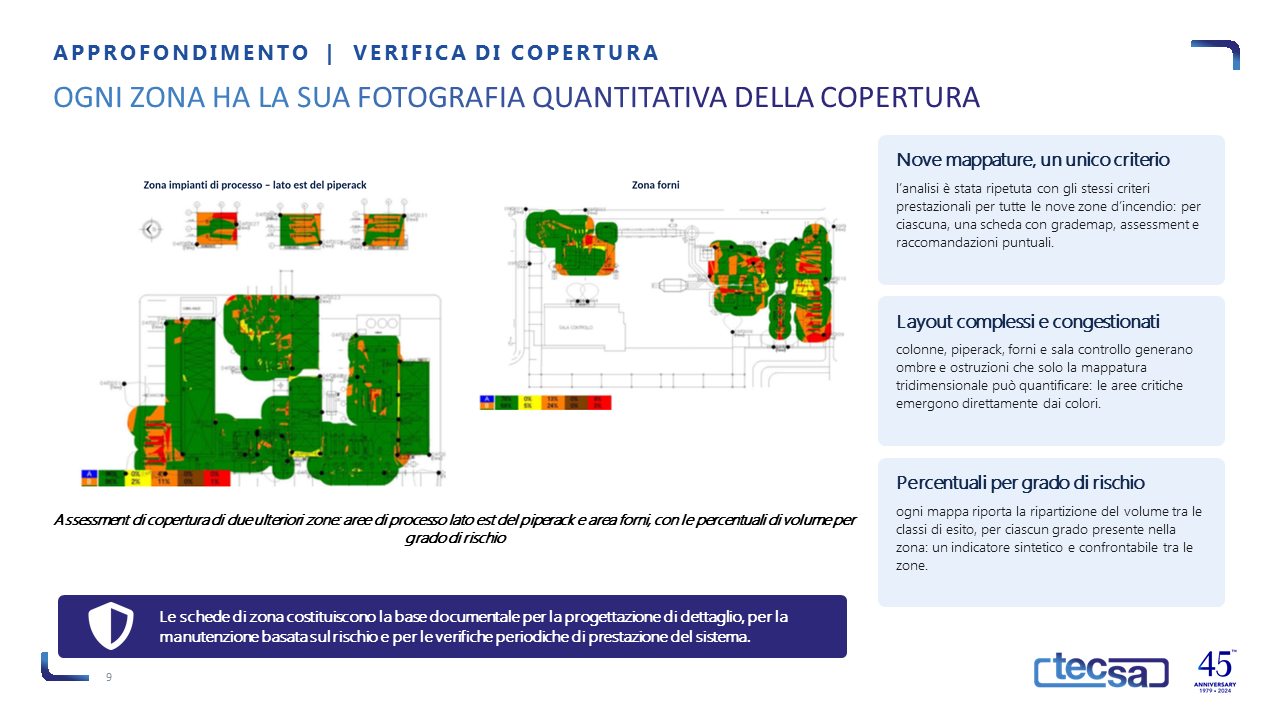
The area was divided into nine fire zones using engineering criteria, and each piece of equipment – columns, vessels, heat exchangers, pumps, compressors and furnaces – was surveyed and classified by risk level based on the fluid, pressure and flashpoint, with on-site verification of the positions of existing detectors. Coverage for each zone was quantified on a scenario-by-scenario basis using mapping software, taking into account obstructions, shadows and actual geometries, both for the single alarm (1ooN) and for the confirmed alarm (2ooN) which triggers control actions.
The results
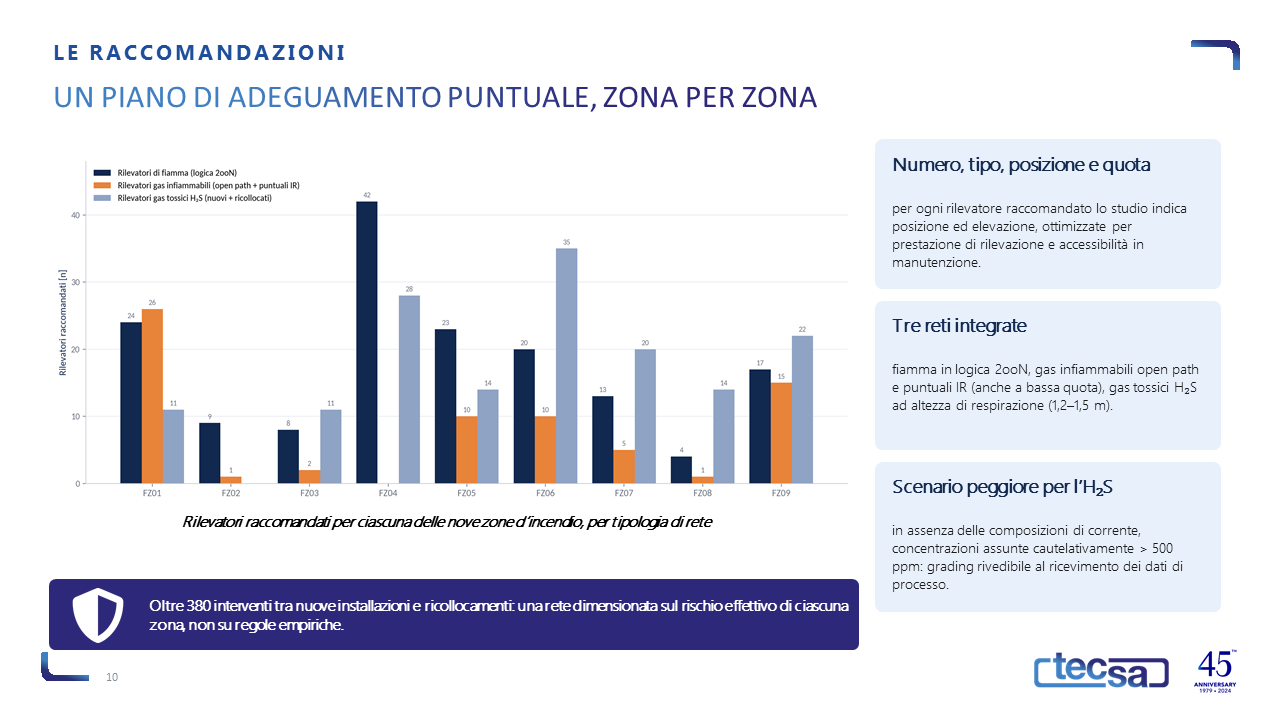
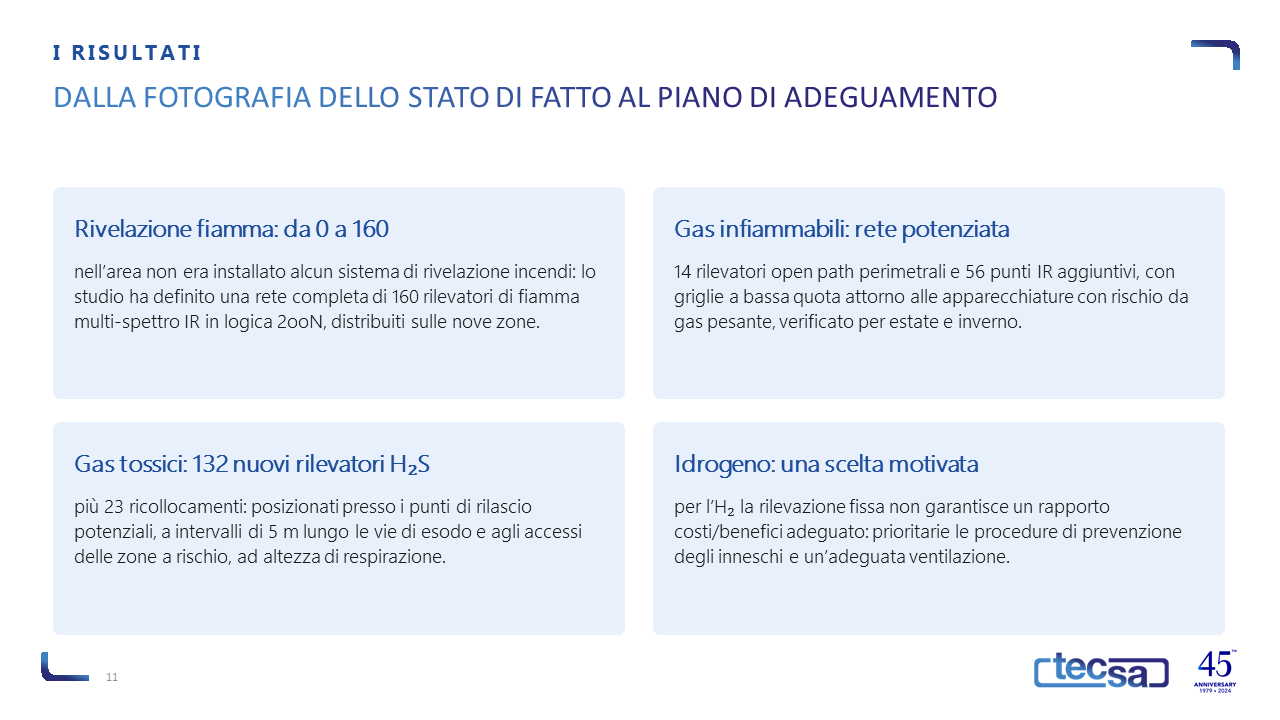
- Flame detection: a comprehensive network of 160 multi-spectral IR detectors operating in 2ooN mode has been established in an area previously lacking fire detection.
- Flammable gases: 14 perimeter open-path detectors and 56 additional IR points, with low-level grids around equipment at risk from heavy gases.
- Toxic gases: 132 new H₂S detectors and 23 repositioned detectors, sized for the worst-case scenario in the absence of current compositions.
- Hydrogen: a reasoned recommendation against the use of fixed detection systems, prioritising ignition prevention and ventilation.
Regulatory significance
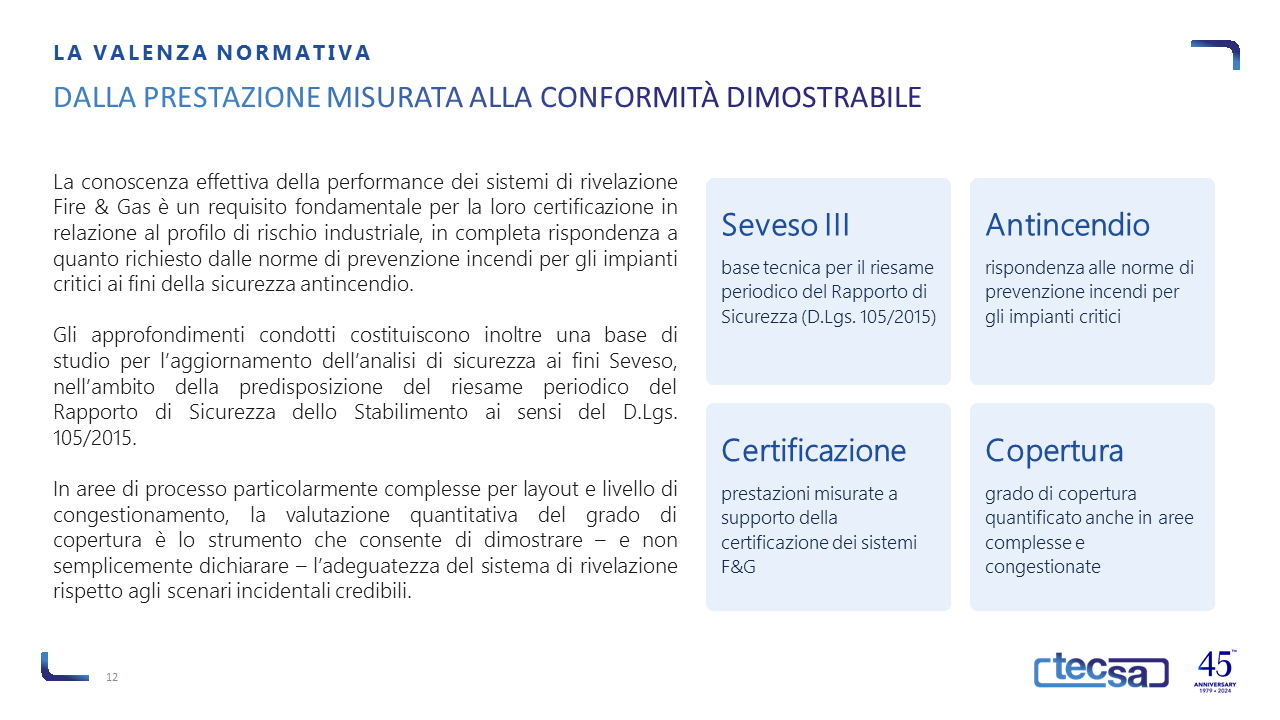
A thorough understanding of the performance of Fire & Gas detection systems is a fundamental requirement for their certification in relation to the industrial risk profile, in full compliance with the requirements of fire prevention regulations for critical installations for the purposes of fire safety. The in-depth analyses carried out also form a basis for updating the safety analysis for Seveso purposes, as part of the preparation for the periodic review of the Plant Safety Report pursuant to Legislative Decree 105/2015, and are essential for assessing the degree of coverage provided by detection systems in process areas that are particularly complex in terms of layout and congestion levels.