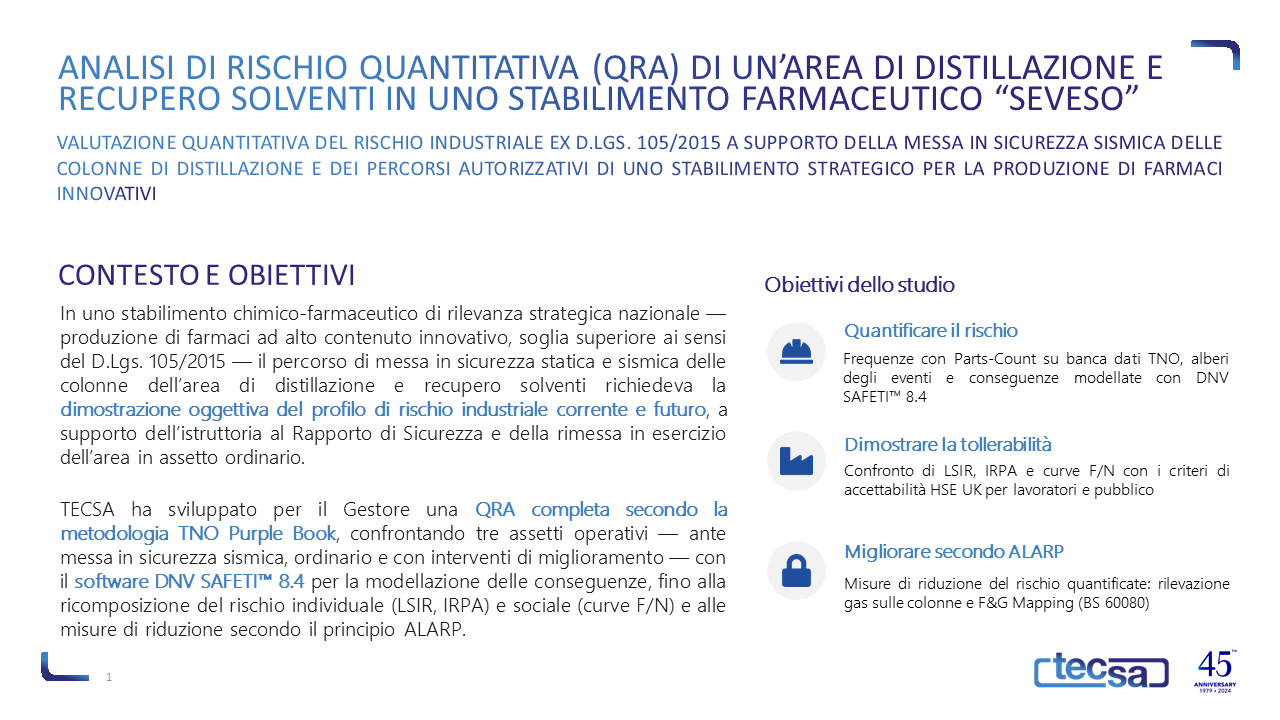
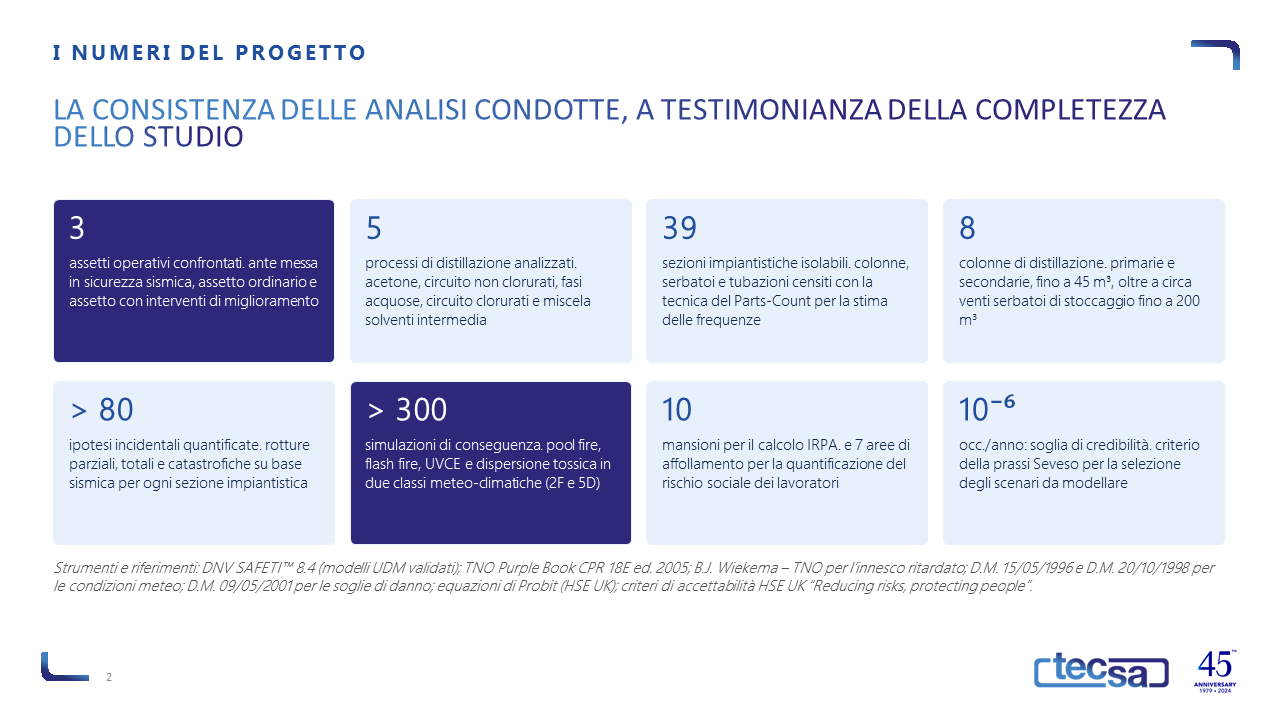
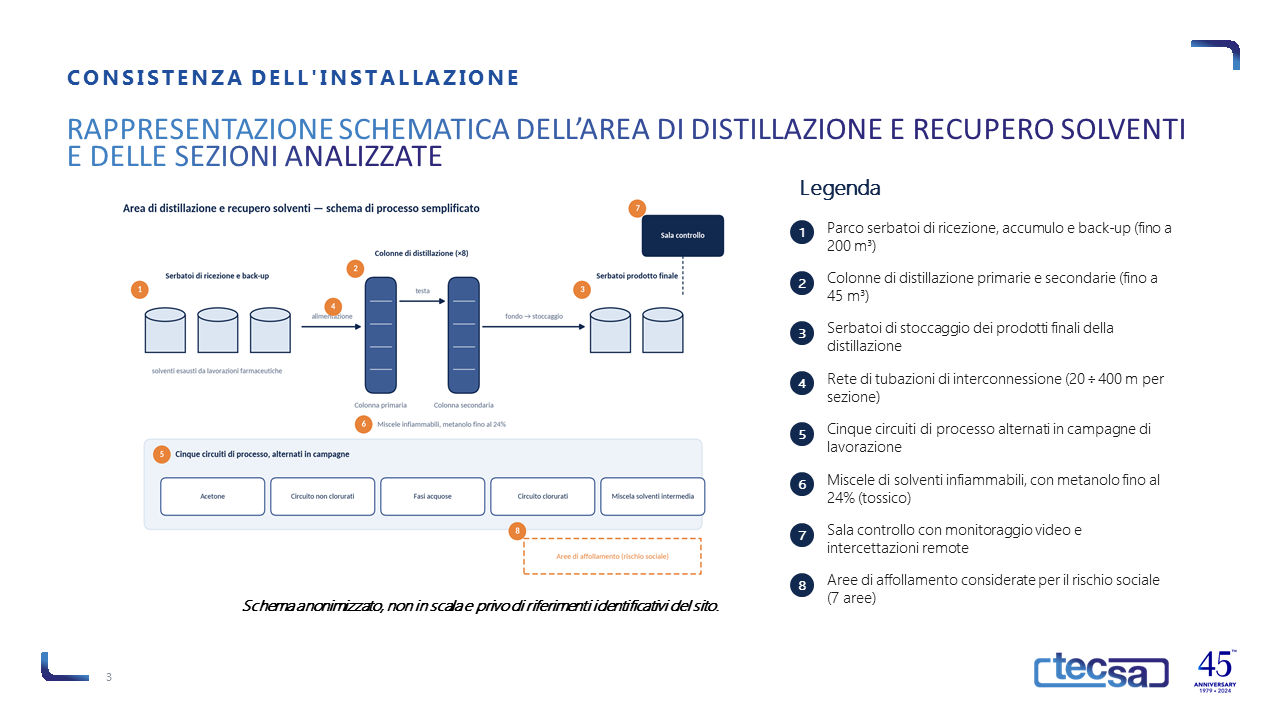
A leading chemical and pharmaceutical operator — a plant of national strategic importance for the production of highly innovative medicines, subject to Legislative Decree 105/2015 (Seveso III) at the upper threshold — commissioned TECSA to carry out a quantitative risk assessment (QRA) of the distillation and solvent recovery area: five distillation processes operating alternately during production runs, eight primary and secondary columns with capacities of up to 45 m³, approximately twenty storage and back-up tanks with capacities of up to 200 m³, and the associated pipework network, comprising a total of 39 isolatable plant sections.
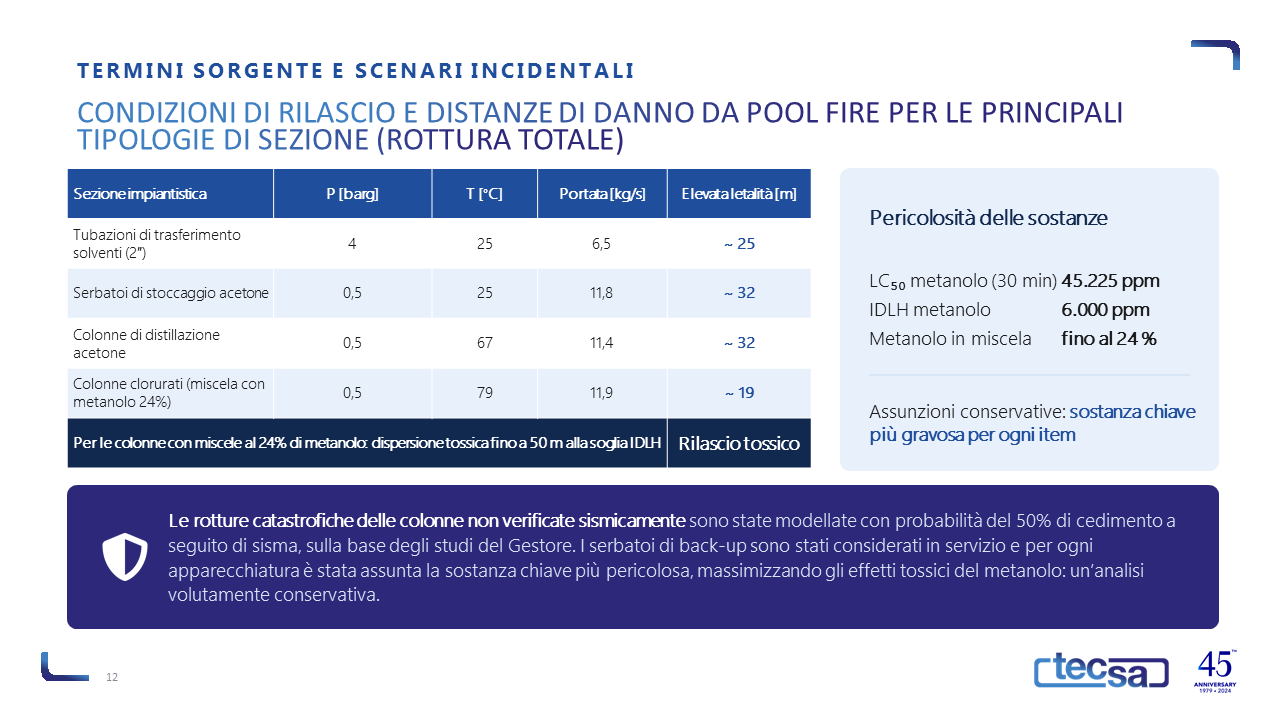
The hazard analysed is the release of mixtures of flammable solvents — containing up to 24 per cent of the toxic substance methanol — with the potential to trigger pool fire, flash fire, explosion (UVCE) and toxic dispersion scenarios. The study, carried out in accordance with the TNO Purple Book methodology across three operational scenarios (prior to seismic retrofitting of the columns, normal operation and operation following improvement works), provided objective evidence of the current and future risk profile, in support of the preliminary assessment for the Safety Report and the recommissioning of the site. TECSA has always supported Seveso facility operators in the quantitative assessment of process risks and in technical dialogue with the relevant authorities.
The methodological approach
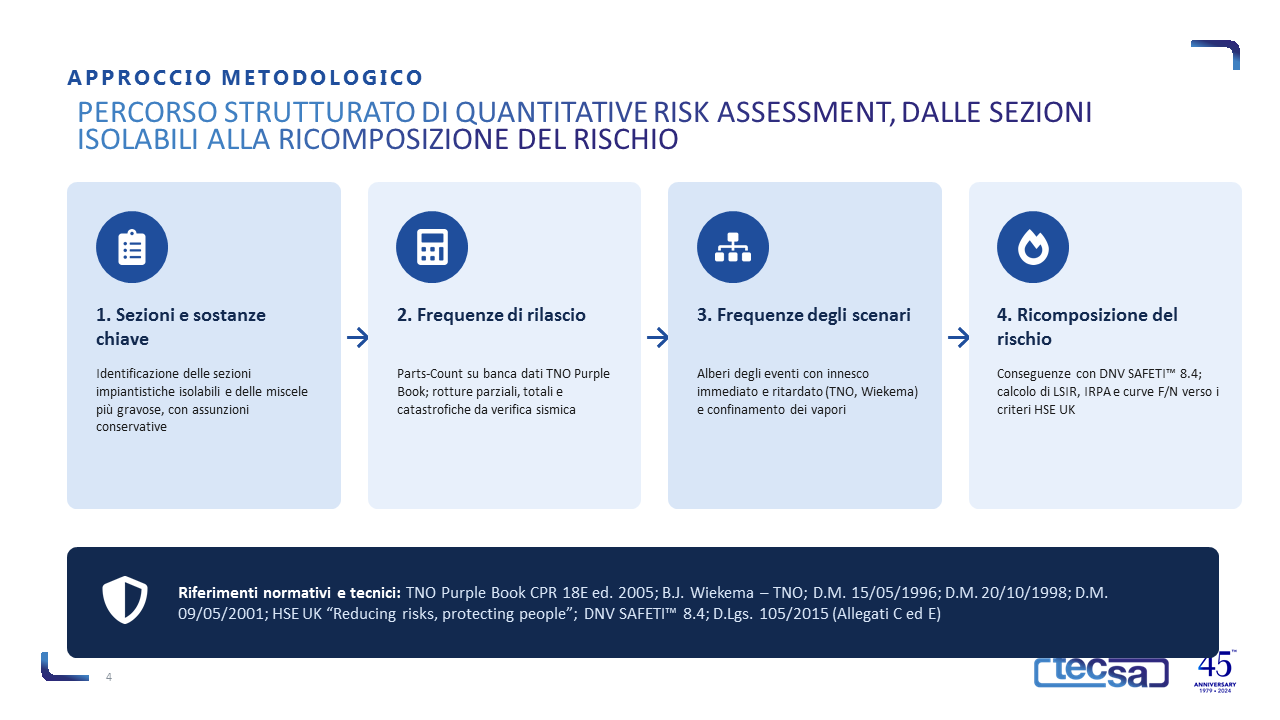
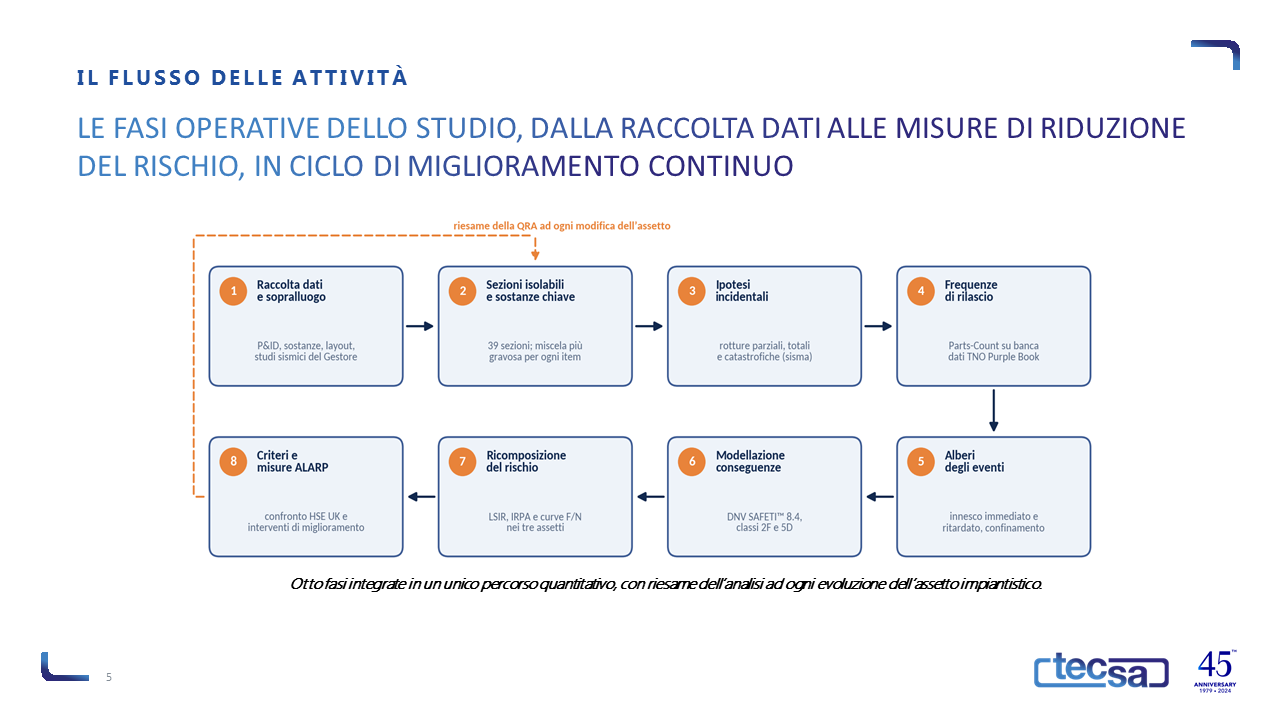
The analysis covered the entire Quantitative Risk Assessment process, from release frequencies to the aggregation of individual and societal risk:
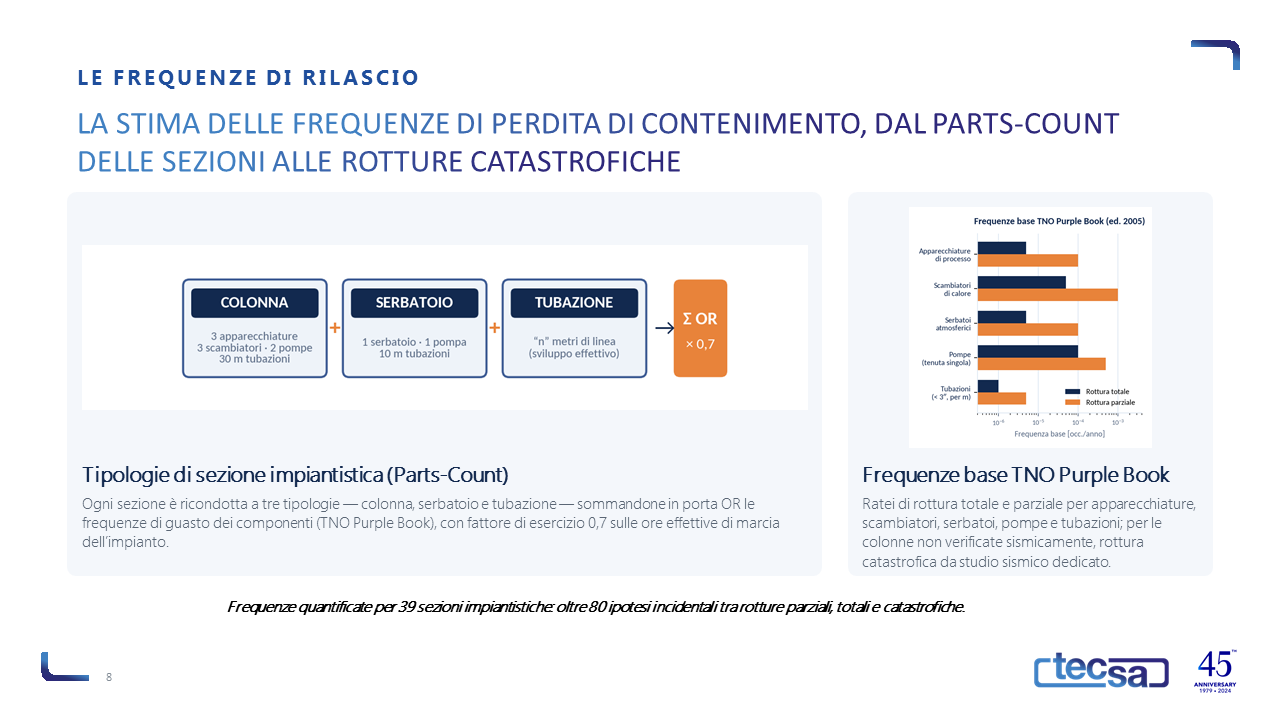
- Isolable sections and Parts-Count – identification of 39 plant sections (columns, tanks and pipework) and estimation of release frequencies using the Parts-Count technique based on the TNO Purple Book database (CPR 18E, 2005 edition), with an operating factor based on actual operating hours and conservative assumptions regarding the most hazardous key substance in each piece of equipment.
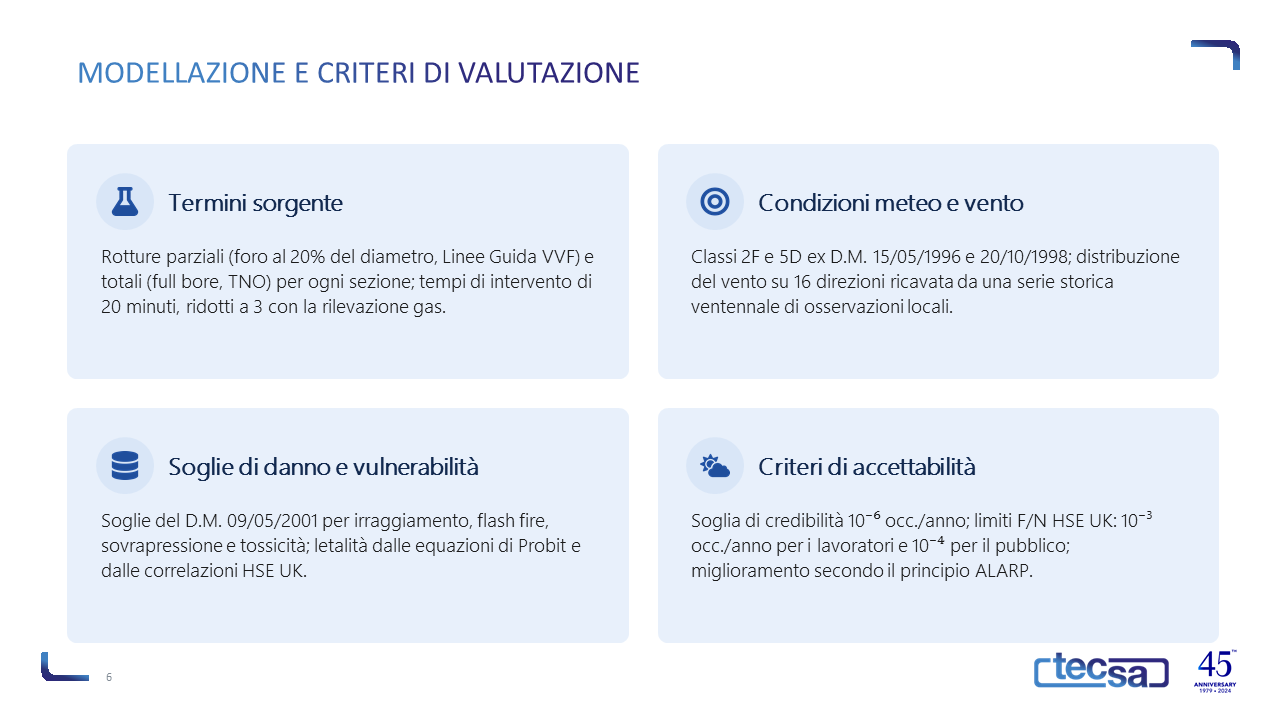
- Accident scenarios – over 80 scenarios including partial ruptures (a hole 20 per cent of the diameter), total (full-bore) ruptures and catastrophic seismic-induced ruptures of untested columns, modelled with a 50 per cent failure probability based on the operator’s seismic studies.
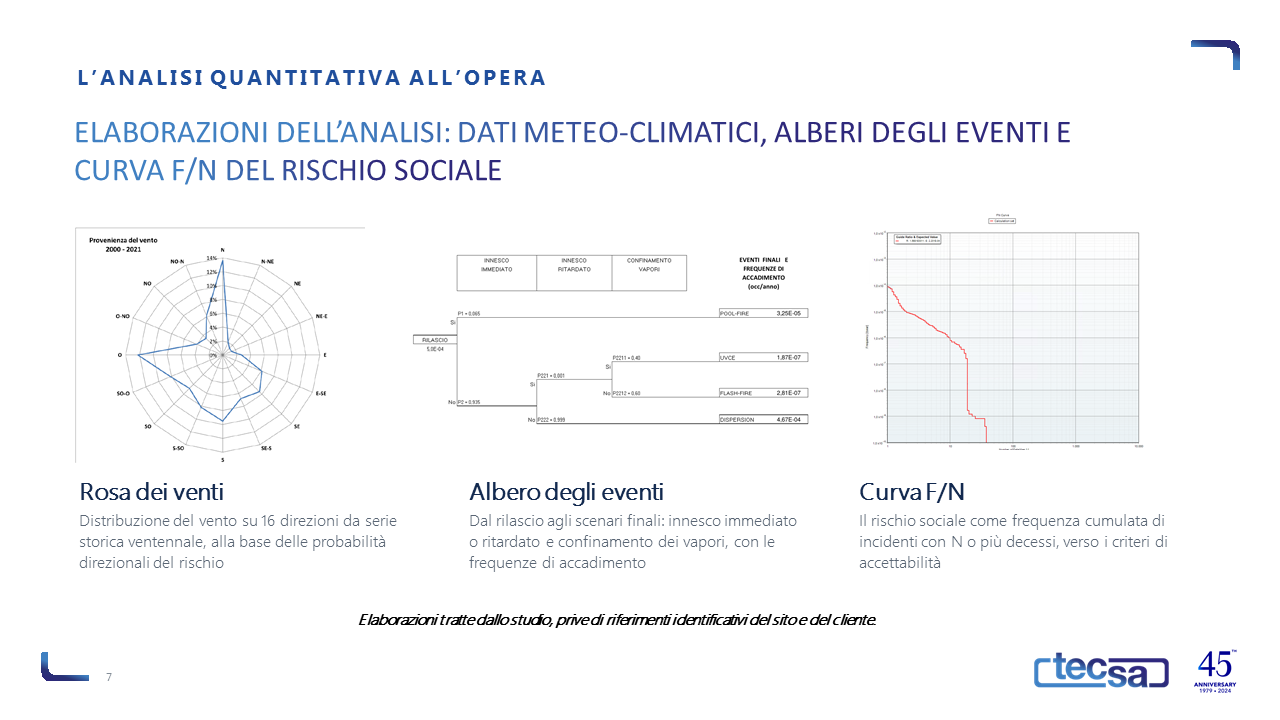
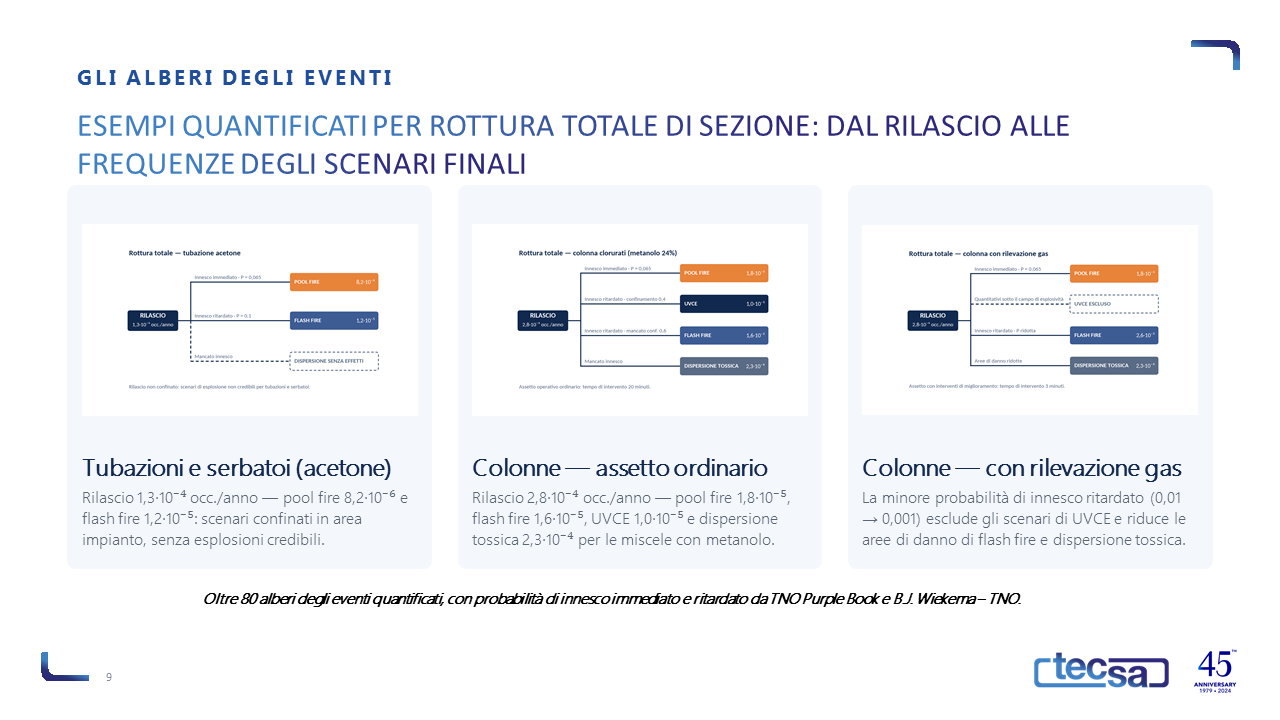
- Event trees – quantification of final scenarios with probabilities of immediate and delayed initiation (TNO, B.J. Wiekema) and vapour containment: pool fire, flash fire, UVCE and toxic dispersion, with a credibility threshold of 10⁻⁶ occurrences per year.
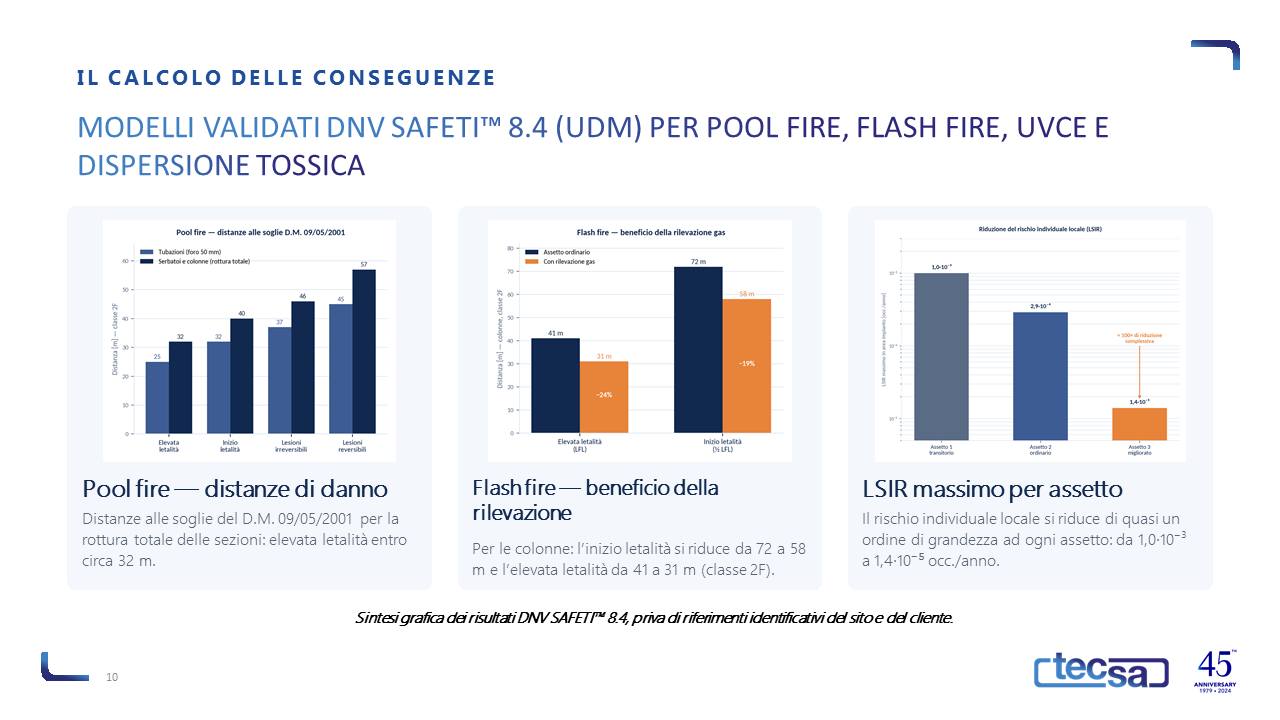
- Consequence modelling – over 300 simulations using DNV SAFETI™ 8.4 (validated UDM models) across two weather-climate classes (2F and 5D) for 16 wind directions based on a 20-year historical wind series, with damage thresholds in accordance with Ministerial Decree of 9 May 2001 and vulnerability derived from the HSE UK Probit equations.
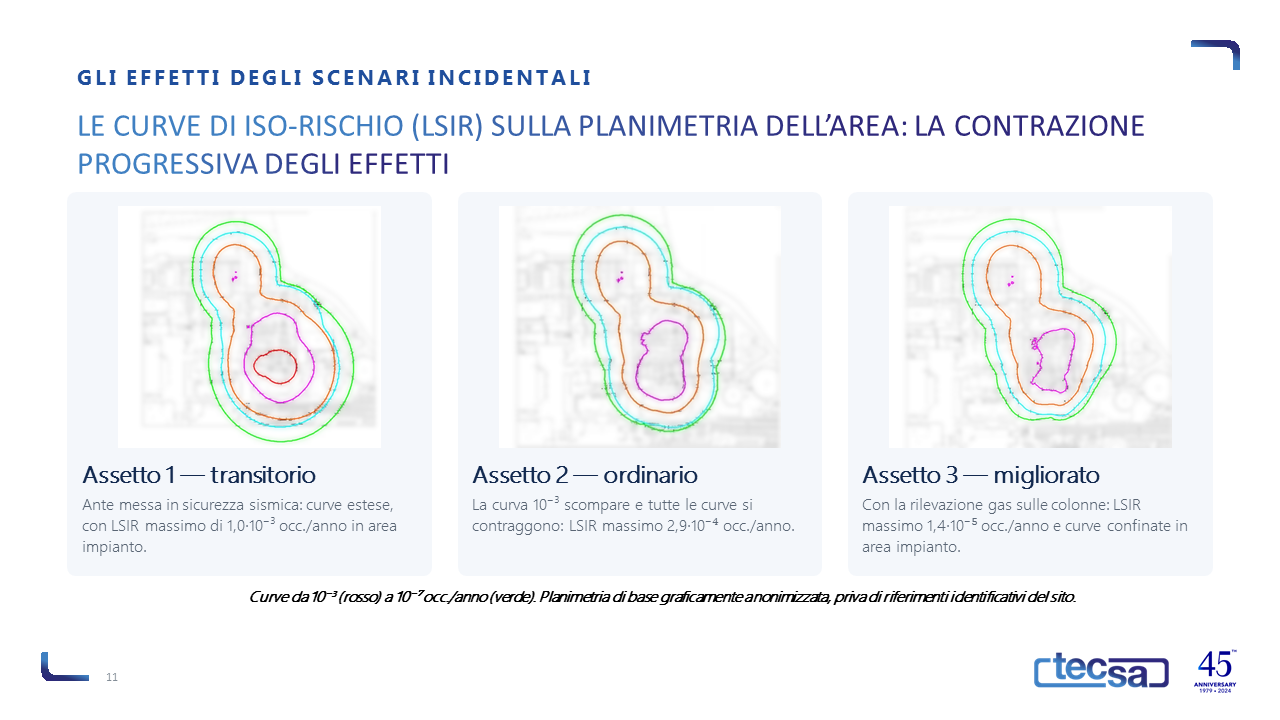
- Risk re-evaluation – LSIR iso-risk curves on the site plan, individual risk by job role (IRPA, 10 job roles) and social risk (F/N curves across 7 crowding areas), compared with the HSE UK acceptability criteria ‘Reducing risks, protecting people’.
The results
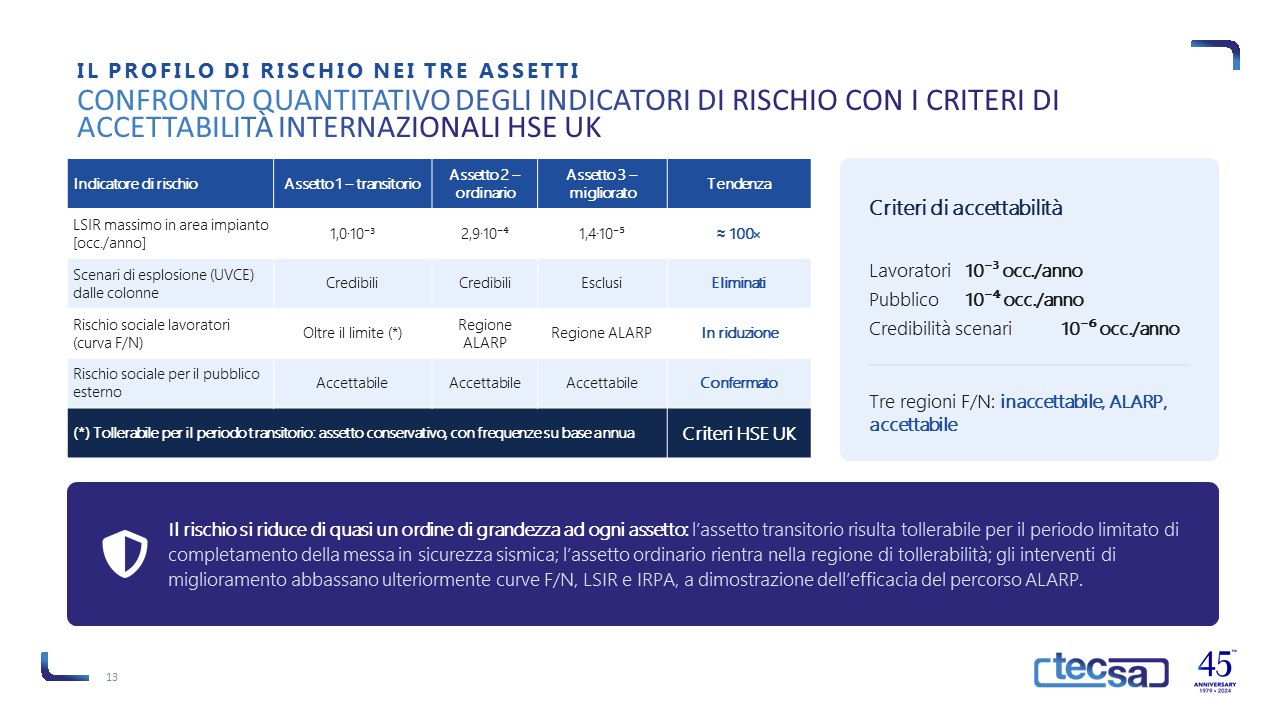
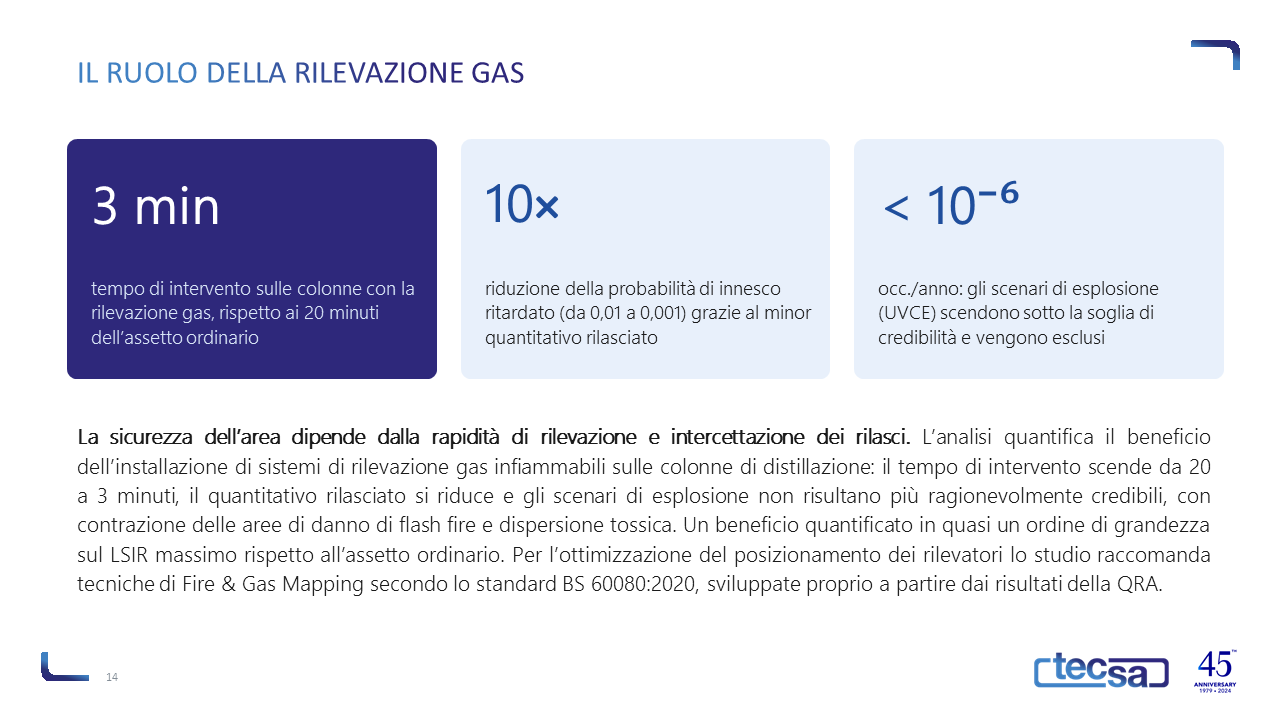
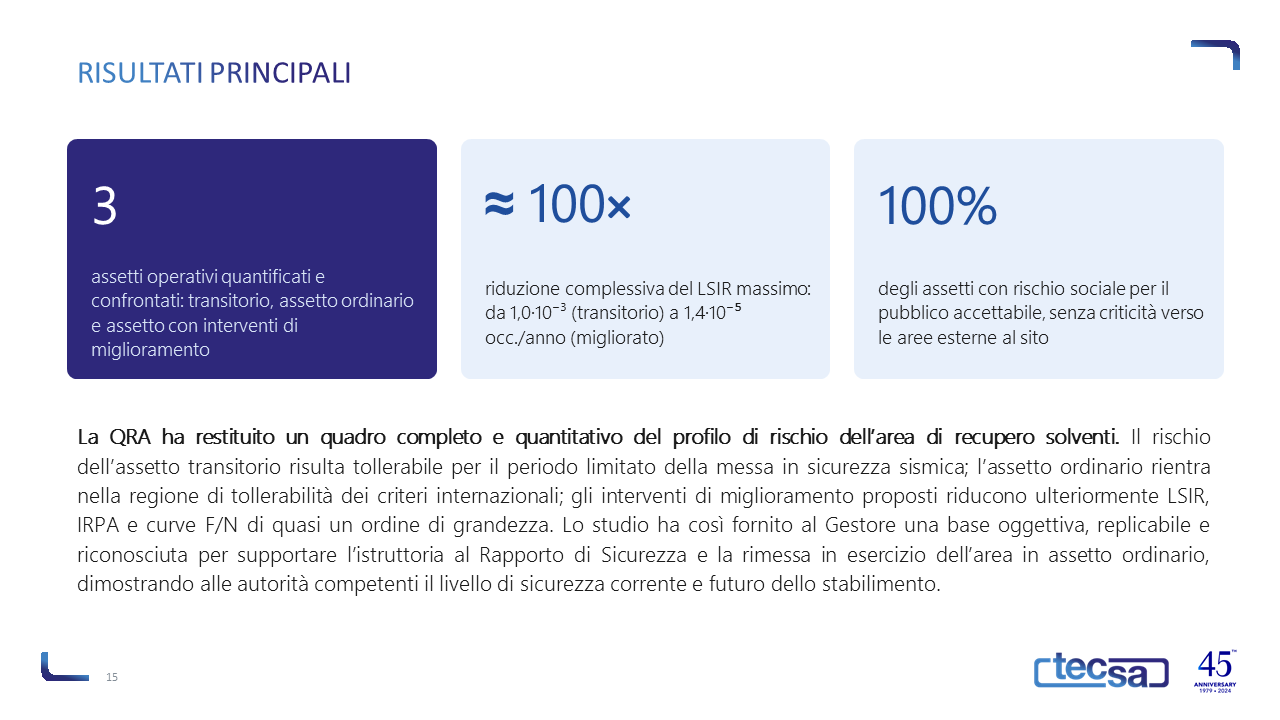
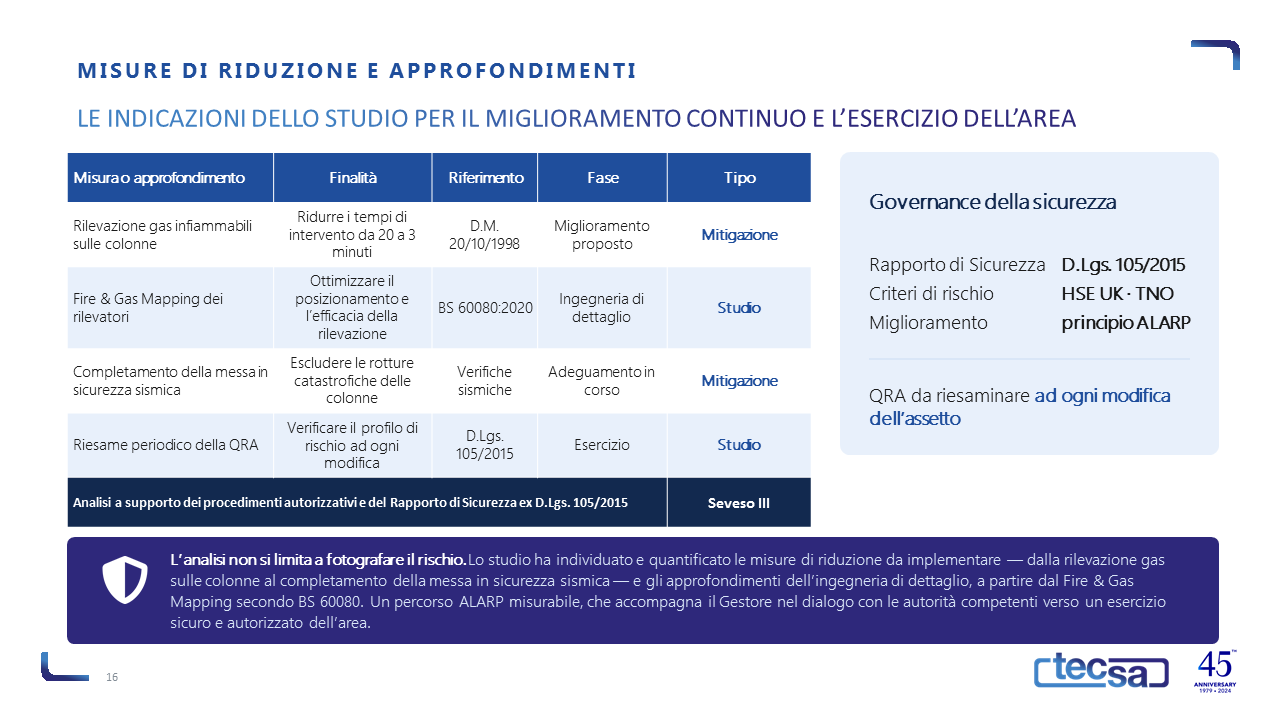
A comparison of the three configurations demonstrated a progressive reduction in risk: the maximum LSIR in the plant area fell from 1.0·10⁻³ person-years in the transitional configuration — tolerable for the limited period required to complete seismic retrofitting — to 2.9·10⁻⁴ in the standard configuration, within the ALARP region, down to 1.4×10⁻⁵ person-years with the proposed improvement measures: an overall reduction of approximately one hundredfold. Gas detection on the columns reduces response times from 20 to 3 minutes and eliminates explosion scenarios, thereby reducing the areas affected by flash fires and toxic dispersion; the social risk to the external public is acceptable in all scenarios. The study also recommends Fire & Gas Mapping in accordance with BS 60080:2020 to optimise the positioning of detectors.
The study utilised validated calculation tools and codes, as well as recognised references from standards, decrees, databases and international technical literature, to ensure the soundness of every assumption.